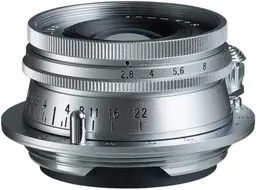
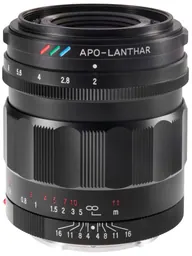
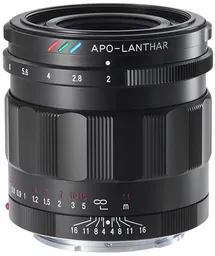
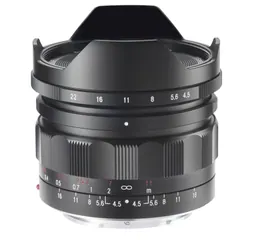
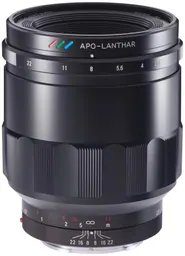
Voigtlander VM 40mm F2.8 Heliar
- Focal length
- 40 mm
- Aperture
- f/2.8
- Weight
- 132 g
- Filter diameter
- 37 mm
- Diameter
- 52 mm
- min. focus dist.
- 50 cm

355 results
Yes: E-mount APS-C lenses fit full-frame Sony bodies and the camera crops to APS-C. See the resolution you keep per model, vignetting and…
When it comes to photography, understanding the basics of f-stop is essential. F-stop is a critical component of a camera lens that…
Keeping your camera lenses clean is essential for getting clear, sharp, and high-quality images. Even the smallest speck of dust, dirt, or…
Sony’s E Mount has quickly become one of the most influential lens systems in the world of mirrorless photography. Introduced in 2010 with the Sony NEX-3 and NEX-5, it has since evolved into a complete system used by both amateur and professional photographers alike. From the beginning, the E Mount was designed to enable compact mirrorless cameras without sacrificing performance—and, more than a decade later, it’s clear that this mount has revolutionized the way we approach both stills and video.
Having used Sony cameras for years, I’ve had the chance to witness the remarkable growth of the E Mount system. It’s a system that continues to evolve at a fast pace, offering unparalleled versatility and performance for all kinds of photographers.
What makes the Sony E Mount stand out is its short flange distance of 18mm and a 46.1mm diameter, which is ideal for designing compact, lightweight cameras and lenses. This short flange distance makes it particularly well-suited for modern mirrorless systems, where space is crucial for innovation.
The E Mount is used by both APS-C (crop sensor) cameras and full-frame cameras, making it versatile for a range of users.
The E Mount design allows for backward compatibility between lenses from earlier APS-C models and newer full-frame bodies. In practice, this means you can use crop-frame lenses on full-frame cameras (with a crop applied), or vice versa, creating a very flexible system.
The E Mount system has exploded in terms of lens offerings. When Sony first launched its mirrorless cameras, the lens selection was limited, but today, there are over 70 lenses from Sony alone, along with a vast range of third-party options.
Sony’s lens lineup includes a full spectrum of options, from entry-level zooms to professional-grade primes and zooms. Some standout lenses include:
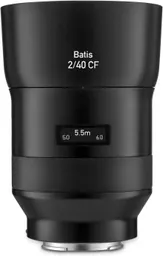
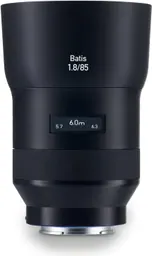
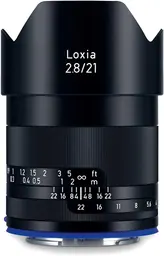
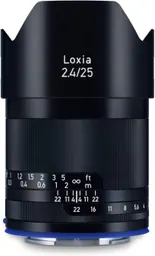
Thanks to the widespread adoption of the E Mount system, third-party manufacturers like Sigma, Tamron, and Zeiss have expanded the range of lenses available, often at more affordable price points. The Sigma 24-70mm f/2.8 DG DN Art is one of the standout lenses, offering exceptional performance at a more reasonable cost.
The native E Mount lenses are built to be fast, sharp, and reliable, with a focus on autofocus performance, particularly important for video creators. Sony has pioneered hybrid autofocus systems, making E Mount cameras incredibly responsive for both stills and video.
Having used several cameras in the E Mount system, I can confidently say that the autofocus performance and overall image quality have been stellar. The Sony A7R IV, for example, boasts 61 megapixels of resolution and exceptional dynamic range, making it a powerhouse for landscape and studio photography. The Sony A7S III, on the other hand, offers unparalleled low-light performance and video capabilities, making it a top choice for videographers.
The thing I love about Sony’s E Mount system is how it’s constantly evolving. I started with the Sony A6000 for travel photography—an affordable crop sensor camera that delivered great results. When I transitioned to the Sony A7 III, the step up in image quality, build, and performance was remarkable. I could use my existing lenses but gain access to the full-frame capabilities of the system.
One of my favorite lenses for the Sony E Mount is the Sony FE 85mm f/1.4 GM, which produces beautiful portraits with creamy bokeh and razor-sharp focus. It’s a perfect example of how Sony’s premium lenses shine in terms of both optics and build quality.
One of the key areas where the Sony E Mount truly shines is in its video capabilities. Sony has been a pioneer in hybrid cameras—cameras that excel in both stills and video. The Sony A7S III and Sony FX3 offer superb 4K video at high frame rates, with the added benefit of 10-bit 4:2:2 color sampling. The autofocus performance in video is also second to none, with real-time eye autofocus, smooth transitions, and quick tracking.
For vloggers and content creators, the Sony ZV-1 and ZV-E10 offer great features for creating high-quality videos in a compact body. The combination of fast autofocus and superior video quality makes the E Mount system an excellent choice for anyone involved in content creation.
Sony has absolutely changed the game with the E Mount system. From a compact and accessible system to a professional powerhouse, it’s a system that grows with you. Whether you're just starting with an APS-C body like the Sony A6100 or diving into full-frame with the A7R V, the E Mount offers incredible flexibility and performance for a variety of photography and video needs.
As a long-time Sony user, I’m excited to see how the E Mount evolves. It’s a system that continually impresses with its combination of cutting-edge technology, ease of use, and stellar image quality. Whether you’re a casual shooter or a professional content creator, the Sony E Mount is a system that can help you push your creative boundaries and capture amazing moments.
The Sony E Mount has quickly become one of the most versatile and dynamic lens mounts available today. With its continuous innovation in both camera and lens technology, Sony has established itself as a leader in the mirrorless world. From APS-C bodies for beginners to full-frame cameras for pros, the E Mount system is adaptable to virtually every type of photographer.
If you’re looking for a system that offers cutting-edge features, incredible autofocus, and superb video capabilities, the Sony E Mount is an investment that will undoubtedly elevate your work.
Not exactly. While FE and E-mount are closely related, they refer to different aspects of Sony’s camera system.
The E-mount is Sony’s lens mount system, used across all their mirrorless cameras. It’s the physical connection between the lens and the camera body, and it’s universal across both full-frame and APS-C cameras.
FE refers specifically to lenses designed for Sony’s full-frame cameras with the E-mount system, such as the Sony A7 and A9 series. These lenses cover the full 35mm sensor area and are optimized for full-frame performance.
In contrast, lenses labeled E (sometimes referred to as APS-C E-mount lenses) are designed for Sony’s APS-C cameras, like the Sony A6000 series. While these lenses are smaller and lighter, they only cover the smaller APS-C sensor area.
Yes! FE lenses are fully compatible with Sony’s APS-C cameras because they share the same E-mount. However, due to the APS-C crop factor (1.5x), the field of view will be narrower. For instance, a 24mm FE lens will provide a field of view equivalent to 36mm on an APS-C camera.
Yes, but with limitations. When you attach an E lens to a full-frame camera, the camera automatically crops the image to match the smaller image circle of the lens. While this works, you won’t be using the full resolution of the camera's sensor.
Yes. Sony disclosed the mount specification to lens makers in 2011, and licensed partners such as Sigma, Tamron, Samyang, Zeiss and Tokina sell autofocus lenses for E-mount. Brands like Viltrox offer them too but are not on Sony's official partner list. Sony notes that it does not guarantee that every function works with every third-party lens, so check that the camera features you need are supported.
Yes, the short 18 mm E-mount flange distance allows adapters for most SLR, rangefinder and cine lens mounts. Autofocus and electronic aperture control only come with active adapters such as Sony's LA-EA series for A-mount lenses or the Sigma MC-11 for Canon EF, while most other adapters, for example for Nikon F or M42, are purely mechanical. Lenses from mounts with a shorter flange distance, such as Nikon Z, cannot be adapted.