

Canon RF Autofocus
Canon RF 14mm F1.4 L VCM
- Focal length
- 14 mm
- Aperture
- f/1.4
- Weight
- 578 g
- Filter diameter
- –
- Min. focus distance
- 24 cm
- Length
- 112 mm
Overview
The Canon RF 14mm F1.4 L VCM is an ultra-wide prime for Canon RF mount, announced in February 2026. According to Canon it is its brightest ultra-wide-angle interchangeable lens ever, and it extends the F1.4 L VCM family that already contains the 20, 24, 35, 50 and 85 mm lenses. It is built for hybrid photo and video work, landscapes, architecture and astrophotography on full frame bodies.
Optical design
The lens has 18 elements in 13 groups. Canon lists one fluorite element, which it describes as its first in an ultra-wide-angle lens, one UD element, one BR optics element and three aspherical elements. Coatings are Super Spectra Coating, Subwavelength Structure Coating, Air Sphere Coating and a fluorine coating on the front element. Canon says the design gives sharp rendering of point light sources. The aperture of F1.4 to F16 is formed by 11 blades. Minimum focus distance is 24 cm with a maximum magnification of 0.11x. There is no front filter thread: a rear holder accepts one polyester or gel filter cut to size by the user.
Autofocus and handling
Two voice coil motors (VCM) drive focusing. Canon quotes focus breathing of 3.0 percent, or 2.3 percent up to F20. A control ring that turns 360 degrees with 54 clicks per revolution, an iris ring and a function button are fitted, along with an AF/MF switch. The iris ring is compatible with the EOS R1, R5 Mark II and R6 Mark III. There is no optical stabilization.
Build and size
The lens weighs 578 g and measures 76.5 mm in diameter and 112 mm in length. It is dust and weather resistant. The hood is integrated into the front of the lens, so there is no accessory hood, and the LP1219 case is included. Extenders and extension tubes are not compatible.
Where it fits
Within the RF range in the database, the RF 20mm F1.4 L VCM and RF 16mm F2.8 STM are the closest prime alternatives. Zooms in this area are the RF 15-35mm F2.8L IS USM, the RF 14-35mm F4L IS USM and the RF 10-20mm F4 L IS STM, which add stabilization and range but are slower or, in the case of the 10-20, cover other focal lengths.
Pros and cons
Pros
- F1.4 at 14 mm, brightest ultra-wide in Canon's range
- Fluorite, BR and three aspherical elements for a demanding design
- Dust and weather resistant with integrated hood
- Iris ring, control ring and function button
Cons
- No front filter thread, only a rear gel or polyester holder
- No optical stabilization
- Maximum magnification of only 0.11x
- 578 g and an L-series price class
Verdict
The RF 14mm F1.4 L VCM is aimed at astro, interior and hybrid video shooters who value the very wide F1.4 aperture. The missing front filter thread and the higher weight than slower wide primes are the main trade-offs.
Technical Specifications
- min focal length
- 14 mm
- max focal length
- 14 mm
- max f (min zoom)
- f/1.4
- max f (max zoom)
- f/1.4
- min. aperture
- f/16
- Elements
- 18
- Groups
- 13
- Weight
- 578 g (1.27 lb)
- Filter diameter
- –
- min focus distance
- 24 cm (9.45 in)
- Length
- 112 mm (4.41 in)
- Diameter
- 76.5 mm (3.01 in)
Which cameras does the Canon RF 14mm F1.4 L VCM fit?
The Canon RF 14mm F1.4 L VCM is a full-frame lens for Canon RF cameras. On full-frame bodies it uses the whole sensor; on APS-C Canon RF cameras its field of view equals 22 mm in full-frame terms.
Canon RF cameras
- Full frame:
- Canon EOS R6 V, Canon EOS R6 Mark III, Canon EOS C50, Canon EOS R1, Canon EOS R5 Mark II, Canon EOS C400, Canon EOS C80, Canon EOS R8, Canon EOS R6 Mark II, Canon EOS R5 C, Canon EOS R3, Canon EOS R5, Canon EOS R6, Canon EOS Ra, Canon EOS RP, Canon EOS R
- APS-C:
- Canon EOS R50 V, Canon EOS R100, Canon EOS R50, Canon EOS R7, Canon EOS R10, Canon EOS C70
Canon RF 14mm F1.4 L VCM compared
Key specs side by side with the most similar Canon RF lenses.
| Lens | Canon RF 14mm F1.4 L VCM | Samyang / Rokinon AF 14mm F2.8 RF | Sigma 15mm F1.4 DC Contemporary | Venus Laowa 15mm F2 Zero-D |
|---|---|---|---|---|
| Focal length | 14 mm | 14 mm | 15 mm | 15 mm |
| Max. aperture | f/1.4 | f/2.8 | f/1.4 | f/2 |
| Weight | 578 g | 484 g | 240 g | 500 g |
| Filter diameter | – | – | 58 mm | 72 mm |
| Min. focus distance | 24 cm | 20 cm | 17.7 cm | 15 cm |
| Length | 112 mm | 95 mm | 62.8 mm | 82 mm |
| Autofocus | yes | yes | yes | no |
| Image stabilization | no | no | no | no |
Canon RF 14mm F1.4 L VCM: FAQ
Does the Canon RF 14mm F1.4 L VCM have autofocus?
Yes, the Canon RF 14mm F1.4 L VCM has autofocus.
Does the Canon RF 14mm F1.4 L VCM have image stabilization?
No, the Canon RF 14mm F1.4 L VCM has no stabilization of its own. On cameras with in-body image stabilization (IBIS) the image is still stabilized.
How much does the Canon RF 14mm F1.4 L VCM weigh?
The Canon RF 14mm F1.4 L VCM weighs 578 g. It is 112 mm long with a diameter of 76.5 mm.
How close can the Canon RF 14mm F1.4 L VCM focus?
The minimum focus distance of the Canon RF 14mm F1.4 L VCM is 24 cm, measured from the sensor plane.
Is the Canon RF 14mm F1.4 L VCM a full-frame lens?
Yes, the Canon RF 14mm F1.4 L VCM covers full frame. On APS-C cameras its field of view equals 22 mm in full-frame terms.
Similar lenses
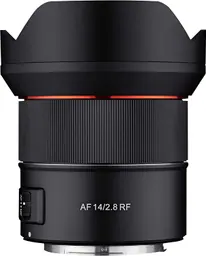
Samyang / Rokinon AF 14mm F2.8 RF
14mm · f/2.8

Sigma 15mm F1.4 DC Contemporary
15mm · f/1.4
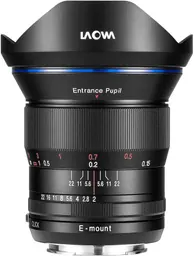
Venus Laowa 15mm F2 Zero-D
15mm · f/2

Artra Lab Latalumen 14mm f/2.8 V2
14mm · f/2.8
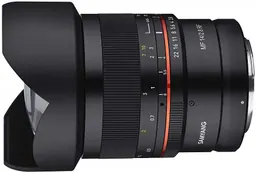
Samyang / Rokinon MF 14mm F2.8 RF
14mm · f/2.8

7artisans 14mm F2.8
14mm · f/2.8

Brightin Star MF 14mm F2.8 Full Frame
14mm · f/2.8
-
TTArtisan 14mm f/2.8 ASPH
14mm · f/2.8
Related guides
What does the f mean in camera lenses?
When it comes to photography, understanding the basics of f-stop is essential. F-stop is a critical component of a camera lens that…
How to clean a camera lens
Keeping your camera lenses clean is essential for getting clear, sharp, and high-quality images. Even the smallest speck of dust, dirt, or…
All camera lens types explained: Uses and functions
In this article, we'll explore the various types of camera lenses, their defining features, and when to use them. We'll also cover the…