

Fujifilm X Autofocus OIS
Fujifilm XC 13-33mm F3.5-6.3 OIS
- Focal length
- 13–33 mm
- Aperture
- f/3.5–6.3
- Weight
- 125 g
- Filter diameter
- 49 mm
- Min. focus distance
- 20 cm
- Length
- 37.5 mm
Overview
The Fujifilm XC 13-33mm F3.5-6.3 OIS is a compact standard zoom for Fujifilm X mount cameras with an APS-C sensor. Fujifilm announced it in October 2025 for a global launch from January 2026. The focal length range is equal to 20-50 mm on full frame, and Fujifilm calls it the smallest and lightest interchangeable zoom lens in its lineup. It is an entry-level XC lens, sold as a kit with the X-T30 III and meant as a first lens for everyday photography.
Optical design
The lens has 10 elements in 9 groups, including four aspherical elements and three ED elements. According to Fujifilm, this suppresses distortion, field curvature and chromatic aberration across the zoom range, despite the small size. The diaphragm has 9 blades, and Fujifilm says this gives rounder bokeh than the older XC15-45mm F3.5-5.6 OIS PZ. Fujifilm lists a smallest aperture of f/22.
Autofocus and handling
Fujifilm quotes an autofocus time of about 0.025 seconds, measured internally with the X-H2 using phase detection AF at the wide end. The built-in optical image stabilization is rated at 4.0 stops under CIPA 2024 conditions, at 33 mm on the X-T3. The minimum focus distance is 20 cm over the whole zoom range, and the maximum magnification is 0.25x at the long end.
Build and size
The zoom is retracted by hand. At 37.5 mm long in the retracted state (55.6 mm at 13 mm and 57.2 mm at 33 mm when extended) and about 125 g, it is the smallest and lightest zoom Fujifilm offers. The diameter is 61.9 mm and the filter thread is 49 mm. The lens has zoom and focus rings but no aperture ring.
Where it fits
In the XC line, the nearest alternatives are the Fujifilm XC 15-45mm F3.5-5.6 OIS PZ and the Fujifilm XC 16-50mm F3.5-5.6 OIS II, which start at narrower angles. For a wider, weather-resistant zoom, the Fujifilm XF 10-24mm F4 R OIS WR is the step up, though it is a larger lens.
Pros and cons
Pros
- Very light at about 125 g and 37.5 mm long when retracted
- Wide start at 13 mm (20 mm equivalent)
- 20 cm minimum focus over the whole range
- 4-stop optical stabilization
- 9-blade diaphragm and fast AF, according to Fujifilm
Cons
- Slow aperture of f/3.5-6.3
- Reaches only 33 mm (50 mm equivalent) at the long end
- Has to be extended by hand before shooting
Verdict
A pocketable kit zoom for those who start with a wide view and prefer low weight over speed. It is not a replacement for a premium standard zoom, but it makes an X-series body very easy to carry.
Technical Specifications
- min focal length
- 13 mm
- max focal length
- 33 mm
- max f (min zoom)
- f/3.5
- max f (max zoom)
- f/6.3
- min. aperture
- f/22
- Elements
- 10
- Groups
- 9
- Weight
- 125 g (0.28 lb)
- Filter diameter
- 49 mm
- min focus distance
- 20 cm (7.87 in)
- Length
- 37.5 mm (1.48 in)
- Diameter
- 61.9 mm (2.44 in)
Which cameras does the Fujifilm XC 13-33mm F3.5-6.3 OIS fit?
The Fujifilm XC 13-33mm F3.5-6.3 OIS fits all Fujifilm X-Mount cameras. There its field of view equals 20-50 mm in full-frame terms (crop factor 1.5).
Fujifilm X-Mount cameras
- APS-C:
- Fujifilm X-T30 III, Fujifilm X-E5, Fujifilm X-M5, Fujifilm X-T50, Fujifilm X-S20, Fujifilm X-T5, Fujifilm X-H2, Fujifilm X-H2S, Fujifilm X-T30 II, Fujifilm X-E4, Fujifilm X-S10, Fujifilm X-T4, Fujifilm X-T200, Fujifilm X-Pro3, Fujifilm X-A7, Fujifilm X-T30, Fujifilm X-T3, Fujifilm X-T100, Fujifilm X-H1, Fujifilm X-A5, Fujifilm X-E3, Fujifilm X-T20, Fujifilm X-A10, Fujifilm X-A3, Fujifilm X-T2, Fujifilm X-E2S, Fujifilm X-Pro2, Fujifilm X-T10, Fujifilm X-A2, Fujifilm X-T1, Fujifilm X-E2, Fujifilm X-A1, Fujifilm X-M1, Fujifilm X-E1, Fujifilm X-Pro1
Fujifilm XC 13-33mm F3.5-6.3 OIS compared
Key specs side by side with the most similar Fujifilm X-Mount lenses.
| Lens | Fujifilm XC 13-33mm F3.5-6.3 OIS | Fujifilm XC 15-45mm F3.5-5.6 OIS PZ | Fujifilm XC 16-50mm F3.5-5.6 OIS | Fujifilm XC 16-50mm F3.5-5.6 OIS II |
|---|---|---|---|---|
| Focal length | 13-33 mm | 15-45 mm | 16-50 mm | 16-50 mm |
| Max. aperture | f/3.5-6.3 | f/3.5-5.6 | f/3.5-5.6 | f/3.5-5.6 |
| Weight | 125 g | 135 g | 195 g | 195 g |
| Filter diameter | 49 mm | 52 mm | 58 mm | 58 mm |
| Min. focus distance | 20 cm | 13 cm | 40 cm | 15 cm |
| Length | 37.5 mm | 44 mm | 65 mm | 65 mm |
| Autofocus | yes | yes | yes | yes |
| Image stabilization | yes | yes | yes | yes |
Fujifilm XC 13-33mm F3.5-6.3 OIS: FAQ
Does the Fujifilm XC 13-33mm F3.5-6.3 OIS have autofocus?
Yes, the Fujifilm XC 13-33mm F3.5-6.3 OIS has autofocus.
Does the Fujifilm XC 13-33mm F3.5-6.3 OIS have image stabilization?
Yes, the Fujifilm XC 13-33mm F3.5-6.3 OIS has optical image stabilization.
How much does the Fujifilm XC 13-33mm F3.5-6.3 OIS weigh?
The Fujifilm XC 13-33mm F3.5-6.3 OIS weighs 125 g. It is 37.5 mm long with a diameter of 61.9 mm.
What filter size does the Fujifilm XC 13-33mm F3.5-6.3 OIS use?
The Fujifilm XC 13-33mm F3.5-6.3 OIS takes 49 mm screw-in filters.
How close can the Fujifilm XC 13-33mm F3.5-6.3 OIS focus?
The minimum focus distance of the Fujifilm XC 13-33mm F3.5-6.3 OIS is 20 cm, measured from the sensor plane.
Similar lenses
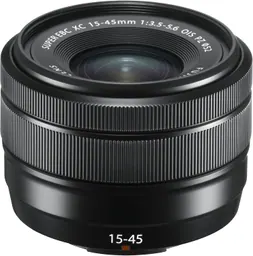
Fujifilm XC 15-45mm F3.5-5.6 OIS PZ
15-45mm · f/3.5-5.6
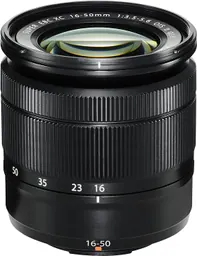
Fujifilm XC 16-50mm F3.5-5.6 OIS
16-50mm · f/3.5-5.6
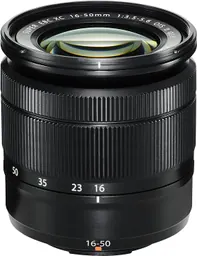
Fujifilm XC 16-50mm F3.5-5.6 OIS II
16-50mm · f/3.5-5.6
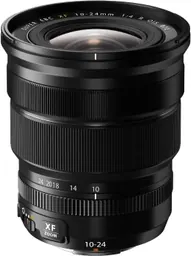
Fujifilm XF 10-24mm F4 R OIS
10-24mm · f/4
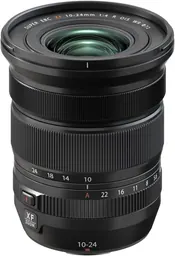
Fujifilm XF 10-24mm F4 R OIS WR
10-24mm · f/4
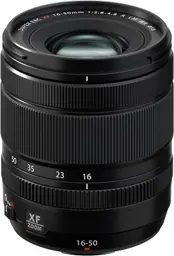
Fujifilm XF 16-50mm F2.8-4.8 R LM WR
16-50mm · f/2.8-4.8
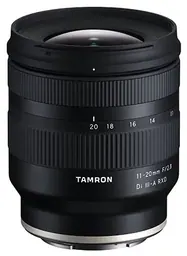
Tamron 11-20mm F/2.8 Di III-A RXD
11-20mm · f/2.8

Sigma 17-40mm F1.8 DC Art
17-40mm · f/1.8
Related guides
What does the f mean in camera lenses?
When it comes to photography, understanding the basics of f-stop is essential. F-stop is a critical component of a camera lens that…
How to clean a camera lens
Keeping your camera lenses clean is essential for getting clear, sharp, and high-quality images. Even the smallest speck of dust, dirt, or…
All camera lens types explained: Uses and functions
In this article, we'll explore the various types of camera lenses, their defining features, and when to use them. We'll also cover the…