

Leica L-Mount Autofocus
AstrHori AF 85mm f/1.8 II
- Focal length
- 85 mm
- Aperture
- f/1.8
- Weight
- –
- Filter diameter
- 62 mm
- Min. focus distance
- 80 cm
- Length
- –
Overview
The AstrHori AF 85mm f/1.8 II is an autofocus short telephoto prime for full frame mirrorless cameras, offered for Sony E, Nikon Z and Leica L mount. It is the second generation of AstrHori's first autofocus 85mm and aims at portrait photographers who want a fast 85mm in the budget class. According to AstrHori, the optics are designed for sensors up to 60 megapixels.
Optical design
AstrHori specifies 10 elements in 7 groups, including two ED elements and two high-refractive elements. The aperture runs from f/1.8 to f/16 and the diaphragm has 11 blades. The angle of view is 28.5 degrees and the minimum focus distance is 0.8 m.
Autofocus and handling
Focusing is driven by an STM stepping motor, and AstrHori lists support for eye, face and animal detection. The barrel carries an AF/MF switch, a customizable Fn button and a stepless, declicked aperture ring that is meant for video work. Electronic contacts pass EXIF data and allow aperture control from the camera, and a USB-C port at the mount is used for firmware updates. A video review summarized by Fstoppers notes visible focus breathing and no weather sealing at the mount.
Build and size
The body is all metal. For the Sony E version AstrHori states about 441 g and roughly 72 mm in diameter by 96 mm in length. For Nikon Z and L, only a range of about 388 g to 441 g is given. The filter thread is 62 mm according to distributors such as First Light Optics, while some retailers list 72 mm, which matches the first generation. A petal hood is included.
Where it fits
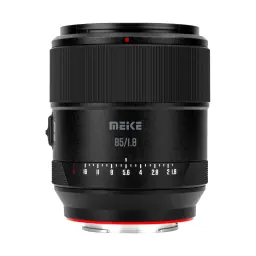
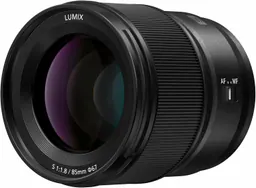
The direct predecessor is the first AstrHori AF 85mm f/1.8, which is not yet in our database and was reported at around 626 g with a 72 mm filter thread. In the same systems, the Sony FE 85mm F1.8 weighs 371 g, the Viltrox AF 85mm F1.8 II 484 g on Sony E and 540 g on Nikon Z, the Meike AF 85mm f1.8 Pro STM 386 g and the Nikkor Z 85mm F1.8 S 470 g. For L mount, the Panasonic Lumix S 85mm F1.8 weighs 355 g.
Pros and cons
Pros
- Fast f/1.8 aperture with 11 diaphragm blades
- ED and high-refractive elements in a 10-element design
- About 441 g, noticeably lighter than the first generation
- AF/MF switch, Fn button and declicked aperture ring
- USB-C firmware updates
- Available for three mounts
Cons
- No built-in stabilization, so stills and video depend on in-body stabilization
- No weather sealing at the mount according to a reviewer
- Visible focus breathing in video
- Minimum focus distance of 0.8 m
- Conflicting filter thread listings
Verdict
The AstrHori AF 85mm f/1.8 II is a lightweight way to get an 85mm f/1.8 on Sony E, Nikon Z or L mount, with a sensible control layout and firmware updates over USB-C. Buyers who need stabilization or weather sealing will find better-supported alternatives from Sony, Nikon and Panasonic.
Technical Specifications
- min focal length
- 85 mm
- max focal length
- 85 mm
- max f (min zoom)
- f/1.8
- max f (max zoom)
- f/1.8
- min. aperture
- f/16
- Elements
- 10
- Groups
- 7
- Weight
- –
- Filter diameter
- 62 mm
- min focus distance
- 80 cm (31.5 in)
- Length
- –
- Diameter
- –
Which cameras does the AstrHori AF 85mm f/1.8 II fit?
The AstrHori AF 85mm f/1.8 II is a full-frame lens for L-Mount cameras. On full-frame bodies it uses the whole sensor; on APS-C L-Mount cameras its field of view equals 128 mm in full-frame terms.
L-Mount cameras
- Full frame:
- Leica SL3-P, Leica SL3-S, Sigma BF, Panasonic Lumix S1II, Panasonic Lumix S1IIE, Panasonic Lumix S1RII, Leica SL3, Panasonic Lumix S9, Blackmagic PYXIS 6K, Panasonic Lumix S5II, Panasonic Lumix S5IIX, Blackmagic Cinema Camera 6K, Panasonic Lumix BS1H, Leica SL2-S, Panasonic Lumix S5, Sigma fp L, Leica SL2, Panasonic Lumix S1, Panasonic Lumix S1R, Panasonic Lumix S1H, Sigma fp, Leica SL (Typ 601)
- APS-C:
- Leica CL, Leica TL2, Leica TL, Leica T (Typ 701)
AstrHori AF 85mm f/1.8 II compared
Key specs side by side with the most similar L-Mount lenses.
| Lens | AstrHori AF 85mm f/1.8 II | Meike AF 85mm f1.8 Pro STM | Panasonic Lumix S 85mm F1.8 | Sigma 85mm F1.4 DG DN Art |
|---|---|---|---|---|
| Focal length | 85 mm | 85 mm | 85 mm | 85 mm |
| Max. aperture | f/1.8 | f/1.8 | f/1.8 | f/1.4 |
| Weight | – | 386 g | 355 g | 630 g |
| Filter diameter | 62 mm | 62 mm | 67 mm | 77 mm |
| Min. focus distance | 80 cm | 85 cm | 80 cm | 85 cm |
| Length | – | 95 mm | 82 mm | 94 mm |
| Autofocus | yes | yes | yes | yes |
| Image stabilization | no | no | no | no |
This lens is also available for
AstrHori AF 85mm f/1.8 II: FAQ
Does the AstrHori AF 85mm f/1.8 II have autofocus?
Yes, the AstrHori AF 85mm f/1.8 II has autofocus.
Does the AstrHori AF 85mm f/1.8 II have image stabilization?
No, the AstrHori AF 85mm f/1.8 II has no stabilization of its own. On cameras with in-body image stabilization (IBIS) the image is still stabilized.
What filter size does the AstrHori AF 85mm f/1.8 II use?
The AstrHori AF 85mm f/1.8 II takes 62 mm screw-in filters.
How close can the AstrHori AF 85mm f/1.8 II focus?
The minimum focus distance of the AstrHori AF 85mm f/1.8 II is 80 cm, measured from the sensor plane.
Is the AstrHori AF 85mm f/1.8 II a full-frame lens?
Yes, the AstrHori AF 85mm f/1.8 II covers full frame. On APS-C cameras its field of view equals 128 mm in full-frame terms.
Similar lenses
Meike AF 85mm f1.8 Pro STM
85mm · f/1.8
Panasonic Lumix S 85mm F1.8
85mm · f/1.8
Sigma 85mm F1.4 DG DN Art
85mm · f/1.4
Sigma 85mm F1.4 DG HSM Art
85mm · f/1.4
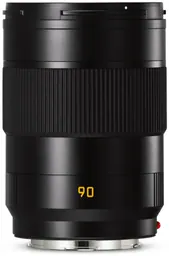
Leica APO-Summicron-SL 90mm F2 ASPH
90mm · f/2
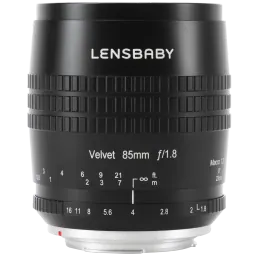
Lensbaby Velvet 85mm f/1.8
85mm · f/1.8
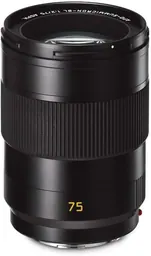
Leica APO-Summicron-SL 75mm F2 ASPH
75mm · f/2
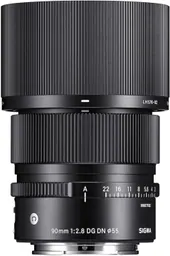
Sigma 90mm F2.8 DG DN | C
90mm · f/2.8
Related guides
What does the f mean in camera lenses?
When it comes to photography, understanding the basics of f-stop is essential. F-stop is a critical component of a camera lens that…
How to clean a camera lens
Keeping your camera lenses clean is essential for getting clear, sharp, and high-quality images. Even the smallest speck of dust, dirt, or…
All camera lens types explained: Uses and functions
In this article, we'll explore the various types of camera lenses, their defining features, and when to use them. We'll also cover the…