

Leica L-Mount Autofocus
Leica Summilux-SL 50mm F1.4 ASPH (2026)
- Focal length
- 50 mm
- Aperture
- f/1.4
- Weight
- 584 g
- Filter diameter
- 67 mm
- Min. focus distance
- 50 cm
- Length
- 75.5 mm
Predecessor: Leica Summilux-SL 50mm F1.4 ASPH
Overview
The Leica Summilux-SL 50mm f/1.4 ASPH (2026) is a new, much smaller autofocus standard prime for the Leica SL system and other L-mount cameras. Leica announced it on 25 June 2026 together with the SL3-P and the APO-Macro-Elmarit-SL 100mm f/2.8, with availability from the end of 2026. Leica calls it the world's most compact autofocus lens with this focal length and an f/1.4 aperture. It is a full-frame lens and a new design, separate from the earlier Summilux-SL 50mm f/1.4 ASPH in the database.
Optical design
The lens has 11 elements in 6 groups. It includes 2 aspherical surfaces, which Leica makes in-house with its PGM process. The maximum aperture is f/1.4, the smallest aperture is f/16, and the diaphragm has 11 blades. Leica says the aspherical elements and the matched glass types shape the lens's distinctive rendering.
Autofocus and handling
Autofocus is driven by a precision voice-coil motor, which Leica says moves the focus group quickly and almost silently. The close focus distance is 0.5 m with a largest scale of 1:7.6. The aperture is controlled electronically from the camera in half-stop or third-stop increments. Lens firmware can be updated through the camera. The lens has no stabilizer of its own.
Build and size
The lens weighs approximately 584 g (637 g with hood), is 75.5 mm long and 74 mm in diameter, and takes E67 filters. The black-anodized aluminum body is protected against dust and splash water to IP54 when used with SL cameras, and the outer lenses have an AquaDura coating. A metal lens hood is included.
Where it fits
The earlier Summilux-SL 50mm F1.4 ASPH in the database weighs 1,065 g and is 124 mm long, so the new lens is noticeably lighter and shorter. The f/2 alternatives in the database are the Summicron-SL 50mm f/2 ASPH (402 g, 83 mm long) and the APO-Summicron-SL 50mm F2 ASPH (740 g). Both are one stop slower.
Pros and cons
Pros
- Compact and light for an f/1.4 autofocus lens, at 584 g
- Quiet voice-coil autofocus
- IP54 sealing with SL cameras, AquaDura coating
- 11-blade diaphragm
- Close focus down to 0.5 m
Cons
- No built-in stabilizer
- Not available until the end of 2026
- Heavier and longer than the Summicron-SL 50mm f/2 ASPH (402 g, 83 mm in the database)
- Not a macro lens: largest scale is 1:7.6
Verdict
The new Summilux-SL 50mm f/1.4 ASPH answers a common criticism of the SL system, the size of its lenses. It suits SL3 and SL3-P users who want a fast standard prime that balances well on the body.
Technical Specifications
- min focal length
- 50 mm
- max focal length
- 50 mm
- max f (min zoom)
- f/1.4
- max f (max zoom)
- f/1.4
- min. aperture
- f/16
- Elements
- 11
- Groups
- 6
- Weight
- 584 g (1.29 lb)
- Filter diameter
- 67 mm
- min focus distance
- 50 cm (19.69 in)
- Length
- 75.5 mm (2.97 in)
- Diameter
- 74 mm (2.91 in)
Which cameras does the Leica Summilux-SL 50mm F1.4 ASPH (2026) fit?
The Leica Summilux-SL 50mm F1.4 ASPH (2026) is a full-frame lens for L-Mount cameras. On full-frame bodies it uses the whole sensor; on APS-C L-Mount cameras its field of view equals 75 mm in full-frame terms.
L-Mount cameras
- Full frame:
- Leica SL3-P, Leica SL3-S, Sigma BF, Panasonic Lumix S1II, Panasonic Lumix S1IIE, Panasonic Lumix S1RII, Leica SL3, Panasonic Lumix S9, Blackmagic PYXIS 6K, Panasonic Lumix S5II, Panasonic Lumix S5IIX, Blackmagic Cinema Camera 6K, Panasonic Lumix BS1H, Leica SL2-S, Panasonic Lumix S5, Sigma fp L, Leica SL2, Panasonic Lumix S1, Panasonic Lumix S1R, Panasonic Lumix S1H, Sigma fp, Leica SL (Typ 601)
- APS-C:
- Leica CL, Leica TL2, Leica TL, Leica T (Typ 701)
Leica Summilux-SL 50mm F1.4 ASPH (2026) compared
Key specs side by side with the most similar L-Mount lenses.
| Lens | Leica Summilux-SL 50mm F1.4 ASPH (2026) | Leica Summilux-SL 50mm F1.4 ASPH | Panasonic Lumix S Pro 50mm F1.4 | Sigma 50mm F1.4 DG DN Art |
|---|---|---|---|---|
| Focal length | 50 mm | 50 mm | 50 mm | 50 mm |
| Max. aperture | f/1.4 | f/1.4 | f/1.4 | f/1.4 |
| Weight | 584 g | 1,065 g | 955 g | 670 g |
| Filter diameter | 67 mm | 82 mm | 77 mm | 72 mm |
| Min. focus distance | 50 cm | 60 cm | 44 cm | 45 cm |
| Length | 75.5 mm | 124 mm | 130 mm | 110 mm |
| Autofocus | yes | yes | yes | yes |
| Image stabilization | no | no | no | no |
Leica Summilux-SL 50mm F1.4 ASPH (2026): FAQ
Does the Leica Summilux-SL 50mm F1.4 ASPH (2026) have autofocus?
Yes, the Leica Summilux-SL 50mm F1.4 ASPH (2026) has autofocus.
Does the Leica Summilux-SL 50mm F1.4 ASPH (2026) have image stabilization?
No, the Leica Summilux-SL 50mm F1.4 ASPH (2026) has no stabilization of its own. On cameras with in-body image stabilization (IBIS) the image is still stabilized.
How much does the Leica Summilux-SL 50mm F1.4 ASPH (2026) weigh?
The Leica Summilux-SL 50mm F1.4 ASPH (2026) weighs 584 g. It is 75.5 mm long with a diameter of 74 mm.
What filter size does the Leica Summilux-SL 50mm F1.4 ASPH (2026) use?
The Leica Summilux-SL 50mm F1.4 ASPH (2026) takes 67 mm screw-in filters.
How close can the Leica Summilux-SL 50mm F1.4 ASPH (2026) focus?
The minimum focus distance of the Leica Summilux-SL 50mm F1.4 ASPH (2026) is 50 cm, measured from the sensor plane.
Is the Leica Summilux-SL 50mm F1.4 ASPH (2026) a full-frame lens?
Yes, the Leica Summilux-SL 50mm F1.4 ASPH (2026) covers full frame. On APS-C cameras its field of view equals 75 mm in full-frame terms.
Similar lenses
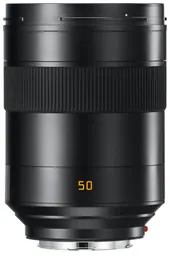
Leica Summilux-SL 50mm F1.4 ASPH
50mm · f/1.4
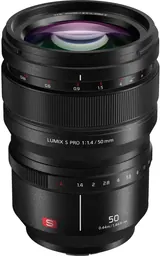
Panasonic Lumix S Pro 50mm F1.4
50mm · f/1.4
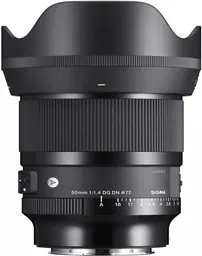
Sigma 50mm F1.4 DG DN Art
50mm · f/1.4
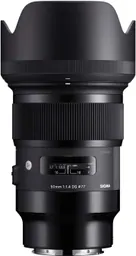
Sigma 50mm F1.4 DG HSM Art
50mm · f/1.4
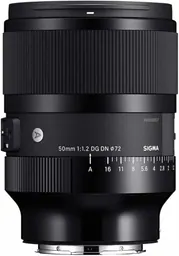
Sigma 50mm F1.2 DG DN | Art
50mm · f/1.2
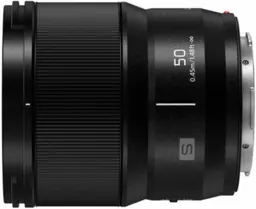
Panasonic Lumix S 50mm F1.8
50mm · f/1.8

TTArtisan AF 50mm f/1.8 Neo
50mm · f/1.8
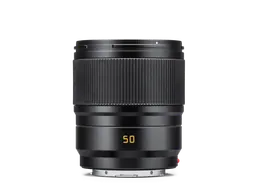
Leica APO-Summicron-SL 50mm F2 ASPH
50mm · f/2
Related guides
What does the f mean in camera lenses?
When it comes to photography, understanding the basics of f-stop is essential. F-stop is a critical component of a camera lens that…
How to clean a camera lens
Keeping your camera lenses clean is essential for getting clear, sharp, and high-quality images. Even the smallest speck of dust, dirt, or…
All camera lens types explained: Uses and functions
In this article, we'll explore the various types of camera lenses, their defining features, and when to use them. We'll also cover the…