

SG-image MF 25mm F1.8
- Focal length
- 25 mm
- Aperture
- f/1.8
- Weight
- 186 g
- Filter diameter
- 43 mm
- Min. focus distance
- 25 cm
- Length
- 30 mm
Overview
The SG-image MF 25mm F1.8 is a manual focus standard prime for APS-C mirrorless cameras. The Chinese manufacturer SG-image offers it for Sony E, Fujifilm X, Nikon Z, Micro Four Thirds, Canon EF-M, Canon RF and Leica L. On APS-C the 25mm focal length gives a field of view comparable to roughly 37.5mm on full frame, which the maker describes as a natural everyday perspective. It is aimed at street, travel and casual shooting for people who want a small, fast and hands-on lens.
Optical design
According to SG-image the lens has 7 elements in 5 groups and an angle of view of 58 degrees. The diaphragm has 7 blades and runs from F1.8 to F16 on a clicked aperture ring. The minimum focus distance is 0.25 m with a maximum magnification of 1:7.7. The spec sheet shows an optical diagram and an MTF chart, but it does not name special glass types such as ED or aspherical elements.
Focusing and handling
Focusing is fully manual, there is no autofocus. SG-image presents this as a deliberate way of working that slows you down and makes you more intentional about composition. Aperture is set directly on the lens with click stops, which also helps when you want to read the setting by feel.
Build and size
The barrel is all metal according to the manufacturer. The lens measures 60 mm in diameter and 30 mm in length and weighs about 186 g. It takes 43 mm filters. The spec sheet gives one set of values for all seven mounts, so any difference between the mounts is not stated.
Where it fits
SG-image positions the lens as an affordable way to get a fast prime. In the database, a comparable manual APS-C option is the 7artisans 25mm F1.8, offered for Fujifilm X, Micro Four Thirds and Sony E. Micro Four Thirds users who want autofocus can look at the Olympus M.Zuiko Digital 25mm F1.8, and SG-image also sells its own autofocus 25mm F1.8 for Sony E, Fujifilm X and Nikon Z.
Pros and cons
Pros
- Fast F1.8 aperture in a small metal body
- Clicked aperture ring
- Short minimum focus distance of 0.25 m
- Low weight of about 186 g and a small 43 mm filter thread
- Available for seven different mounts
Cons
- Manual focus only
- The autofocus SG-image 25mm F1.8 is lighter on paper at 145 g
- No weather sealing or special glass is mentioned
- Little independent data on optical quality is available yet
Verdict
The SG-image MF 25mm F1.8 is a simple, light and bright manual prime with an unusually wide mount choice. It suits photographers who enjoy manual focusing and want a normal-view lens for an APS-C body without spending much. Anyone who relies on autofocus should look at the AF version of the same focal length instead.
Technical Specifications
- min focal length
- 25 mm
- max focal length
- 25 mm
- max f (min zoom)
- f/1.8
- max f (max zoom)
- f/1.8
- min. aperture
- f/16
- Elements
- 7
- Groups
- 5
- Weight
- 186 g (0.41 lb)
- Filter diameter
- 43 mm
- min focus distance
- 25 cm (9.84 in)
- Length
- 30 mm (1.18 in)
- Diameter
- 60 mm (2.36 in)
Which cameras does the SG-image MF 25mm F1.8 fit?
The SG-image MF 25mm F1.8 is designed for APS-C sensors. On APS-C L-Mount cameras its field of view equals 38 mm in full-frame terms. Full-frame bodies use it in APS-C (crop) mode, recording only part of the sensor and fewer megapixels.
L-Mount cameras
- Full frame (in APS-C mode):
- Leica SL3-P, Leica SL3-S, Sigma BF, Panasonic Lumix S1II, Panasonic Lumix S1IIE, Panasonic Lumix S1RII, Leica SL3, Panasonic Lumix S9, Blackmagic PYXIS 6K, Panasonic Lumix S5II, Panasonic Lumix S5IIX, Blackmagic Cinema Camera 6K, Panasonic Lumix BS1H, Leica SL2-S, Panasonic Lumix S5, Sigma fp L, Leica SL2, Panasonic Lumix S1, Panasonic Lumix S1R, Panasonic Lumix S1H, Sigma fp, Leica SL (Typ 601)
- APS-C:
- Leica CL, Leica TL2, Leica TL, Leica T (Typ 701)
SG-image MF 25mm F1.8 compared
Key specs side by side with the most similar L-Mount lenses.
| Lens | SG-image MF 25mm F1.8 | Voigtländer 27mm F2.0 Ultron | 7artisans Photoelectric 25mm f/0.95 | Leica Summicron-T 23mm f/2 ASPH |
|---|---|---|---|---|
| Focal length | 25 mm | 27 mm | 25 mm | 23 mm |
| Max. aperture | f/1.8 | f/2 | f/1 | f/2 |
| Weight | 186 g | 120 g | 587 g | 154 g |
| Filter diameter | 43 mm | 43 mm | 52 mm | 52 mm |
| Min. focus distance | 25 cm | 25 cm | 25 cm | 30 cm |
| Length | 30 mm | 24 mm | 100 mm | 37 mm |
| Autofocus | no | no | no | yes |
| Image stabilization | no | no | no | no |
This lens is also available for
SG-image MF 25mm F1.8: FAQ
Does the SG-image MF 25mm F1.8 have autofocus?
No, the SG-image MF 25mm F1.8 has no autofocus; you focus it manually.
Does the SG-image MF 25mm F1.8 have image stabilization?
No, the SG-image MF 25mm F1.8 has no stabilization of its own. On cameras with in-body image stabilization (IBIS) the image is still stabilized.
How much does the SG-image MF 25mm F1.8 weigh?
The SG-image MF 25mm F1.8 weighs 186 g. It is 30 mm long with a diameter of 60 mm.
What filter size does the SG-image MF 25mm F1.8 use?
The SG-image MF 25mm F1.8 takes 43 mm screw-in filters.
How close can the SG-image MF 25mm F1.8 focus?
The minimum focus distance of the SG-image MF 25mm F1.8 is 25 cm, measured from the sensor plane.
Is the SG-image MF 25mm F1.8 a full-frame lens?
No, the SG-image MF 25mm F1.8 is an APS-C lens. On APS-C cameras its field of view equals 38 mm in full-frame terms.
Similar lenses
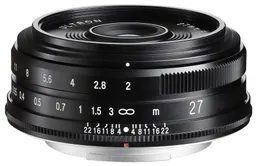
Voigtländer 27mm F2.0 Ultron
27mm · f/2
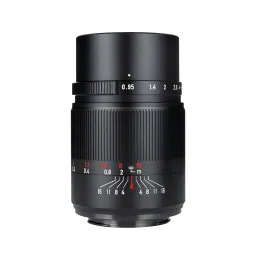
7artisans Photoelectric 25mm f/0.95
25mm · f/0.95
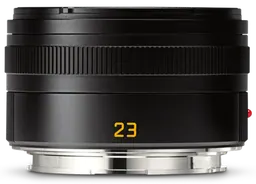
Leica Summicron-T 23mm f/2 ASPH
23mm · f/2
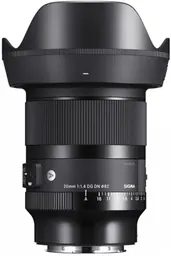
Sigma 23mm F1.4 DC DN | C
23mm · f/1.4
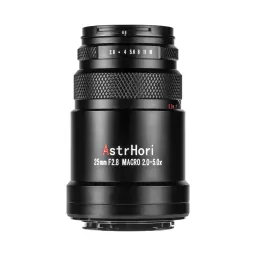
AstrHori 25mm f/2.8 2-5x Ultra Macro
25mm · f/2.8
Venus Laowa 25mm F2.8 2.5-5X Ultra Macro
25mm · f/2.8
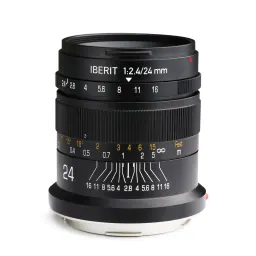
KIPON Iberit 24mm f/2.4
24mm · f/2.4
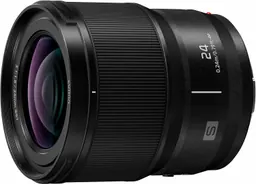
Panasonic Lumix S 24mm F1.8
24mm · f/1.8
Related guides
What does the f mean in camera lenses?
When it comes to photography, understanding the basics of f-stop is essential. F-stop is a critical component of a camera lens that…
How to clean a camera lens
Keeping your camera lenses clean is essential for getting clear, sharp, and high-quality images. Even the smallest speck of dust, dirt, or…
All camera lens types explained: Uses and functions
In this article, we'll explore the various types of camera lenses, their defining features, and when to use them. We'll also cover the…