

Leica L-Mount Autofocus OIS
Sigma 300-600mm F4 DG OS | Sports
- Focal length
- 300–600 mm
- Aperture
- f/4
- Weight
- 3985 g
- Filter diameter
- –
- Min. focus distance
- 280 cm
- Length
- 467.9 mm
Overview
The Sigma 300-600mm F4 DG OS Sports is a full-frame super-telephoto zoom with a constant F4 aperture for Sony E and Leica L-Mount. Sigma presents it as 600mm F4 reach with the option to zoom out to 300mm. It is aimed at wildlife, sports and motorsport photographers who work from a tripod or monopod.
Optical design
The construction has 28 elements in 21 groups, including 6 FLD and 1 SLD element, plus anomalous dispersion glass and high refractive index glass per Sigma. The diaphragm has 13 rounded blades and the smallest aperture is F22. Minimum focus distance is 2.8m at 300mm and 4.5m at 600mm, with a maximum magnification of 1:6 at 470mm. An inner zoom keeps the center of gravity stable across the range.
Autofocus and handling
An HLA (High-response Linear Actuator) drives the focus. Optical stabilization uses Sigma's OS2 algorithm and, according to Sigma, offers 5.5 stops at 600mm by CIPA guidelines, with Mode 1 for general use and Mode 2 for panning. A new function ring can work in Focus Preset mode or Power Focus mode. Controls include four AFL buttons, a focus mode switch, a focus limiter, an OS mode switch and a custom mode switch. Sigma says the L-Mount version works with its TC-1411 and TC-2011 teleconverters.
Build and size
The lens weighs 3,970g in Sony E and 3,985g in L-Mount form, is about 470mm long and 167mm wide. The main barrel parts are magnesium alloy and the hood is carbon. A thermal insulation paint is meant to limit heating in sunlight. The tripod socket rotates on bearings with 90° clicks and takes Arca-Swiss clamps. There is no front filter thread. Instead, a drop-in holder takes 40.5mm filters. The structure is dust and splash resistant.
Where it fits
There is no direct predecessor in the database. Within Sigma's own range, the Sigma 150-600mm F5-6.3 DG DN OS S and the Sigma 60-600mm F4.5-6.3 DG DN OS are lighter zooms with less light and more flexibility at the wide end. For Sony E, the Sony FE 200-600mm F5.6-6.3 G OSS is the common telephoto zoom, and the Sony FE 600mm F4 GM OSS is the prime counterpart at 600mm.
Pros and cons
Pros
- Constant F4 over a 300 to 600mm range
- Stabilization rated at 5.5 stops at 600mm by Sigma, with a panning mode
- Function ring with Focus Preset and Power Focus
- Drop-in filter holder and Arca-Swiss tripod socket
- Dust and splash resistant, with thermal insulation paint
Cons
- Nearly 4kg, so a tripod or monopod is practically required
- Long minimum focus distance of 2.8 to 4.5m
- Large 167mm diameter and about 47cm length
Verdict
The Sigma 300-600mm F4 DG OS Sports targets users who need F4 light at 600mm and who work from support. Compared with 150-600mm zooms, the extra light and the function ring come at the cost of weight and size.
Technical Specifications
- min focal length
- 300 mm
- max focal length
- 600 mm
- max f (min zoom)
- f/4
- max f (max zoom)
- f/4
- min. aperture
- f/22
- Elements
- 28
- Groups
- 21
- Weight
- 3,985 g (8.79 lb)
- Filter diameter
- –
- min focus distance
- 280 cm (110.24 in)
- Length
- 467.9 mm (18.42 in)
- Diameter
- 167 mm (6.57 in)
Which cameras does the Sigma 300-600mm F4 DG OS | Sports fit?
The Sigma 300-600mm F4 DG OS | Sports is a full-frame lens for L-Mount cameras. On full-frame bodies it uses the whole sensor; on APS-C L-Mount cameras its field of view equals 450-900 mm in full-frame terms.
L-Mount cameras
- Full frame:
- Leica SL3-P, Leica SL3-S, Sigma BF, Panasonic Lumix S1II, Panasonic Lumix S1IIE, Panasonic Lumix S1RII, Leica SL3, Panasonic Lumix S9, Blackmagic PYXIS 6K, Panasonic Lumix S5II, Panasonic Lumix S5IIX, Blackmagic Cinema Camera 6K, Panasonic Lumix BS1H, Leica SL2-S, Panasonic Lumix S5, Sigma fp L, Leica SL2, Panasonic Lumix S1, Panasonic Lumix S1R, Panasonic Lumix S1H, Sigma fp, Leica SL (Typ 601)
- APS-C:
- Leica CL, Leica TL2, Leica TL, Leica T (Typ 701)
Sigma 300-600mm F4 DG OS | Sports compared
Key specs side by side with the most similar L-Mount lenses.
| Lens | Sigma 300-600mm F4 DG OS | Sports | Sigma 150-600mm F5-6.3 DG DN OS | S | Sigma 500mm F5.6 DG DN OS Sports | Leica Vario-Elmar-SL 100-400 f/5-6.3 |
|---|---|---|---|---|
| Focal length | 300-600 mm | 150-600 mm | 500 mm | 100-400 mm |
| Max. aperture | f/4 | f/5-6.3 | f/5.6 | f/5-6.3 |
| Weight | 3,985 g | 2,100 g | 1,370 g | 1,530 g |
| Filter diameter | – | 95 mm | 95 mm | 82 mm |
| Min. focus distance | 280 cm | 280 cm | 320 cm | 110 cm |
| Length | 467.9 mm | 266 mm | 235 mm | 198 mm |
| Autofocus | yes | yes | yes | yes |
| Image stabilization | yes | yes | yes | yes |
This lens is also available for
Sigma 300-600mm F4 DG OS | Sports: FAQ
Does the Sigma 300-600mm F4 DG OS | Sports have autofocus?
Yes, the Sigma 300-600mm F4 DG OS | Sports has autofocus.
Does the Sigma 300-600mm F4 DG OS | Sports have image stabilization?
Yes, the Sigma 300-600mm F4 DG OS | Sports has optical image stabilization.
How much does the Sigma 300-600mm F4 DG OS | Sports weigh?
The Sigma 300-600mm F4 DG OS | Sports weighs 3,985 g. It is 467.9 mm long with a diameter of 167 mm.
How close can the Sigma 300-600mm F4 DG OS | Sports focus?
The minimum focus distance of the Sigma 300-600mm F4 DG OS | Sports is 280 cm, measured from the sensor plane.
Is the Sigma 300-600mm F4 DG OS | Sports a full-frame lens?
Yes, the Sigma 300-600mm F4 DG OS | Sports covers full frame. On APS-C cameras its field of view equals 450-900 mm in full-frame terms.
Similar lenses
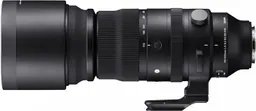
Sigma 150-600mm F5-6.3 DG DN OS | S
150-600mm · f/5-6.3
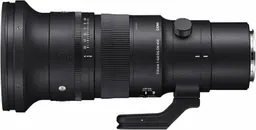
Sigma 500mm F5.6 DG DN OS Sports
500mm · f/5.6
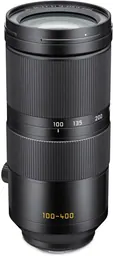
Leica Vario-Elmar-SL 100-400 f/5-6.3
100-400mm · f/5-6.3
Sigma 100-400mm F5-6.3 DG DN OS
100-400mm · f/5-6.3
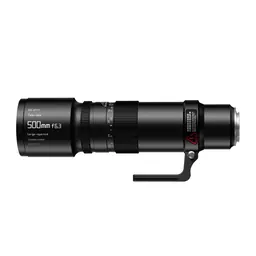
TTArtisan 500mm f/6.3
500mm · f/6.3
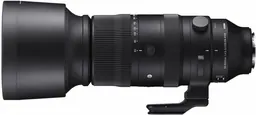
Sigma 60-600mm F4.5-6.3 DG DN OS
60-600mm · f/4.5-6.3
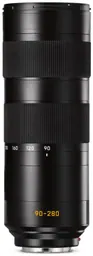
Leica APO-Vario-Elmarit-SL 90-280 mm F2.8–4
90-280mm · f/2.8-4
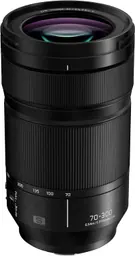
Panasonic Lumix S 70-300 F4.5-5.6 Macro OIS
70-300mm · f/4.5-5.6
Related guides
What does the f mean in camera lenses?
When it comes to photography, understanding the basics of f-stop is essential. F-stop is a critical component of a camera lens that…
How to clean a camera lens
Keeping your camera lenses clean is essential for getting clear, sharp, and high-quality images. Even the smallest speck of dust, dirt, or…
All camera lens types explained: Uses and functions
In this article, we'll explore the various types of camera lenses, their defining features, and when to use them. We'll also cover the…