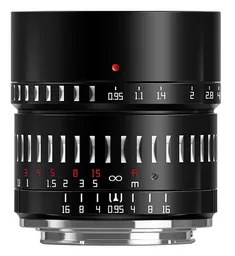
TTArtisan 50mm f/0.95
- Focal length
- 50 mm
- Aperture
- f/0.95
- Weight
- 411 g
- Filter diameter
- 58 mm
- Diameter
- 62 mm
- min. focus dist.
- 50 cm

58 results

When it comes to photography, understanding the basics of f-stop is essential. F-stop is a critical component of a camera lens that…
Keeping your camera lenses clean is essential for getting clear, sharp, and high-quality images. Even the smallest speck of dust, dirt, or…
In this article, we'll explore the various types of camera lenses, their defining features, and when to use them. We'll also cover the…
The Canon EF-M mount, introduced in 2012 alongside the Canon EOS M system, is a lens mount specifically designed for Canon’s mirrorless cameras with APS-C sensors. It represents Canon’s first step into the world of compact mirrorless camera systems, focusing on portability, ease of use, and compatibility with modern imaging technologies.
With its compact size and electronic communication system, the EF-M mount delivers excellent performance for casual photographers and enthusiasts looking for lightweight, travel-friendly gear without sacrificing image quality.
The EF-M mount is smaller and lighter than Canon's EF and EF-S mounts, reflecting its focus on creating compact, mirrorless camera systems. Like the EF and EF-S mounts, the EF-M uses a fully electronic interface for communication between the lens and camera body. This allows for precise autofocus, seamless aperture control, and integration with advanced features like image stabilization.
Canon designed EF-M lenses to be lightweight and portable, perfectly matching the compact size of EOS M cameras. The lenses typically feature plastic construction with metal mounts for durability while keeping the overall weight low. This makes the EF-M system ideal for everyday use, travel, and street photography.
The EF-M mount is exclusive to Canon’s APS-C mirrorless cameras, such as the EOS M50, EOS M6, and EOS M200. EF-M lenses are specifically designed for these cameras, ensuring optimal performance and image quality in a smaller form factor.
For photographers looking to expand their lens options, Canon offers the EF-EOS M adapter, which allows EF and EF-S lenses to be mounted on EF-M cameras. This adapter maintains full electronic communication between the lens and the camera body, ensuring autofocus and image stabilization work seamlessly. This adaptability provides access to Canon’s extensive library of EF and EF-S lenses, making the EF-M system more versatile for users with existing Canon gear.
Canon’s EF-M lens lineup is designed to cover essential focal ranges while keeping size and weight to a minimum. The selection includes versatile zooms like the EF-M 15-45mm f/3.5-6.3 IS STM, ultra-wide options like the EF-M 11-22mm f/4-5.6 IS STM, and primes like the EF-M 22mm f/2 STM, which is highly praised for its compact design and excellent image quality. These lenses are optimized for everyday shooting, travel photography, and video work, with features like image stabilization and Canon’s Stepping Motor (STM) technology for smooth, quiet autofocus.
While the EF-M lens lineup is smaller compared to the EF and RF systems, its offerings focus on portability and convenience, appealing to casual and enthusiast photographers who value simplicity.
The Canon EF-M mount excels in providing a lightweight, portable system for APS-C mirrorless cameras. Its compact lenses and intuitive functionality make it ideal for everyday use and on-the-go photography. The inclusion of an adapter further enhances its flexibility, allowing users to explore Canon’s broader lens ecosystem.
However, the EF-M system has its limitations. The native lens lineup, while sufficient for general use, lacks high-end or specialized options like telephoto primes or fast aperture zooms. Additionally, with Canon’s introduction of the RF mount in 2018, the company has shifted its focus toward its full-frame mirrorless system, which may limit the future development of the EF-M system.
The Canon EF-M mount strikes a balance between portability and performance, offering a user-friendly system for photographers who prioritize convenience without sacrificing image quality. Its compatibility with EF and EF-S lenses via an adapter extends its versatility, making it a practical choice for those already invested in Canon’s ecosystem. While its lens lineup may feel limited for professionals or specialized applications, the EF-M system remains a solid option for beginners, enthusiasts, and travelers who value a compact, mirrorless setup for everyday photography.
No. According to Canon's compatibility chart, EF-M lenses only work on EOS M series cameras, not on EOS R System cameras or EF/EF-S DSLRs. The EF-M flange distance of 18 mm is shorter than RF (20 mm) and EF (44 mm), so no adapter could place the lens at the right distance from the sensor.
Yes, with the Mount Adapter EF-EOS M, which accepts EF, EF-S, TS-E and MP-E lenses and, according to Canon, offers full compatibility. The 1.6x crop factor of the APS-C sensor applies. RF and RF-S lenses, on the other hand, do not fit EOS M cameras.
Yes. Canon Japan formally discontinued the last EOS M cameras in October 2023, ending the EF-M system, and Canon's mirrorless focus is now on RF and RF-S. Existing EF-M cameras and lenses keep working, and EF lenses can still be used via an adapter.
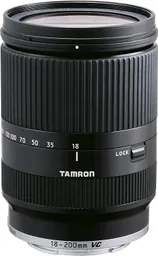
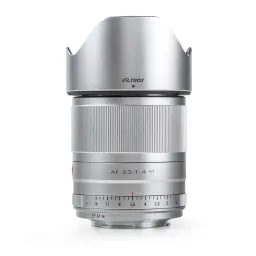
Autofocus lenses for EF-M include models from Sigma (16, 30 and 56 mm f/1.4 DC DN), Viltrox (23, 33 and 56 mm f/1.4) and Tamron (18-200 mm f/3.5-6.3 Di III VC). A common alternative is adapting EF and EF-S lenses.
It is 1.6x, because EF-M cameras have APS-C sensors, so a 22 mm focal length frames like about 35 mm on full frame. Canon introduced the mount in 2012 with the EOS M, and its flange distance is 18 mm (EF: 44 mm).