
Autofocus
Viltrox AF 35mm F1.7
- Focal length
- 35 mm
- Aperture
- f/1.7
- Weight
- 170 g
- Filter diameter
- 52 mm
- Diameter
- 64 mm
- min. focus dist.
- 33 cm

153 results
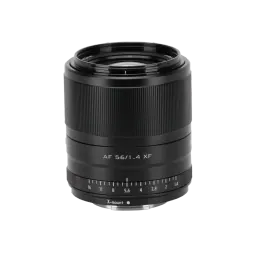
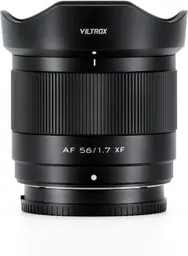
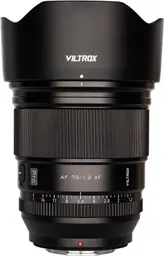
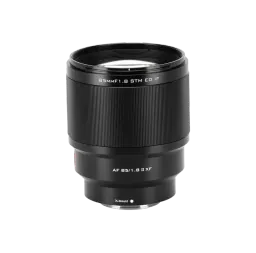
When it comes to photography, understanding the basics of f-stop is essential. F-stop is a critical component of a camera lens that…
Keeping your camera lenses clean is essential for getting clear, sharp, and high-quality images. Even the smallest speck of dust, dirt, or…
In this article, we'll explore the various types of camera lenses, their defining features, and when to use them. We'll also cover the…
The Fujifilm X Mount has become a cornerstone of the mirrorless camera market since its debut in 2012. Introduced alongside the Fujifilm X-Pro1, the X Mount was designed specifically for Fujifilm’s APS-C cameras, offering a blend of compactness, exceptional image quality, and a unique shooting experience. As someone who has used the X Mount system extensively over the years, I can confidently say it’s one of the most well-thought-out and rewarding systems on the market. It’s not just a tool for photography—it’s a joy to use.
The Fujifilm X Mount was created with APS-C sensors in mind, allowing Fujifilm to optimize lens design for this sensor size. This decision has been key to the system’s success. By fully committing to APS-C, Fujifilm avoided the compromises often seen in systems trying to cater to multiple sensor formats. The result is a lineup of lenses and cameras that feel perfectly balanced in size, performance, and usability.
The flange distance of 17.7mm is shorter than many other mounts, which not only allows for smaller cameras and lenses but also gives Fujifilm the flexibility to design optics with excellent sharpness and minimal distortion. This design philosophy is evident across the X Mount system, from compact primes to high-performance zooms.
When I first picked up an X-T1, I was immediately struck by how intuitive it felt. The retro-inspired design with physical dials for shutter speed, aperture, and ISO wasn’t just a nostalgic nod—it was genuinely functional, making it easier to focus on the creative process. Over the years, as I’ve upgraded to cameras like the X-T4 and X-H2, that same tactile shooting experience has remained a hallmark of the system.
The X Mount’s lightweight, compact lenses have also been a revelation. As someone who travels frequently, I value a kit that doesn’t weigh me down but still delivers professional-grade results. With the X Mount, I can carry a body and a few lenses without feeling encumbered, making it perfect for street photography, landscapes, and even event work.
One of the X Mount’s greatest strengths is its lens lineup. Fujifilm has built an impressive collection of primes and zooms that cater to a wide range of needs, from casual shooters to professionals. Here are a few of my favorites:
Fujifilm’s commitment to lens quality is evident in every aspect, from optical performance to build quality. Many lenses are weather-sealed, ensuring they can handle challenging conditions—a feature I’ve appreciated on countless shoots.
The X Mount isn’t just about lenses—it’s the cameras that bring the system to life. Fujifilm offers a diverse range of X Mount cameras, catering to everyone from casual shooters to professionals. Some highlights include:
What I love most about the X Mount system is its personality. Unlike many other camera systems that feel overly clinical, Fujifilm has infused the X Mount with a sense of joy and creativity. The Film Simulation modes, inspired by Fujifilm’s legendary film stocks, add a layer of character to images straight out of the camera. I often find myself shooting JPEGs with simulations like Classic Chrome or Acros, skipping the editing process entirely.
The compact size and excellent build quality of the lenses and cameras also make me want to take them everywhere. Whether I’m exploring a new city, hiking in the mountains, or shooting a wedding, the X Mount system feels like the perfect companion.
Of course, no system is without its downsides. The autofocus on earlier X Mount cameras wasn’t always the best, particularly for fast-moving subjects. While this has improved significantly with newer models like the X-H2S, it’s something to consider if you shoot a lot of action or wildlife.
Additionally, the APS-C sensor, while excellent for most situations, can’t quite match the shallow depth of field or extreme low-light performance of full-frame or medium format systems. However, Fujifilm’s fast prime lenses do a fantastic job of narrowing the gap.
After more than a decade, the Fujifilm X Mount remains one of the most innovative and inspiring systems available. It offers a perfect balance of size, quality, and character that appeals to a wide range of photographers. Whether you’re a seasoned pro or a hobbyist, the X Mount system has something to offer. For me, it’s not just about the gear—it’s about how the system encourages creativity and makes the act of photography enjoyable.
In a world where many cameras feel like tools, the Fujifilm X Mount feels like a partner. It’s a system that not only helps you capture great images but also reminds you why you love photography in the first place.
About 1.5x, because X-mount cameras use APS-C sensors of roughly 23.5 x 15.6 mm. A 23 mm lens therefore frames like about 35 mm on full frame, and a 56 mm lens like about 85 mm. The same factor applies to adapted lenses.
XF lenses are the higher-end line, mostly with a metal barrel and metal mount, many of them with an aperture ring. XC lenses are simpler, lighter models, mainly made of plastic and without an aperture ring. Both use the same X mount and work on all X-series cameras.
Yes. Fujifilm said in 2020 that it was opening the X mount to third parties, and Sigma, Tamron and Viltrox, among others, sell autofocus lenses for it.
Yes, because the short X-mount flange distance of 17.7 mm leaves room for adapters from most SLR and rangefinder mounts. Simple adapters give you manual focus only, without automatic aperture or Exif data. Active adapters such as the Fringer EF-FX Pro II or Viltrox EF-FX1 are made for Canon EF lenses. The 1.5x crop factor applies to adapted full-frame lenses.
Not in a useful way. XF and XC lenses only project an APS-C-sized image circle, which is far too small for the 43.8 x 32.9 mm GFX sensor. The systems use different mounts: X (17.7 mm flange distance, 2012) and G (26.7 mm, 2017).