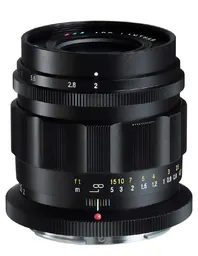
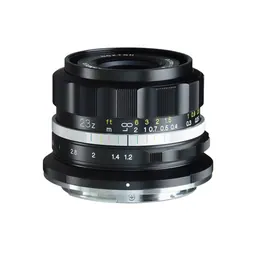
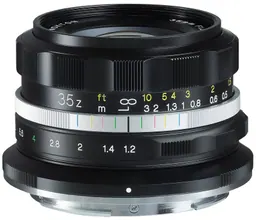
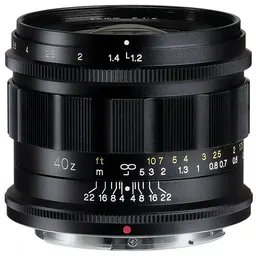
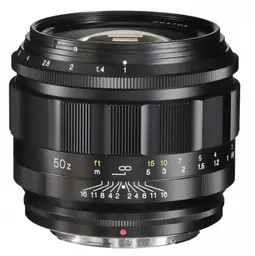
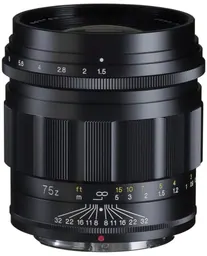
Voigtländer APO-Lanthar 50mm f/2
- Focal length
- 50 mm
- Aperture
- f/2
- Weight
- 347 g
- Filter diameter
- 52 mm
- Diameter
- 68 mm
- min. focus dist.
- 45 cm

177 results
When it comes to photography, understanding the basics of f-stop is essential. F-stop is a critical component of a camera lens that…
Keeping your camera lenses clean is essential for getting clear, sharp, and high-quality images. Even the smallest speck of dust, dirt, or…
In this article, we'll explore the various types of camera lenses, their defining features, and when to use them. We'll also cover the…
The Nikon Z Mount is Nikon’s bold step into the mirrorless era, blending cutting-edge innovation with the company’s longstanding commitment to optical excellence. Introduced in 2018 alongside the Nikon Z7 and Z6, the Z Mount represents a fresh start, designed to maximize the potential of mirrorless technology while supporting both DX (APS-C) and FX (full-frame) formats.
As someone who has transitioned from the Nikon F Mount to the Z system, I can confidently say this mount offers a glimpse into the future of photography. It’s not just an update; it’s a reinvention.
At the heart of the Nikon Z system is its larger mount diameter of 55mm, the widest among full-frame mirrorless systems. This increased size allows for:
The short flange distance of 16mm also plays a critical role. By bringing the lens closer to the sensor, Nikon has optimized the Z Mount for exceptional optical performance, particularly with wide-angle lenses.
Like the F Mount, the Z Mount supports both FX and DX formats, making it a versatile system for photographers of all levels.
FX (Full-Frame): Ideal for professionals and enthusiasts, the FX format delivers the best in image quality, dynamic range, and low-light performance. Cameras like the Nikon Z9, Z8, and Z7 II are designed to excel in demanding conditions, from studio work to wildlife and sports photography.
DX (APS-C): Designed for compactness and affordability, DX-format cameras like the Nikon Z50, Zfc, and Z30 are perfect for travel, vlogging, and general photography. The 1.5x crop factor makes DX cameras especially appealing for telephoto work.
Transitioning to the Nikon Z system was a revelation for me. The first thing I noticed was how seamless the shooting experience felt. The in-camera stabilization (IBIS), available on most FX bodies, makes handheld shooting in low light or with telephoto lenses much easier. Coupled with the high-resolution EVF, the Z cameras offer a level of precision and usability that I never experienced with DSLRs.
One of the standout benefits of the Z Mount is the NIKKOR Z lens lineup. Nikon has clearly prioritized quality over quantity, with every lens in the Z lineup delivering exceptional sharpness, fast focusing, and beautiful bokeh. Some of my favorites include:
The DX lineup is still growing, but lenses like the NIKKOR Z DX 16-50mm f/3.5-6.3 VR are compact and surprisingly sharp for their size and price.
For those who’ve invested heavily in F Mount glass, Nikon’s FTZ adapter is a lifesaver. It allows F Mount lenses to be used seamlessly on Z cameras, often with improved performance thanks to in-body stabilization. I’ve used the FTZ adapter extensively with lenses like the Nikon 70-200mm f/2.8E FL VR, and the experience has been fantastic—autofocus is fast and reliable, and image quality remains stellar.
While the adapter is a great solution, it’s clear that native Z lenses unlock the full potential of the system. The optical designs of Z lenses are optimized for the mount, resulting in better sharpness, less distortion, and improved rendering.
While the Z Mount is undoubtedly impressive, it’s not without its drawbacks:
For me, the Z Mount is where Nikon truly shines in the modern era. It’s a system that embraces innovation without forgetting its roots. The cameras feel intuitive, the lenses deliver world-class performance, and the design choices ensure the system will remain relevant for years to come.
Whether you’re a professional photographer shooting with an FX body or an enthusiast exploring DX for the first time, the Z Mount has something to offer. It’s not just a mount—it’s a statement of Nikon’s commitment to empowering photographers to create their best work.
The Nikon Z Mount represents the future of Nikon photography. It combines decades of expertise with forward-thinking design, delivering a system that excels in both stills and video. While it’s still early days for the Z ecosystem, the quality of the cameras and lenses already makes it a standout choice in the mirrorless market.
For photographers transitioning from DSLRs, the Z Mount offers a bridge to the future without leaving your past investments behind. And for those new to Nikon, it’s a system that promises exceptional performance, adaptability, and creative potential.
In my experience, the Nikon Z Mount isn’t just about capturing images—it’s about redefining what’s possible in photography. If you’re ready to embrace the future, this is the mount to watch.
According to Nikon, there is no functional difference, the two adapters are identical. The FTZ II dropped the tripod foot, which makes it work better with battery grips and wider tripod plates, and the original FTZ is discontinued. Both connect F-mount lenses to Z cameras, with autofocus for AF-S, AF-P and AF-I lenses.
Yes, but autofocus is not available from every maker. Nikon says it works with officially licensed partners, and Tamron and Sigma sell Z-mount lenses with autofocus. Other brands often offer manual-focus lenses, and the availability of autofocus lenses without a Nikon license can change.
Yes, on full-frame (FX) Z cameras, DX lenses are cropped to the DX area (1.5x crop factor), so resolution drops accordingly. Conversely, FX lenses work on DX cameras without restrictions, with the field of view narrowed by 1.5x.
The Z mount (2018) belongs to Nikon's mirrorless cameras and has a 55 mm throat diameter and a 16 mm flange distance, while the F mount (1959) has 44 mm and 46.5 mm. Z also has 11 electrical contacts instead of 8. F lenses work on Z cameras via the FTZ II, but Z lenses cannot be used on F-mount cameras.
No. The Z flange distance of 16 mm is shorter than that of Sony E (18 mm), Fujifilm X (17.7 mm), Canon RF (20 mm) and the other mirrorless mounts, so no adapter can place a Z lens at the right distance from the sensor.