

Brightin Star MF 50mm F0.95 II
- Focal length
- 50 mm
- Aperture
- f/0.95
- Weight
- 757 g
- Filter diameter
- 62 mm
- Min. focus distance
- 50 cm
- Length
- 84 mm
Overview
The Brightin Star MF 50mm F0.95 II is a manual focus full frame standard prime for Sony E, Nikon Z, Canon RF and Leica L mount. With its F0.95 maximum aperture it is among the fastest lenses in the 50mm class that are offered for these mounts. The "II" refers to the second version of the design, which was officially announced in China in December 2024 and reached wider sales in November 2025.
Optical design
The manufacturer manual lists 10 elements in 9 groups, an F0.95 to F16 aperture range and an angle of view of 43.8 degrees. The design includes two ultra low dispersion and four ultra high refractive index elements. The closest focusing distance is 0.5 m.
Focusing and handling
Focusing is manual with a focus ring and a clicked aperture ring. The II version has glow in the dark focusing and aperture scales. The lens has a built in telescoping hood and an all metal barrel. There are no electronic contacts, which means no aperture or focus data in the image files. Focus peaking or magnification is advisable at F0.95.
Build and size
The lens measures 72 mm in diameter and 84 mm in length and weighs 757 g. The filter thread is 62 mm. The weight is typical for a full frame f/0.95 lens, and it suits mirrorless bodies like the Sony A7 series or the Nikon Z6 and Z7 lines.
Where it fits
In the database the Mitakon Zhongyi Speedmaster 50mm f/0.95 III covers the same four mounts, and the TTArtisan 50mm f/0.95 is a lighter APS-C focused option for several mounts. For a more moderate aperture there are the TTArtisan 50mm f/1.2 and the 7artisans Photoelectric 50mm f/1.05. Autofocus alternatives such as the Sony FE 50mm F1.2 GM or Nikon Nikkor Z 50mm F1.2 S belong to a different price class.
Pros and cons
Pros
- Full frame coverage at F0.95
- Four mounts, including Leica L
- Built in telescoping hood and all metal barrel
- Glow in the dark scales on the II version
Cons
- Manual focus only
- 757 g and 84 mm length are substantial
- 0.5 m closest focusing distance
- Very shallow depth of field at full aperture
Verdict
The MF 50mm F0.95 II gives full frame shooters an f/0.95 portrait and low light lens at a modest cost compared with autofocus designs. It rewards careful manual focusing and is better suited to deliberate portrait or night work than to action.
Technical Specifications
- min focal length
- 50 mm
- max focal length
- 50 mm
- max f (min zoom)
- f/0.95
- max f (max zoom)
- f/0.95
- min. aperture
- f/16
- Elements
- 10
- Groups
- 9
- Weight
- 757 g (1.67 lb)
- Filter diameter
- 62 mm
- min focus distance
- 50 cm (19.69 in)
- Length
- 84 mm (3.31 in)
- Diameter
- 72 mm (2.83 in)
Which cameras does the Brightin Star MF 50mm F0.95 II fit?
The Brightin Star MF 50mm F0.95 II is a full-frame lens for Sony E-Mount cameras. On full-frame bodies it uses the whole sensor; on APS-C Sony E-Mount cameras its field of view equals 75 mm in full-frame terms.
Sony E-Mount cameras
- Full frame:
- Sony A7R VI, Sony A7 V, Sony FX2, Sony A1 II, Sony A9 III, Sony A7C II, Sony A7CR, Sony ZV-E1, Sony A7R V, Sony A7 IV, Sony A1, Sony FX3, Sony A7S III, Sony A7C, Sony FX6, Sony A7R IV, Sony A9 II, Sony FX9, Sony A7 III, Sony A7R III, Sony A9, Sony A7R II, Sony A7S II, Sony A7 II, Sony A7S, Sony A7, Sony A7R
- APS-C:
- Sony ZV-E10 II, Sony A6700, Sony FX30, Sony ZV-E10, Sony A6600, Sony A6100, Sony A6400, Sony A6500, Sony A6300, Sony A6000, Sony A5100, Sony A5000, Sony A3000, Sony NEX-5T, Sony NEX-3N, Sony NEX-6, Sony NEX-5R, Sony NEX-F3
Brightin Star MF 50mm F0.95 II compared
Key specs side by side with the most similar Sony E-Mount lenses.
| Lens | Brightin Star MF 50mm F0.95 II | Mitakon Zhongyi Speedmaster 50mm f/0.95 III | Voigtländer Nokton 50mm f/1 | 7artisans Photoelectric 50mm f/1.05 |
|---|---|---|---|---|
| Focal length | 50 mm | 50 mm | 50 mm | 50 mm |
| Max. aperture | f/1 | f/1 | f/1 | f/1.1 |
| Weight | 757 g | 720 g | 590 g | 606 g |
| Filter diameter | 62 mm | 67 mm | 67 mm | 58 mm |
| Min. focus distance | 50 cm | 50 cm | 45 cm | 57 cm |
| Length | 84 mm | 84 mm | 69 mm | 100 mm |
| Autofocus | no | no | no | no |
| Image stabilization | no | no | no | no |
This lens is also available for
Brightin Star MF 50mm F0.95 II: FAQ
Does the Brightin Star MF 50mm F0.95 II have autofocus?
No, the Brightin Star MF 50mm F0.95 II has no autofocus; you focus it manually.
Does the Brightin Star MF 50mm F0.95 II have image stabilization?
No, the Brightin Star MF 50mm F0.95 II has no stabilization of its own. On cameras with in-body image stabilization (IBIS) the image is still stabilized.
How much does the Brightin Star MF 50mm F0.95 II weigh?
The Brightin Star MF 50mm F0.95 II weighs 757 g. It is 84 mm long with a diameter of 72 mm.
What filter size does the Brightin Star MF 50mm F0.95 II use?
The Brightin Star MF 50mm F0.95 II takes 62 mm screw-in filters.
How close can the Brightin Star MF 50mm F0.95 II focus?
The minimum focus distance of the Brightin Star MF 50mm F0.95 II is 50 cm, measured from the sensor plane.
Is the Brightin Star MF 50mm F0.95 II a full-frame lens?
Yes, the Brightin Star MF 50mm F0.95 II covers full frame. On APS-C cameras its field of view equals 75 mm in full-frame terms.
Similar lenses
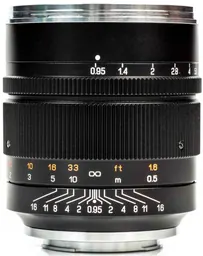
Mitakon Zhongyi Speedmaster 50mm f/0.95 III
50mm · f/0.95
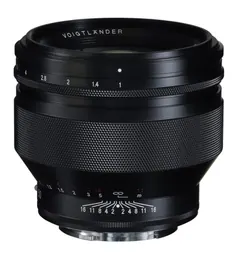
Voigtländer Nokton 50mm f/1
50mm · f/1
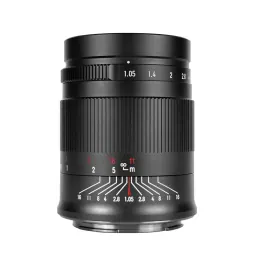
7artisans Photoelectric 50mm f/1.05
50mm · f/1.05

Brightin Star MF 50mm F1.05 Full Frame
50mm · f/1.05

Artra Lab Nonikkor-Nocty 50mm f/1.2
50mm · f/1.2
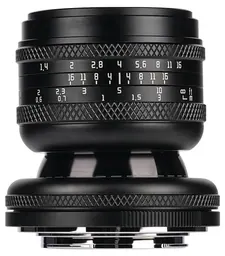
AstrHori 50mm f/1.4 Tilt
50mm · f/1.4
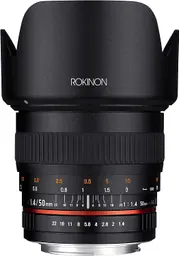
Samyang / Rokinon 50mm F1.4 AS UMC
50mm · f/1.4
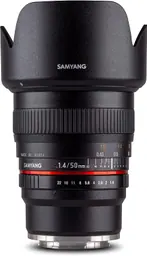
Samyang 50mm F1.4 AS UMC
50mm · f/1.4
Related guides
What does the f mean in camera lenses?
When it comes to photography, understanding the basics of f-stop is essential. F-stop is a critical component of a camera lens that…
How to clean a camera lens
Keeping your camera lenses clean is essential for getting clear, sharp, and high-quality images. Even the smallest speck of dust, dirt, or…
All camera lens types explained: Uses and functions
In this article, we'll explore the various types of camera lenses, their defining features, and when to use them. We'll also cover the…