

Sony E Autofocus OIS
Sony FE 400-800mm F6.3-8 G OSS
- Focal length
- 400–800 mm
- Aperture
- f/6.3–8
- Weight
- 2475 g
- Filter diameter
- 105 mm
- Min. focus distance
- 170 cm
- Length
- 346 mm
Overview
The Sony FE 400-800mm F6.3-8 G OSS is a super telephoto zoom for Sony E-mount full frame cameras. Sony announced it in February 2025 and calls it the first Alpha lens to reach 800 mm. It is aimed at bird, wildlife, aviation and sports photographers who need reach beyond 600 mm without switching to a prime.
Optical design
The lens has 27 elements in 19 groups. According to Sony, six ED elements control chromatic aberration and advanced coatings suppress flare and ghosting. An 11 blade circular aperture shapes the background blur. The maximum aperture is F6.3 at 400 mm and F8 at 800 mm, with a minimum aperture of F36 to F45. Close focus is 1.7 m to 3.5 m with a maximum magnification of 0.23x.
Autofocus and handling
Two linear motors drive autofocus; Sony says the system keeps pace with 120 frames per second on the Alpha 9 III. Built-in Optical SteadyShot offers three modes. The zoom is internal, which keeps length and balance steady, and the zoom ring has a short rotation throw. Controls include three focus hold buttons at 90 degree intervals, a focus range switch and full-time direct manual focus. The lens works with the 1.4x SEL14TC and 2x SEL20TC for up to 1600 mm.
Build and size
The lens weighs 2,475 g including its non-removable, rotating tripod foot, measures 119.8 mm in diameter and 346 mm in length and takes 105 mm filters. The design is dust and moisture resistant (not guaranteed fully sealed), and the front element has a fluorine coating.
Where it fits
It extends beyond the Sony FE 200-600mm F5.6-6.3 G OSS. Smaller or lighter zooms include the Sony FE 100-400mm F4.5-5.6 GM OSS, the Sigma 150-600mm F5-6.3 DG DN OS Sports and the Tamron 150-500mm F5-6.7 Di III VC VXD. The Sigma 60-600mm F4.5-6.3 DG DN OS offers a wider zoom range.
Pros and cons
Pros
- 800 mm reach in a zoom
- Optical stabilization and internal zoom
- Teleconverter compatibility
- Dust and moisture resistant design
Cons
- Slow F6.3 to F8 aperture
- 2,475 g with a fixed tripod foot
- 400 mm at the short end limits flexibility
Verdict
The FE 400-800mm F6.3-8 G OSS targets users who need maximum reach in daylight conditions and accept the slow aperture and weight. Based on the data, it is a specialist lens, more suited to dedicated wildlife and sports work than to general travel.
Technical Specifications
- min focal length
- 400 mm
- max focal length
- 800 mm
- max f (min zoom)
- f/6.3
- max f (max zoom)
- f/8
- min. aperture
- f/36
- Elements
- 27
- Groups
- 19
- Weight
- 2,475 g (5.46 lb)
- Filter diameter
- 105 mm
- min focus distance
- 170 cm (66.93 in)
- Length
- 346 mm (13.62 in)
- Diameter
- 119.8 mm (4.72 in)
Which cameras does the Sony FE 400-800mm F6.3-8 G OSS fit?
The Sony FE 400-800mm F6.3-8 G OSS is a full-frame lens for Sony E-Mount cameras. On full-frame bodies it uses the whole sensor; on APS-C Sony E-Mount cameras its field of view equals 600-1200 mm in full-frame terms.
Sony E-Mount cameras
- Full frame:
- Sony A7R VI, Sony A7 V, Sony FX2, Sony A1 II, Sony A9 III, Sony A7C II, Sony A7CR, Sony ZV-E1, Sony A7R V, Sony A7 IV, Sony A1, Sony FX3, Sony A7S III, Sony A7C, Sony FX6, Sony A7R IV, Sony A9 II, Sony FX9, Sony A7 III, Sony A7R III, Sony A9, Sony A7R II, Sony A7S II, Sony A7 II, Sony A7S, Sony A7, Sony A7R
- APS-C:
- Sony ZV-E10 II, Sony A6700, Sony FX30, Sony ZV-E10, Sony A6600, Sony A6100, Sony A6400, Sony A6500, Sony A6300, Sony A6000, Sony A5100, Sony A5000, Sony A3000, Sony NEX-5T, Sony NEX-3N, Sony NEX-6, Sony NEX-5R, Sony NEX-F3
Sony FE 400-800mm F6.3-8 G OSS compared
Key specs side by side with the most similar Sony E-Mount lenses.
| Lens | Sony FE 400-800mm F6.3-8 G OSS | Sigma 300-600mm F4 DG OS | Sports | Sony FE 200-600mm F5.6-6.3 G OSS | Sigma 500mm F5.6 DG DN OS Sports |
|---|---|---|---|---|
| Focal length | 400-800 mm | 300-600 mm | 200-600 mm | 500 mm |
| Max. aperture | f/6.3-8 | f/4 | f/5.6-6.3 | f/5.6 |
| Weight | 2,475 g | 3,970 g | 2,115 g | 1,370 g |
| Filter diameter | 105 mm | – | 95 mm | 95 mm |
| Min. focus distance | 170 cm | 280 cm | 240 cm | 320 cm |
| Length | 346 mm | 469.9 mm | 318 mm | 235 mm |
| Autofocus | yes | yes | yes | yes |
| Image stabilization | yes | yes | yes | yes |
Sony FE 400-800mm F6.3-8 G OSS: FAQ
Does the Sony FE 400-800mm F6.3-8 G OSS have autofocus?
Yes, the Sony FE 400-800mm F6.3-8 G OSS has autofocus.
Does the Sony FE 400-800mm F6.3-8 G OSS have image stabilization?
Yes, the Sony FE 400-800mm F6.3-8 G OSS has optical image stabilization.
How much does the Sony FE 400-800mm F6.3-8 G OSS weigh?
The Sony FE 400-800mm F6.3-8 G OSS weighs 2,475 g. It is 346 mm long with a diameter of 119.8 mm.
What filter size does the Sony FE 400-800mm F6.3-8 G OSS use?
The Sony FE 400-800mm F6.3-8 G OSS takes 105 mm screw-in filters.
How close can the Sony FE 400-800mm F6.3-8 G OSS focus?
The minimum focus distance of the Sony FE 400-800mm F6.3-8 G OSS is 170 cm, measured from the sensor plane.
Is the Sony FE 400-800mm F6.3-8 G OSS a full-frame lens?
Yes, the Sony FE 400-800mm F6.3-8 G OSS covers full frame. On APS-C cameras its field of view equals 600-1200 mm in full-frame terms.
Similar lenses

Sigma 300-600mm F4 DG OS | Sports
300-600mm · f/4
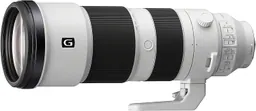
Sony FE 200-600mm F5.6-6.3 G OSS
200-600mm · f/5.6-6.3
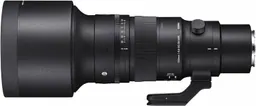
Sigma 500mm F5.6 DG DN OS Sports
500mm · f/5.6
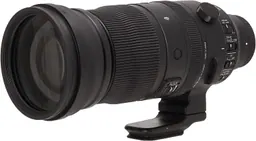
Sigma 150-600mm F5-6.3 DG DN OS | S
150-600mm · f/5-6.3
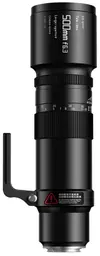
TTArtisan 500mm f/6.3
500mm · f/6.3
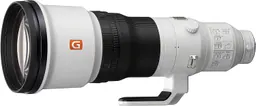
Sony FE 600mm F4 GM OSS
600mm · f/4
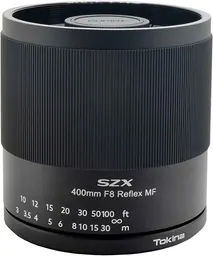
Tokina SZX Super Tele 400mm F8 Reflex MF
400mm · f/8
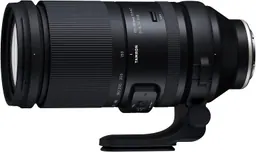
Tamron 150-500mm F5-6.7 Di III VC VXD
150-500mm · f/5-6.7
Related guides
What does the f mean in camera lenses?
When it comes to photography, understanding the basics of f-stop is essential. F-stop is a critical component of a camera lens that…
How to clean a camera lens
Keeping your camera lenses clean is essential for getting clear, sharp, and high-quality images. Even the smallest speck of dust, dirt, or…
All camera lens types explained: Uses and functions
In this article, we'll explore the various types of camera lenses, their defining features, and when to use them. We'll also cover the…