

Sony E Autofocus
Tamron 16-30mm F2.8 Di III VXD G2
- Focal length
- 16–30 mm
- Aperture
- f/2.8
- Weight
- 440 g
- Filter diameter
- 67 mm
- Min. focus distance
- 19 cm
- Length
- 101.8 mm
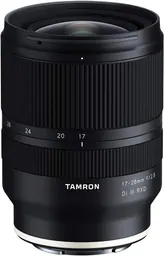
Predecessor: Tamron 17-28mm F2.8 Di III RXD
Overview
The Tamron 16-30mm F2.8 Di III VXD G2 (model A064) is a compact ultra wide zoom for full frame mirrorless cameras, available for Sony E and Nikon Z mounts. Tamron announced it in July 2025 as the third lens of its G2 trinity, following the 28-75mm F2.8 and 70-180mm F2.8, and as the successor to the 17-28mm F2.8. It suits landscape, architecture, interiors, astrophotography and travel.
Optical design
The lens has 16 elements in 12 groups. According to Tamron, it includes one XLD element, two LD elements and three GM (glass molded aspherical) elements to reduce chromatic aberration and distortion. BBAR-G2 coating limits ghosting and flare, and a circular diaphragm with 9 blades supports soft background blur. The aperture runs from F2.8 to F16. Close focus is 19 cm at 16 mm and 30 cm at 30 mm, with magnification of 1:5.4 to 1:7.
Autofocus and handling
Autofocus uses Tamron's VXD linear motor. Zooming is internal, so the lens does not change length, and it has a 67 mm filter thread. A Focus Set button can be assigned functions such as AF/MF switching, and the lens supports the Tamron Lens Utility app, an Astro Focus Lock and has a connector port. There is no built-in stabilizer.
Build and size
The Sony E version weighs 440 g and is 101.8 mm long, the Nikon Z version weighs 450 g and is 103.9 mm long, both with a maximum diameter of 74.8 mm. Tamron describes moisture resistant construction and a fluorine coating on the front element.
Where it fits
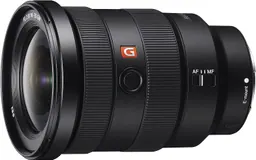
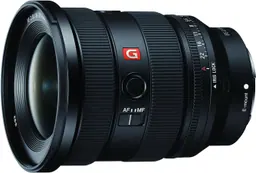
Within the range it succeeds the Tamron 17-28mm F2.8 Di III RXD. Alternatives for Sony E include the Sony FE 16-35mm F2.8 GM II, the Sony FE 12-24mm F4 G and the Sigma 14-24mm F2.8 DG DN Art. On Nikon Z, comparable lenses are the Nikon Nikkor Z 14-24mm F2.8 S and the Nikkor Z 17-28mm F2.8.
Pros and cons
Pros
- F2.8 constant aperture from 16 mm
- Around 440 to 450 g with internal zoom
- 67 mm filters, same as other G2 lenses
- 19 cm close focus
Cons
- No lens stabilization
- 30 mm long end is shorter than on 16-35 mm zooms
Verdict
The Tamron 16-30mm F2.8 G2 is a compact option for users who want a fast ultra wide zoom in a small and light body. Based on the data, its main strengths are size, close focus and the shared 67 mm filter size across the G2 series.
Technical Specifications
- min focal length
- 16 mm
- max focal length
- 30 mm
- max f (min zoom)
- f/2.8
- max f (max zoom)
- f/2.8
- min. aperture
- f/16
- Elements
- 16
- Groups
- 12
- Weight
- 440 g (0.97 lb)
- Filter diameter
- 67 mm
- min focus distance
- 19 cm (7.48 in)
- Length
- 101.8 mm (4.01 in)
- Diameter
- 74.8 mm (2.94 in)
Which cameras does the Tamron 16-30mm F2.8 Di III VXD G2 fit?
The Tamron 16-30mm F2.8 Di III VXD G2 is a full-frame lens for Sony E-Mount cameras. On full-frame bodies it uses the whole sensor; on APS-C Sony E-Mount cameras its field of view equals 24-45 mm in full-frame terms.
Sony E-Mount cameras
- Full frame:
- Sony A7R VI, Sony A7 V, Sony FX2, Sony A1 II, Sony A9 III, Sony A7C II, Sony A7CR, Sony ZV-E1, Sony A7R V, Sony A7 IV, Sony A1, Sony FX3, Sony A7S III, Sony A7C, Sony FX6, Sony A7R IV, Sony A9 II, Sony FX9, Sony A7 III, Sony A7R III, Sony A9, Sony A7R II, Sony A7S II, Sony A7 II, Sony A7S, Sony A7, Sony A7R
- APS-C:
- Sony ZV-E10 II, Sony A6700, Sony FX30, Sony ZV-E10, Sony A6600, Sony A6100, Sony A6400, Sony A6500, Sony A6300, Sony A6000, Sony A5100, Sony A5000, Sony A3000, Sony NEX-5T, Sony NEX-3N, Sony NEX-6, Sony NEX-5R, Sony NEX-F3
Tamron 16-30mm F2.8 Di III VXD G2 compared
Key specs side by side with the most similar Sony E-Mount lenses.
| Lens | Tamron 16-30mm F2.8 Di III VXD G2 | Tamron 17-28mm F2.8 Di III RXD | Sony FE 16-35mm F2.8 GM | Sony FE 16-35mm F2.8 GM II |
|---|---|---|---|---|
| Focal length | 16-30 mm | 17-28 mm | 16-35 mm | 16-35 mm |
| Max. aperture | f/2.8 | f/2.8 | f/2.8 | f/2.8 |
| Weight | 440 g | 420 g | 680 g | 547 g |
| Filter diameter | 67 mm | 67 mm | 82 mm | 82 mm |
| Min. focus distance | 19 cm | 19 cm | 28 cm | 22 cm |
| Length | 101.8 mm | 99 mm | 122 mm | 112 mm |
| Autofocus | yes | yes | yes | yes |
| Image stabilization | no | no | no | no |
This lens is also available for
Tamron 16-30mm F2.8 Di III VXD G2: FAQ
Does the Tamron 16-30mm F2.8 Di III VXD G2 have autofocus?
Yes, the Tamron 16-30mm F2.8 Di III VXD G2 has autofocus.
Does the Tamron 16-30mm F2.8 Di III VXD G2 have image stabilization?
No, the Tamron 16-30mm F2.8 Di III VXD G2 has no stabilization of its own. On cameras with in-body image stabilization (IBIS) the image is still stabilized.
How much does the Tamron 16-30mm F2.8 Di III VXD G2 weigh?
The Tamron 16-30mm F2.8 Di III VXD G2 weighs 440 g. It is 101.8 mm long with a diameter of 74.8 mm.
What filter size does the Tamron 16-30mm F2.8 Di III VXD G2 use?
The Tamron 16-30mm F2.8 Di III VXD G2 takes 67 mm screw-in filters.
How close can the Tamron 16-30mm F2.8 Di III VXD G2 focus?
The minimum focus distance of the Tamron 16-30mm F2.8 Di III VXD G2 is 19 cm, measured from the sensor plane.
Is the Tamron 16-30mm F2.8 Di III VXD G2 a full-frame lens?
Yes, the Tamron 16-30mm F2.8 Di III VXD G2 covers full frame. On APS-C cameras its field of view equals 24-45 mm in full-frame terms.
Similar lenses
Tamron 17-28mm F2.8 Di III RXD
17-28mm · f/2.8
Sony FE 16-35mm F2.8 GM
16-35mm · f/2.8
Sony FE 16-35mm F2.8 GM II
16-35mm · f/2.8
Sony FE 16-25mm F2.8 G
16-25mm · f/2.8
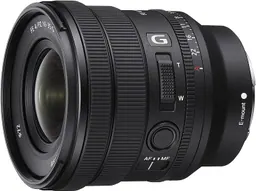
Sony FE PZ 16-35mm F4 G
16-35mm · f/4
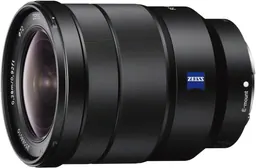
Sony Vario-Tessar T* FE 16-35mm F4 ZA OSS
16-35mm · f/4
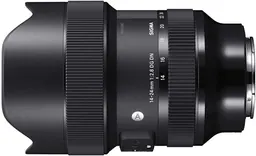
Sigma 14-24mm F2.8 DG DN Art
14-24mm · f/2.8

Samyang / Rokinon AF 14-24mm F2.8 FE
14-24mm · f/2.8
Related guides
What does the f mean in camera lenses?
When it comes to photography, understanding the basics of f-stop is essential. F-stop is a critical component of a camera lens that…
How to clean a camera lens
Keeping your camera lenses clean is essential for getting clear, sharp, and high-quality images. Even the smallest speck of dust, dirt, or…
All camera lens types explained: Uses and functions
In this article, we'll explore the various types of camera lenses, their defining features, and when to use them. We'll also cover the…