

Sony E Autofocus
Thypoch Voyager 24-50mm F2.8
- Focal length
- 24–50 mm
- Aperture
- f/2.8
- Weight
- 432 g
- Filter diameter
- 67 mm
- Min. focus distance
- 30 cm
- Length
- 92.8 mm
Overview
The Thypoch Voyager 24-50mm F2.8 is a full-frame autofocus zoom for Sony E mount. Thypoch announced it on 14 May 2026 as its first autofocus lens and calls it the first full-frame autofocus zoom developed by a Chinese optical brand. It covers 24mm, 35mm and 50mm field of view with a constant F2.8 aperture and targets documentary, street, event and video work.
Optical design
The optical design has 16 elements in 13 groups, including 2 aspherical, 3 ED and 3 high-refractive-index elements, according to Thypoch. The aperture has 10 rounded blades and closes down to F22 as listed by B&H. The zoom is internal, so the barrel length does not change between 24mm and 50mm. The minimum focusing distance is 0.3 m across the zoom range with a maximum magnification of 0.216x. The angle of view is 83 degrees diagonally at 24mm and 47 degrees at 50mm.
Autofocus and handling
The lens has native Sony E-mount autofocus with eye AF, AF-C tracking and in-camera and lens-side AF/MF switching, according to Thypoch. The company calls the autofocus fast and quiet and says it has been tested with bodies from the ZV-E1 to the A7V, A9III and FX3. Because the zoom is internal and the length is fixed, Thypoch says the center of gravity stays in place, which helps on a gimbal. Thypoch does not list an optical stabilizer. Firmware updates are supported, with a download page and a firmware guide published by Thypoch.
Build and size
The weight is 432 g, the length is 92.8 mm, the maximum diameter 73.6 mm, the front diameter 70 mm, and the filter thread is 67 mm. Thypoch says the lens is sealed at the mount, focus ring, zoom ring and front element and developed for dust and moisture resistance.
Where it fits
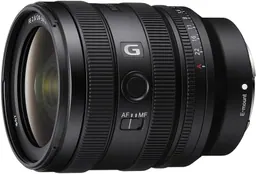
In the database, the Sony FE 24-50mm F2.8 G weighs 440 g and is the closest rival with the same range and aperture. The Tamron 28-75mm F/2.8 Di III VXD G2 at 540 g offers a longer range but starts at 28mm. Thypoch positions the Voyager as a replacement for a set of 24mm, 35mm and 50mm primes.
Pros and cons
Pros
- Constant F2.8 across 24mm to 50mm
- 432 g, lighter than the Sony FE 24-50mm F2.8 G (440 g)
- Internal zoom with fixed length
- Weather sealing at four points according to Thypoch
Cons
- Only for Sony E
- No optical stabilizer listed
- Shorter range than a 28-75mm zoom
- Newer lens with less long-term track record
Verdict
The Voyager 24-50mm F2.8 is a compact, light standard zoom for Sony E with constant F2.8 and an internal zoom. It is a direct alternative to the Sony FE 24-50mm F2.8 G.
Technical Specifications
- min focal length
- 24 mm
- max focal length
- 50 mm
- max f (min zoom)
- f/2.8
- max f (max zoom)
- f/2.8
- min. aperture
- f/22
- Elements
- 16
- Groups
- 13
- Weight
- 432 g (0.95 lb)
- Filter diameter
- 67 mm
- min focus distance
- 30 cm (11.81 in)
- Length
- 92.8 mm (3.65 in)
- Diameter
- 73.6 mm (2.9 in)
Which cameras does the Thypoch Voyager 24-50mm F2.8 fit?
The Thypoch Voyager 24-50mm F2.8 is a full-frame lens for Sony E-Mount cameras. On full-frame bodies it uses the whole sensor; on APS-C Sony E-Mount cameras its field of view equals 36-75 mm in full-frame terms.
Sony E-Mount cameras
- Full frame:
- Sony A7R VI, Sony A7 V, Sony FX2, Sony A1 II, Sony A9 III, Sony A7C II, Sony A7CR, Sony ZV-E1, Sony A7R V, Sony A7 IV, Sony A1, Sony FX3, Sony A7S III, Sony A7C, Sony FX6, Sony A7R IV, Sony A9 II, Sony FX9, Sony A7 III, Sony A7R III, Sony A9, Sony A7R II, Sony A7S II, Sony A7 II, Sony A7S, Sony A7, Sony A7R
- APS-C:
- Sony ZV-E10 II, Sony A6700, Sony FX30, Sony ZV-E10, Sony A6600, Sony A6100, Sony A6400, Sony A6500, Sony A6300, Sony A6000, Sony A5100, Sony A5000, Sony A3000, Sony NEX-5T, Sony NEX-3N, Sony NEX-6, Sony NEX-5R, Sony NEX-F3
Thypoch Voyager 24-50mm F2.8 compared
Key specs side by side with the most similar Sony E-Mount lenses.
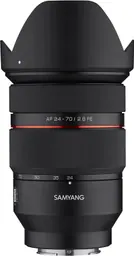
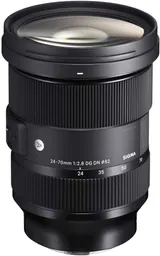
| Lens | Thypoch Voyager 24-50mm F2.8 | Sony FE 24-50mm F2.8 G | Samyang 24-70MM F2.8 AF | Sigma 24-70mm F2.8 DG DN Art |
|---|---|---|---|---|
| Focal length | 24-50 mm | 24-50 mm | 24-70 mm | 24-70 mm |
| Max. aperture | f/2.8 | f/2.8 | f/2.8 | f/2.8 |
| Weight | 432 g | 440 g | 1,027 g | 835 g |
| Filter diameter | 67 mm | 67 mm | 82 mm | 82 mm |
| Min. focus distance | 30 cm | 18 cm | 35 cm | 18 cm |
| Length | 92.8 mm | 92 mm | 129 mm | 123 mm |
| Autofocus | yes | yes | yes | yes |
| Image stabilization | no | no | no | no |
Thypoch Voyager 24-50mm F2.8: FAQ
Does the Thypoch Voyager 24-50mm F2.8 have autofocus?
Yes, the Thypoch Voyager 24-50mm F2.8 has autofocus.
Does the Thypoch Voyager 24-50mm F2.8 have image stabilization?
No, the Thypoch Voyager 24-50mm F2.8 has no stabilization of its own. On cameras with in-body image stabilization (IBIS) the image is still stabilized.
How much does the Thypoch Voyager 24-50mm F2.8 weigh?
The Thypoch Voyager 24-50mm F2.8 weighs 432 g. It is 92.8 mm long with a diameter of 73.6 mm.
What filter size does the Thypoch Voyager 24-50mm F2.8 use?
The Thypoch Voyager 24-50mm F2.8 takes 67 mm screw-in filters.
How close can the Thypoch Voyager 24-50mm F2.8 focus?
The minimum focus distance of the Thypoch Voyager 24-50mm F2.8 is 30 cm, measured from the sensor plane.
Is the Thypoch Voyager 24-50mm F2.8 a full-frame lens?
Yes, the Thypoch Voyager 24-50mm F2.8 covers full frame. On APS-C cameras its field of view equals 36-75 mm in full-frame terms.
Similar lenses
Sony FE 24-50mm F2.8 G
24-50mm · f/2.8
Samyang 24-70MM F2.8 AF
24-70mm · f/2.8
Sigma 24-70mm F2.8 DG DN Art
24-70mm · f/2.8
Sigma 24-70mm F2.8 DG DN II | Art
24-70mm · f/2.8

Sony FE 24-70mm F2.8 GM
24-70mm · f/2.8
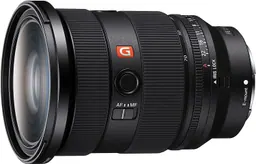
Sony FE 24-70mm F2.8 GM II
24-70mm · f/2.8
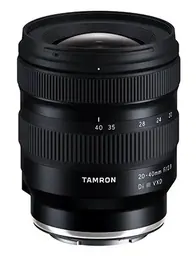
Tamron 20-40mm F/2.8 Di III VXD
20-40mm · f/2.8
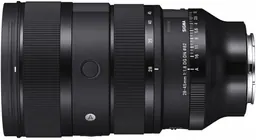
Sigma 28-45mm F1.8 DG DN Art
28-45mm · f/1.8
Related guides
What does the f mean in camera lenses?
When it comes to photography, understanding the basics of f-stop is essential. F-stop is a critical component of a camera lens that…
How to clean a camera lens
Keeping your camera lenses clean is essential for getting clear, sharp, and high-quality images. Even the smallest speck of dust, dirt, or…
All camera lens types explained: Uses and functions
In this article, we'll explore the various types of camera lenses, their defining features, and when to use them. We'll also cover the…