
Example comparisons
- 70-200 mm f/2.8: Sony, Canon, Nikon
- 24-70 mm f/2.8: Sony, Canon, Nikon
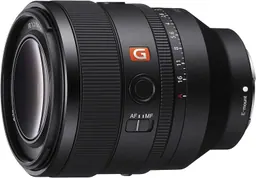
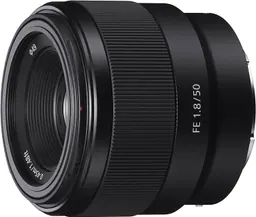
- 50 mm f/1.8: Sony, Canon, Nikon
- 50 mm f/1.2: Sony, Canon, Nikon
- Compact and fast 50 mm: Canon RF 50 f/1.8 and Nikon Z 50 f/1.2
- 600 mm telephotos: f/4, f/6.3 and f/11
- Bodies with a 24-70 mm f/2.8: Sony A7 IV, Canon EOS R6 Mark II and Nikon Z6III
- APS-C with a travel zoom: Sony A6700 and Canon EOS R7
- Full-frame bodies: Sony A7 IV and A7C II, Canon EOS R6 Mark II, Nikon Z6III
What the comparison shows
Every lens is drawn with the length and diameter given by its manufacturer, every body with its width, height and depth, all at the same scale and standing on a common baseline. The front view shows a body as a rectangle of its width and height and a lens as a circle of its diameter, with the filter thread as a dashed circle. The top view shows a body with its width and depth; a lens on the body points forward. Single lenses appear there from the side with their length and outer diameter. The silhouettes are schematic, only the outer dimensions are to scale. Where the lens sits on the body is not known, so its position is schematic. Only what the manufacturer states is drawn; nothing is estimated. No total length of body depth plus lens length is shown, because the depth usually includes the grip.
Where the figures come from
Length, diameter, width, height, depth and weight are manufacturer specifications. As a rule, the lens length is measured from the lens mount flange to the front of the lens, for zoom lenses in the shortest state and without caps and lens hood; the diameter is the largest outer diameter. For bodies these are the outer dimensions; the depth often includes the grip and, depending on the manufacturer, is measured with or without protrusions. The body weight usually follows the CIPA standard, with battery and memory card; if a manufacturer states only the weight of the body alone, it is shown as "body only". Not every manufacturer states how it measures, so small differences between brands are possible.
Frequently asked questions
Does LensFinder measure lenses and cameras itself?
No. Length, diameter, width, height, depth and weight are manufacturer specifications as stored in the database. Where a manufacturer states no value, it stays empty and nothing is estimated.
Why can a zoom lens be longer than shown?
Many zoom lenses extend when zooming or focusing, while lenses with an internal zoom keep their length. The drawing uses the manufacturer figure, which as a rule applies to the shortest state.
Do a larger size and a higher weight go together?
Not necessarily. Length and diameter only describe the outer dimensions, while the weight also depends on the materials and the glass used. Two lenses of similar size can differ clearly in weight, as the table shows.
Why is an entry in the table but not in the drawing?
A lens is drawn only if the manufacturer states both length and diameter, a body with width and height (front view) or width and depth (top view). If values are missing, the entry still appears in the table with the figures that exist.
Why is there no total length of body and lens?
For most manufacturers the body depth includes the grip, which projects forward beyond the lens mount flange. The sum of depth and lens length would therefore be too large, and by how much is not in the manufacturer figures. The top view shows the individual dimensions only.
Which weight is given for camera bodies?
As a rule the weight according to the CIPA standard, that is with battery and memory card. If a manufacturer states only the body alone, the weight appears as "body only" in the table. The combined weight of body and lens is shown only when both values are available.
Which lenses can be put on a body?
The choice covers lenses with the mount of the body, without adapters. APS-C lenses are not offered for full-frame bodies, because the body would then use only a crop of the sensor.