

Brightin Star MF 12mm F2.0 III APS-C
- Focal length
- 12 mm
- Aperture
- f/2
- Weight
- 268 g
- Filter diameter
- 62 mm
- Min. focus distance
- 18 cm
- Length
- –
Overview
The Brightin Star MF 12mm F2.0 III is a manual focus ultra wide prime for APS-C and Micro Four Thirds cameras. It is offered for Sony E, Fujifilm X, Nikon Z, Canon RF, Canon EF-M and Micro Four Thirds. On an APS-C body the field of view matches roughly an 18mm lens, on Micro Four Thirds it is closer to 24mm. The brand positions it for landscape, architecture and interiors, and the F2.0 aperture also makes it a candidate for night skies and city scenes.
Optical design
The manufacturer manual lists 12 elements in 9 groups and an angle of view of 97 degrees. The design includes two aspherical and two ED elements. The aperture has 10 blades and stops down from f/2 to f/22; according to Brightin Star the 10 blades produce 10-point starbursts on point light sources. The closest focusing distance is 0.18 m.
Focusing and handling
Focusing is manual only. It has a clicked aperture ring and a removable hood, which can be taken off to fit filters. The lens has no electronic contacts, so the camera cannot record aperture data and will usually show a placeholder instead of an f-number. With focus peaking or magnification on the camera, the 0.18 m minimum distance allows close wide angle shots.
Build and size
The manual gives a weight of 268.4 g, and the filter thread is 62 mm. The diameter is 69.5 mm. At this weight the lens is light for a 12mm F2 design and is easy to carry on a compact mirrorless body.
Where it fits
Alternatives in the database include the Samyang / Rokinon 12mm F2.0 NCS CS (E, X, EF-M and MFT, manual focus) and the Sigma 12mm F1.4 DC Contemporary for E, X and RF with autofocus. For Micro Four Thirds there is also the Olympus M.Zuiko Digital ED 12mm 1:2. The Brightin Star offers the same focal length and aperture as the Samyang with a full set of mount options.
Pros and cons
Pros
- F2.0 aperture at 12mm
- 268.4 g, light for its class
- Wide choice of mounts including EF-M and Micro Four Thirds
- 62 mm filter thread and removable hood
- 0.18 m minimum focusing distance
Cons
- Manual focus only, no electronic aperture or focus data
- No image stabilization
- Not a full frame lens, intended for APS-C and smaller sensors
Verdict
The MF 12mm F2.0 III is a simple, fast ultra wide for APS-C and Micro Four Thirds users who are fine with manual focus. It suits landscape, interiors and astrophotography where the lens is set once and shot at distance. Anyone who needs autofocus will look at the Sigma 12mm F1.4 or comparable native lenses instead.
Technical Specifications
- min focal length
- 12 mm
- max focal length
- 12 mm
- max f (min zoom)
- f/2
- max f (max zoom)
- f/2
- min. aperture
- f/22
- Elements
- 12
- Groups
- 9
- Weight
- 268 g (0.59 lb)
- Filter diameter
- 62 mm
- min focus distance
- 18 cm (7.09 in)
- Length
- –
- Diameter
- 69.5 mm (2.74 in)
Which cameras does the Brightin Star MF 12mm F2.0 III APS-C fit?
The Brightin Star MF 12mm F2.0 III APS-C is designed for APS-C sensors. On APS-C Canon RF cameras its field of view equals 19 mm in full-frame terms. Full-frame bodies use it in APS-C (crop) mode, recording only part of the sensor and fewer megapixels.
Canon RF cameras
- Full frame (in APS-C mode):
- Canon EOS R6 V, Canon EOS R6 Mark III, Canon EOS C50, Canon EOS R1, Canon EOS R5 Mark II, Canon EOS C400, Canon EOS C80, Canon EOS R8, Canon EOS R6 Mark II, Canon EOS R5 C, Canon EOS R3, Canon EOS R5, Canon EOS R6, Canon EOS Ra, Canon EOS RP, Canon EOS R
- APS-C:
- Canon EOS R50 V, Canon EOS R100, Canon EOS R50, Canon EOS R7, Canon EOS R10, Canon EOS C70
Brightin Star MF 12mm F2.0 III APS-C compared
Key specs side by side with the most similar Canon RF lenses.
| Lens | Brightin Star MF 12mm F2.0 III APS-C | Pergear 12mm F2 II | Samyang / Rokinon AF 12mm F2.0 RF-S | Sigma 12mm F1.4 DC Contemporary |
|---|---|---|---|---|
| Focal length | 12 mm | 12 mm | 12 mm | 12 mm |
| Max. aperture | f/2 | f/2 | f/2 | f/1.4 |
| Weight | 268 g | 230 g | 213 g | 250 g |
| Filter diameter | 62 mm | – | 62 mm | 62 mm |
| Min. focus distance | 18 cm | 20 cm | 20 cm | 17.2 cm |
| Length | – | 59.5 mm | 57.2 mm | 67.4 mm |
| Autofocus | no | no | yes | yes |
| Image stabilization | no | no | no | no |
This lens is also available for
Brightin Star MF 12mm F2.0 III APS-C: FAQ
Does the Brightin Star MF 12mm F2.0 III APS-C have autofocus?
No, the Brightin Star MF 12mm F2.0 III APS-C has no autofocus; you focus it manually.
Does the Brightin Star MF 12mm F2.0 III APS-C have image stabilization?
No, the Brightin Star MF 12mm F2.0 III APS-C has no stabilization of its own. On cameras with in-body image stabilization (IBIS) the image is still stabilized.
How much does the Brightin Star MF 12mm F2.0 III APS-C weigh?
The Brightin Star MF 12mm F2.0 III APS-C weighs 268 g.
What filter size does the Brightin Star MF 12mm F2.0 III APS-C use?
The Brightin Star MF 12mm F2.0 III APS-C takes 62 mm screw-in filters.
How close can the Brightin Star MF 12mm F2.0 III APS-C focus?
The minimum focus distance of the Brightin Star MF 12mm F2.0 III APS-C is 18 cm, measured from the sensor plane.
Is the Brightin Star MF 12mm F2.0 III APS-C a full-frame lens?
No, the Brightin Star MF 12mm F2.0 III APS-C is an APS-C lens. On APS-C cameras its field of view equals 19 mm in full-frame terms.
Similar lenses
-
Pergear 12mm F2 II
12mm · f/2

Samyang / Rokinon AF 12mm F2.0 RF-S
12mm · f/2

Sigma 12mm F1.4 DC Contemporary
12mm · f/1.4
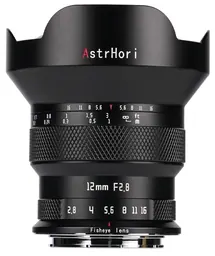
AstrHori 12mm f/2.8 Fisheye
12mm · f/2.8
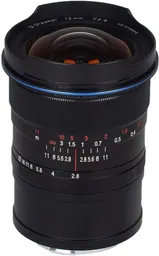
Venus Laowa 12mm F2.8 Zero-D
12mm · f/2.8
-
Brightin Star MF 12mm F2.8
12mm · f/2.8

Venus Laowa 12mm F2.8 Lite Zero-D FF
12mm · f/2.8
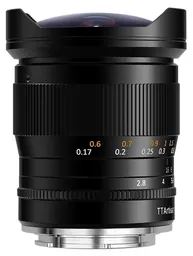
TTArtisan 11mm f/2.8
11mm · f/2.8
Related guides
What does the f mean in camera lenses?
When it comes to photography, understanding the basics of f-stop is essential. F-stop is a critical component of a camera lens that…
How to clean a camera lens
Keeping your camera lenses clean is essential for getting clear, sharp, and high-quality images. Even the smallest speck of dust, dirt, or…
All camera lens types explained: Uses and functions
In this article, we'll explore the various types of camera lenses, their defining features, and when to use them. We'll also cover the…