

Canon RF Autofocus OIS
Canon RF-S 14-30mm F4-6.3 IS STM PZ
- Focal length
- 14–30 mm
- Aperture
- f/4–6.3
- Weight
- 181 g
- Filter diameter
- 58 mm
- Min. focus distance
- 15 cm
- Length
- 62 mm
Overview
The Canon RF-S 14-30mm F4-6.3 IS STM PZ is a compact power zoom for APS-C cameras with RF mount. Canon announced it in March 2025 together with the EOS R50 V and calls it its first RF lens with power zoom optimized for cinematic video. On an APS-C body the range corresponds to roughly 22 to 48 mm in full frame terms, a wide to standard zoom aimed at vloggers, travel shooters and anyone who films handheld.
Optical design
The lens has 10 elements in 9 groups, including one UD element and two aspherical elements, with Super Spectra Coating. The aperture runs from F4 to F6.3 at the maximum and closes to F22 at 14 mm and F36 at 30 mm, using 7 blades. Minimum focus distance is 15 cm, giving a maximum magnification of 0.38x at 30 mm. The filter thread is 58 mm.
Autofocus and handling
The lens uses a leadscrew STM focus drive. Zooming is electronic: Canon replaced the usual lever or button with a ring, so the zoom can be operated from any direction, for example when holding the camera in front of you for selfies. A separate customizable control ring with click stops and an AF/MF switch are included. Optical image stabilization is built in; according to Canon it gives up to 5.5 stops on its own and up to 7.5 stops together with in-body stabilization. The lens does not extend while zooming, which suits tripods and gimbals. The RF extenders are not compatible, but the 250D and 500D close-up lenses are.
Build and size
At 181 g, 69.6 mm in diameter and 62 mm in length, it is small and light. Canon lists no dust or weather resistant construction. A lens cap and dust cap are supplied, the EW-63C hood is sold separately.
Where it fits
Within the RF-S range in the database, the RF-S 18-45mm F4.5-6.3 IS STM is the cheaper everyday kit zoom and the RF-S 18-150mm F3.5-6.3 IS STM covers a much longer range. The RF-S 10-18mm F4.5-6.3 IS STM goes wider but stops at 18 mm. The 14-30 sits between them with a wide start and power zoom as its main argument.
Pros and cons
Pros
- Wide start at 14 mm on APS-C
- Power zoom ring with fixed lens length
- Optical stabilization with up to 7.5 stops combined with IBIS (Canon figure)
- 181 g and a 15 cm close focus distance
Cons
- Variable aperture, F6.3 at 30 mm
- No dust or weather sealing
- Zoom range ends at 30 mm
- Plastic mount and leadscrew STM, a basic build
Verdict
The RF-S 14-30mm F4-6.3 IS STM PZ is a video and vlogging lens in a small package. It makes most sense on bodies like the EOS R50 V where the power zoom and the light weight matter, less so for photographers who want a bright aperture or sealing.
Technical Specifications
- min focal length
- 14 mm
- max focal length
- 30 mm
- max f (min zoom)
- f/4
- max f (max zoom)
- f/6.3
- min. aperture
- f/22
- Elements
- 10
- Groups
- 9
- Weight
- 181 g (0.4 lb)
- Filter diameter
- 58 mm
- min focus distance
- 15 cm (5.91 in)
- Length
- 62 mm (2.44 in)
- Diameter
- 69.6 mm (2.74 in)
Which cameras does the Canon RF-S 14-30mm F4-6.3 IS STM PZ fit?
The Canon RF-S 14-30mm F4-6.3 IS STM PZ is designed for APS-C sensors. On APS-C Canon RF cameras its field of view equals 22-48 mm in full-frame terms. Full-frame bodies use it in APS-C (crop) mode, recording only part of the sensor and fewer megapixels.
Canon RF cameras
- Full frame (in APS-C mode):
- Canon EOS R6 V, Canon EOS R6 Mark III, Canon EOS C50, Canon EOS R1, Canon EOS R5 Mark II, Canon EOS C400, Canon EOS C80, Canon EOS R8, Canon EOS R6 Mark II, Canon EOS R5 C, Canon EOS R3, Canon EOS R5, Canon EOS R6, Canon EOS Ra, Canon EOS RP, Canon EOS R
- APS-C:
- Canon EOS R50 V, Canon EOS R100, Canon EOS R50, Canon EOS R7, Canon EOS R10, Canon EOS C70
Canon RF-S 14-30mm F4-6.3 IS STM PZ compared
Key specs side by side with the most similar Canon RF lenses.
| Lens | Canon RF-S 14-30mm F4-6.3 IS STM PZ | Canon RF 15-30mm F4.5-6.3 IS STM | Canon RF 14-35mm F4L IS USM | Canon RF 16-28mm F2.8 IS STM |
|---|---|---|---|---|
| Focal length | 14-30 mm | 15-30 mm | 14-35 mm | 16-28 mm |
| Max. aperture | f/4-6.3 | f/4.5-6.3 | f/4 | f/2.8 |
| Weight | 181 g | 390 g | 540 g | 445 g |
| Filter diameter | 58 mm | 67 mm | 77 mm | 67 mm |
| Min. focus distance | 15 cm | 13 cm | 20 cm | 20 cm |
| Length | 62 mm | 88 mm | 99.8 mm | 91 mm |
| Autofocus | yes | yes | yes | yes |
| Image stabilization | yes | yes | yes | yes |
Canon RF-S 14-30mm F4-6.3 IS STM PZ: FAQ
Does the Canon RF-S 14-30mm F4-6.3 IS STM PZ have autofocus?
Yes, the Canon RF-S 14-30mm F4-6.3 IS STM PZ has autofocus.
Does the Canon RF-S 14-30mm F4-6.3 IS STM PZ have image stabilization?
Yes, the Canon RF-S 14-30mm F4-6.3 IS STM PZ has optical image stabilization.
How much does the Canon RF-S 14-30mm F4-6.3 IS STM PZ weigh?
The Canon RF-S 14-30mm F4-6.3 IS STM PZ weighs 181 g. It is 62 mm long with a diameter of 69.6 mm.
What filter size does the Canon RF-S 14-30mm F4-6.3 IS STM PZ use?
The Canon RF-S 14-30mm F4-6.3 IS STM PZ takes 58 mm screw-in filters.
How close can the Canon RF-S 14-30mm F4-6.3 IS STM PZ focus?
The minimum focus distance of the Canon RF-S 14-30mm F4-6.3 IS STM PZ is 15 cm, measured from the sensor plane.
Is the Canon RF-S 14-30mm F4-6.3 IS STM PZ a full-frame lens?
No, the Canon RF-S 14-30mm F4-6.3 IS STM PZ is an APS-C lens. On APS-C cameras its field of view equals 22-48 mm in full-frame terms.
Similar lenses
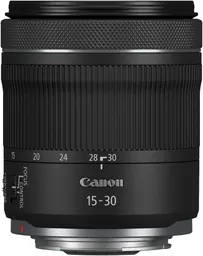
Canon RF 15-30mm F4.5-6.3 IS STM
15-30mm · f/4.5-6.3
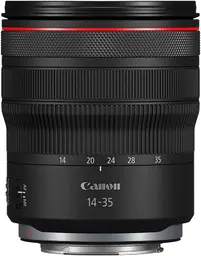
Canon RF 14-35mm F4L IS USM
14-35mm · f/4

Canon RF 16-28mm F2.8 IS STM
16-28mm · f/2.8
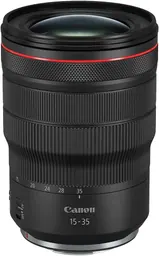
Canon RF 15-35mm F2.8L IS USM
15-35mm · f/2.8
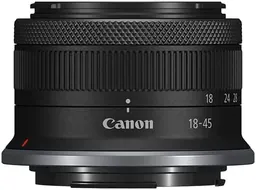
Canon RF-S 18-45mm F4.5-6.3 IS STM
18-45mm · f/4.5-6.3

Venus Laowa 12-24mm f/5.6 Zoom Shift CF
12-24mm · f/5.6
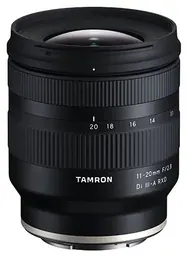
Tamron 11-20mm F/2.8 Di III-A RXD
11-20mm · f/2.8

Sigma 17-40mm F1.8 DC Art
17-40mm · f/1.8
Related guides
What does the f mean in camera lenses?
When it comes to photography, understanding the basics of f-stop is essential. F-stop is a critical component of a camera lens that…
How to clean a camera lens
Keeping your camera lenses clean is essential for getting clear, sharp, and high-quality images. Even the smallest speck of dust, dirt, or…
All camera lens types explained: Uses and functions
In this article, we'll explore the various types of camera lenses, their defining features, and when to use them. We'll also cover the…