

Canon RF Autofocus
Yongnuo YN 50mm F1.8 DF DSM II
- Focal length
- 50 mm
- Aperture
- f/1.8
- Weight
- 276 g
- Filter diameter
- 58 mm
- Min. focus distance
- 45 cm
- Length
- 77 mm
Overview
The Yongnuo YN 50mm F1.8 DF DSM II is a compact full-frame 50 mm prime that Yongnuo sells for Sony E, Nikon Z and, as a "Multi-mount" lens, for Canon RF bodies. The shop calls the E and Z versions the "Lite Version" and the "II" successor to its earlier heavier 50 mm F1.8 DF lenses. The Canon version (model 50F1.8R DF) has the same optical specification.
Optical design
Yongnuo specifies 10 elements in 6 groups, an aperture range of f/1.8 to f/16 and nine circular aperture blades, which give 18-point star effects when stopped down. The glass includes one extra-low-dispersion and one low-dispersion element, with a nano-multilayer coating against ghosting and flare and a fluorine coating on the front element. The angle of view is 47.4 degrees diagonal, 39.5 degrees horizontal and 26.5 degrees vertical.
Autofocus and handling
A digital stepping motor (DSM) drives the focus, which Yongnuo describes as fast, quiet and suitable for video. The minimum focus distance is 45 cm at 0.13x magnification. The shop lists customizable Fn buttons and a control ring for the E and Z versions, and an AF/MF switch. For removing the Canon RF version, Yongnuo notes that the unlock button on the lens must be pressed and held. A USB-C port allows firmware updates.
Build and size
The lens has a metal bayonet with gold-plated contacts, a rubber gasket at the mount and an anodized aluminium focus ring. The filter thread is 58 mm. The maximum dimensions are about 68 x 79 mm for Sony E, 68 x 80 mm for Nikon Z and 68 x 77 mm for Canon RF. The weights are about 273 g (E), 282 g (Z) and 276 g (RF) without caps. White versions are available for E and Z.
Where it fits
The database lists many 50 mm options: the Sony FE 50mm F1.8, the Canon RF 50mm F1.8 STM, the Nikon Nikkor Z 50mm F1.8 S and the 7Artisans AF 50mm F1.8 for E and Z. Yongnuo's version sits in the budget corner, with a nine-blade aperture and a 273 to 282 g weight.
Pros and cons
Pros
- Full-frame coverage and f/1.8 in a lens under 300 g
- Nine aperture blades
- Same 58 mm filter size on all versions
- USB-C firmware updates
Cons
- 45 cm minimum focus distance
- No optical stabilization
- No Fn button or control ring is listed for the RF version
- The Canon version is not marketed as a Canon RF lens
Verdict
The YN 50mm F1.8 DF DSM II is a light, simple full-frame standard lens for three mirrorless systems. It fits users who want a basic bright 50 mm with autofocus and a small footprint and who do not need weather sealing or stabilization.
Technical Specifications
- min focal length
- 50 mm
- max focal length
- 50 mm
- max f (min zoom)
- f/1.8
- max f (max zoom)
- f/1.8
- min. aperture
- f/16
- Elements
- 10
- Groups
- 6
- Weight
- 276 g (0.61 lb)
- Filter diameter
- 58 mm
- min focus distance
- 45 cm (17.72 in)
- Length
- 77 mm (3.03 in)
- Diameter
- 68 mm (2.68 in)
Which cameras does the Yongnuo YN 50mm F1.8 DF DSM II fit?
The Yongnuo YN 50mm F1.8 DF DSM II is a full-frame lens for Canon RF cameras. On full-frame bodies it uses the whole sensor; on APS-C Canon RF cameras its field of view equals 80 mm in full-frame terms.
Canon RF cameras
- Full frame:
- Canon EOS R6 V, Canon EOS R6 Mark III, Canon EOS C50, Canon EOS R1, Canon EOS R5 Mark II, Canon EOS C400, Canon EOS C80, Canon EOS R8, Canon EOS R6 Mark II, Canon EOS R5 C, Canon EOS R3, Canon EOS R5, Canon EOS R6, Canon EOS Ra, Canon EOS RP, Canon EOS R
- APS-C:
- Canon EOS R50 V, Canon EOS R100, Canon EOS R50, Canon EOS R7, Canon EOS R10, Canon EOS C70
Yongnuo YN 50mm F1.8 DF DSM II compared
Key specs side by side with the most similar Canon RF lenses.
| Lens | Yongnuo YN 50mm F1.8 DF DSM II | Canon RF 50mm F1.8 STM | Canon RF 50mm F1.4 L VCM | Vistilen AF 55mm F1.8 Pro |
|---|---|---|---|---|
| Focal length | 50 mm | 50 mm | 50 mm | 55 mm |
| Max. aperture | f/1.8 | f/1.8 | f/1.4 | f/1.8 |
| Weight | 276 g | 160 g | 580 g | 370 g |
| Filter diameter | 58 mm | 43 mm | 67 mm | 58 mm |
| Min. focus distance | 45 cm | 30 cm | 40 cm | 55 cm |
| Length | 77 mm | 40.5 mm | 99 mm | 88 mm |
| Autofocus | yes | yes | yes | yes |
| Image stabilization | no | no | no | no |
This lens is also available for
Yongnuo YN 50mm F1.8 DF DSM II: FAQ
Does the Yongnuo YN 50mm F1.8 DF DSM II have autofocus?
Yes, the Yongnuo YN 50mm F1.8 DF DSM II has autofocus.
Does the Yongnuo YN 50mm F1.8 DF DSM II have image stabilization?
No, the Yongnuo YN 50mm F1.8 DF DSM II has no stabilization of its own. On cameras with in-body image stabilization (IBIS) the image is still stabilized.
How much does the Yongnuo YN 50mm F1.8 DF DSM II weigh?
The Yongnuo YN 50mm F1.8 DF DSM II weighs 276 g. It is 77 mm long with a diameter of 68 mm.
What filter size does the Yongnuo YN 50mm F1.8 DF DSM II use?
The Yongnuo YN 50mm F1.8 DF DSM II takes 58 mm screw-in filters.
How close can the Yongnuo YN 50mm F1.8 DF DSM II focus?
The minimum focus distance of the Yongnuo YN 50mm F1.8 DF DSM II is 45 cm, measured from the sensor plane.
Is the Yongnuo YN 50mm F1.8 DF DSM II a full-frame lens?
Yes, the Yongnuo YN 50mm F1.8 DF DSM II covers full frame. On APS-C cameras its field of view equals 80 mm in full-frame terms.
Similar lenses
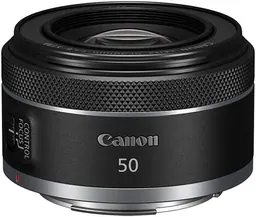
Canon RF 50mm F1.8 STM
50mm · f/1.8
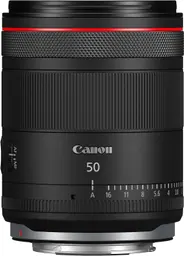
Canon RF 50mm F1.4 L VCM
50mm · f/1.4

Vistilen AF 55mm F1.8 Pro
55mm · f/1.8
-
SG-image MF 50mm F1.8 Shaped Aperture
50mm · f/1.8
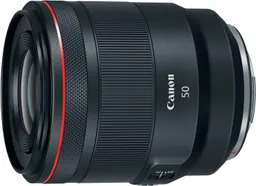
Canon RF 50mm F1.2L USM
50mm · f/1.2
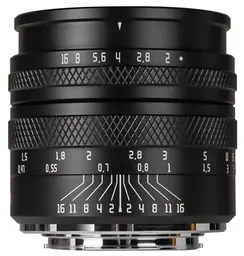
AstrHori 50mm f/2
50mm · f/2
-
Brightin Star MF 50mm F2 Tri-Sight
50mm · f/2
AstrHori 50mm f/1.4 Tilt
50mm · f/1.4
Related guides
What does the f mean in camera lenses?
When it comes to photography, understanding the basics of f-stop is essential. F-stop is a critical component of a camera lens that…
How to clean a camera lens
Keeping your camera lenses clean is essential for getting clear, sharp, and high-quality images. Even the smallest speck of dust, dirt, or…
All camera lens types explained: Uses and functions
In this article, we'll explore the various types of camera lenses, their defining features, and when to use them. We'll also cover the…