

Leica L-Mount Autofocus
Sigma 20-60mm F2.8-4 DG Contemporary
- Focal length
- 20–60 mm
- Aperture
- f/2.8–4
- Weight
- 385 g
- Filter diameter
- 67 mm
- Min. focus distance
- 15.8 cm
- Length
- 86 mm
Overview
The Sigma 20-60mm F2.8-4 DG Contemporary is a compact standard zoom for full-frame mirrorless cameras, available for Sony E and L-Mount. It starts at an ultra-wide 20mm with F2.8 and reaches 60mm at F4. Sigma positions it as a travel and everyday lens that keeps full-frame mobility high, with close-up capability close to half macro.
Optical design
Sigma specifies 15 elements in 13 groups, including three aspherical and three SLD elements. According to Sigma, this gives consistent sharpness across the zoom range. The 9-blade rounded diaphragm closes to F22-32 depending on focal length. The angle of view runs from 94.5 to 39.6 degrees. Minimum focusing distance is 15.8 cm at 28mm, with 20 cm at the wide end and 25 cm at the long end. Maximum magnification is 1:2.3 at 35mm and 1:2.9 at 60mm. The filter thread measures 67mm.
Autofocus and handling
A linear HLA motor (High-response Linear Actuator) drives the autofocus, which Sigma describes as fast and precise with good tracking for fast subjects. The design is meant to minimize focus breathing for smooth focus pulls in video. On L-Mount the focus ring can be switched between linear and non-linear response. No optical stabilizer is listed, so the camera body has to handle shake reduction. Hood, caps and a pouch are included.
Build and size
The Sony E version weighs 375 g and is 72.2mm in diameter and 88.0mm long. The L-Mount version weighs 385 g at 86.0mm length. Sigma calls this remarkable for a zoom starting at 20mm F2.8. The structure is dust and splash resistant, the front element has a water and oil repellent coating, and Sigma notes the lens is not waterproof.
Where it fits
Compared with other standard zooms, the range of 20-60mm sits between the Sony FE 20-70mm F4 G and the Tamron 20-40mm F2.8. On L-Mount, the Panasonic Lumix S 20-60mm F3.5-5.6 covers the same focal range with a slower aperture. Faster standard zooms such as the Sigma 24-70mm F2.8 DG DN II Art or the Sigma 28-70mm F2.8 DG DN Contemporary offer constant F2.8 but start at 24mm or 28mm.
Pros and cons
Pros
- 20mm wide end with F2.8
- Compact for the range: 375 g on Sony E
- Close focusing, 1:2.3 at 35mm
- Dust and splash resistant structure
Cons
- Aperture drops to F4 at 60mm
- No built-in stabilization
- Focal range ends at 60mm
- Quality claims come from Sigma, independent measurements are still needed
Verdict
A light full-frame standard zoom with an unusually wide starting point and good close-up ability. It fits travel and video shooters who value size over a constant F2.8, as long as independent tests confirm Sigma's sharpness claims.
Technical Specifications
- min focal length
- 20 mm
- max focal length
- 60 mm
- max f (min zoom)
- f/2.8
- max f (max zoom)
- f/4
- min. aperture
- f/22
- Elements
- 15
- Groups
- 13
- Weight
- 385 g (0.85 lb)
- Filter diameter
- 67 mm
- min focus distance
- 15.8 cm (6.22 in)
- Length
- 86 mm (3.39 in)
- Diameter
- 72.2 mm (2.84 in)
Which cameras does the Sigma 20-60mm F2.8-4 DG Contemporary fit?
The Sigma 20-60mm F2.8-4 DG Contemporary is a full-frame lens for L-Mount cameras. On full-frame bodies it uses the whole sensor; on APS-C L-Mount cameras its field of view equals 30-90 mm in full-frame terms.
L-Mount cameras
- Full frame:
- Leica SL3-P, Leica SL3-S, Sigma BF, Panasonic Lumix S1II, Panasonic Lumix S1IIE, Panasonic Lumix S1RII, Leica SL3, Panasonic Lumix S9, Blackmagic PYXIS 6K, Panasonic Lumix S5II, Panasonic Lumix S5IIX, Blackmagic Cinema Camera 6K, Panasonic Lumix BS1H, Leica SL2-S, Panasonic Lumix S5, Sigma fp L, Leica SL2, Panasonic Lumix S1, Panasonic Lumix S1R, Panasonic Lumix S1H, Sigma fp, Leica SL (Typ 601)
- APS-C:
- Leica CL, Leica TL2, Leica TL, Leica T (Typ 701)
Sigma 20-60mm F2.8-4 DG Contemporary compared
Key specs side by side with the most similar L-Mount lenses.
| Lens | Sigma 20-60mm F2.8-4 DG Contemporary | Panasonic Lumix S 20-60mm F3.5-5.6 | Panasonic Lumix S 24-60mm F2.8 | Leica Vario-Elmarit-SL 24-70mm F2.8 ASPH |
|---|---|---|---|---|
| Focal length | 20-60 mm | 20-60 mm | 24-60 mm | 24-70 mm |
| Max. aperture | f/2.8-4 | f/3.5-5.6 | f/2.8 | f/2.8 |
| Weight | 385 g | 350 g | 544 g | 856 g |
| Filter diameter | 67 mm | 67 mm | 77 mm | 82 mm |
| Min. focus distance | 15.8 cm | 15 cm | 19 cm | 18 cm |
| Length | 86 mm | 87 mm | 99.9 mm | 123 mm |
| Autofocus | yes | yes | yes | yes |
| Image stabilization | no | no | no | no |
This lens is also available for
Sigma 20-60mm F2.8-4 DG Contemporary: FAQ
Does the Sigma 20-60mm F2.8-4 DG Contemporary have autofocus?
Yes, the Sigma 20-60mm F2.8-4 DG Contemporary has autofocus.
Does the Sigma 20-60mm F2.8-4 DG Contemporary have image stabilization?
No, the Sigma 20-60mm F2.8-4 DG Contemporary has no stabilization of its own. On cameras with in-body image stabilization (IBIS) the image is still stabilized.
How much does the Sigma 20-60mm F2.8-4 DG Contemporary weigh?
The Sigma 20-60mm F2.8-4 DG Contemporary weighs 385 g. It is 86 mm long with a diameter of 72.2 mm.
What filter size does the Sigma 20-60mm F2.8-4 DG Contemporary use?
The Sigma 20-60mm F2.8-4 DG Contemporary takes 67 mm screw-in filters.
How close can the Sigma 20-60mm F2.8-4 DG Contemporary focus?
The minimum focus distance of the Sigma 20-60mm F2.8-4 DG Contemporary is 15.8 cm, measured from the sensor plane.
Is the Sigma 20-60mm F2.8-4 DG Contemporary a full-frame lens?
Yes, the Sigma 20-60mm F2.8-4 DG Contemporary covers full frame. On APS-C cameras its field of view equals 30-90 mm in full-frame terms.
Similar lenses
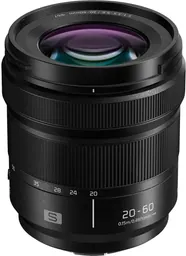
Panasonic Lumix S 20-60mm F3.5-5.6
20-60mm · f/3.5-5.6

Panasonic Lumix S 24-60mm F2.8
24-60mm · f/2.8
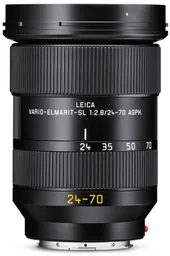
Leica Vario-Elmarit-SL 24-70mm F2.8 ASPH
24-70mm · f/2.8
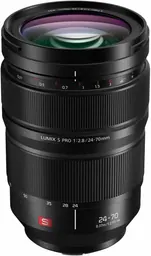
Panasonic Lumix S Pro 24-70mm F2.8
24-70mm · f/2.8
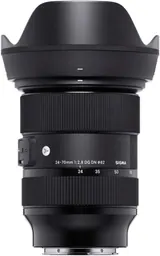
Sigma 24-70mm F2.8 DG DN Art
24-70mm · f/2.8
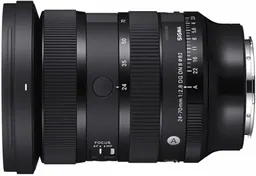
Sigma 24-70mm F2.8 DG DN II | Art
24-70mm · f/2.8
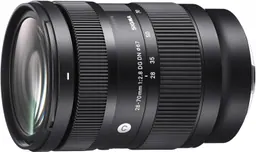
Sigma 28-70mm F2.8 DG DN | C
28-70mm · f/2.8
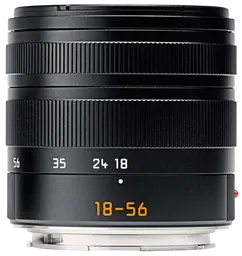
Leica Vario-Elmar-T 18-56mm f/3.5-5.6
18-56mm · f/3.5-5.6
Related guides
What does the f mean in camera lenses?
When it comes to photography, understanding the basics of f-stop is essential. F-stop is a critical component of a camera lens that…
How to clean a camera lens
Keeping your camera lenses clean is essential for getting clear, sharp, and high-quality images. Even the smallest speck of dust, dirt, or…
All camera lens types explained: Uses and functions
In this article, we'll explore the various types of camera lenses, their defining features, and when to use them. We'll also cover the…