

Leica L-Mount Autofocus
Panasonic Lumix S 24-60mm F2.8
- Focal length
- 24–60 mm
- Aperture
- f/2.8
- Weight
- 544 g
- Filter diameter
- 77 mm
- Min. focus distance
- 19 cm
- Length
- 99.9 mm
Overview
The Panasonic Lumix S 24-60mm F2.8 is a standard zoom with a constant f/2.8 aperture for L-Mount cameras with a full frame sensor. Panasonic announced it in May 2025 together with two new full frame cameras. It covers a range from wide angle to a short standard focal length and is aimed at photographers and video shooters who want a bright zoom at a moderate size.
Optical design
The lens has 14 elements in 12 groups, including three aspherical elements, one UED element and two ED elements. The diaphragm has 9 blades and forms a circular opening, closing down to f/22. The diagonal angle of view is 84 degrees at 24 mm and 40 degrees at 60 mm.
Autofocus and handling
A Dual Phase Linear Motor with an optical encoder drives autofocus, which Panasonic describes as fast and precise. For video, Panasonic says an optimized barrel structure and optical design suppress focus breathing, micro-step aperture control gives smooth exposure transitions and the center of gravity stays stable while zooming, which suits gimbal use. The focus ring can also act as a control ring for settings such as aperture or exposure compensation, and there is a function button and a focus button on the barrel. The minimum focus distance is 0.19 m from 24 to 30 mm and 0.33 m at 60 mm. The maximum magnification is 0.30x at 30 mm.
Build and size
The lens weighs about 544 g, measures 84 mm in diameter and about 99.9 mm in length, and takes 77 mm filters. Panasonic lists a dust-resistant, splash-resistant and freeze-resistant design with a fluorine coating on the front element. There is no lens stabilizer, so stabilization relies on the camera body.
Where it fits
For L-Mount, this is an alternative to the Panasonic Lumix S Pro 24-70mm F2.8 with a shorter range. Other options in our database are the Sigma 24-70mm F2.8 DG DN II Art, the Sigma 28-70mm F2.8 DG DN Contemporary and the Leica Vario-Elmarit-SL 24-70mm F2.8 ASPH. Photographers who prefer more range at a slower aperture can look at the Panasonic Lumix S 24-105mm f/4 Macro O.I.S. or the Panasonic Lumix S 20-60mm F3.5-5.6.
Pros and cons
Pros
- Constant f/2.8 across the zoom range
- Moderate weight of about 544 g
- Close focus from 0.19 m
- Dual Phase Linear Motor and focus breathing suppression
- Dust, splash and freeze resistance, according to Panasonic
Cons
- No lens stabilizer
- Zoom ends at 60 mm
- Maximum magnification of 0.30x is below macro level
Verdict
A compact f/2.8 standard zoom for L-Mount users who want speed and video-friendly behavior without the size of a 24-70 mm. The shorter 60 mm end is the main trade-off.
Technical Specifications
- min focal length
- 24 mm
- max focal length
- 60 mm
- max f (min zoom)
- f/2.8
- max f (max zoom)
- f/2.8
- min. aperture
- f/22
- Elements
- 14
- Groups
- 12
- Weight
- 544 g (1.2 lb)
- Filter diameter
- 77 mm
- min focus distance
- 19 cm (7.48 in)
- Length
- 99.9 mm (3.93 in)
- Diameter
- 84 mm (3.31 in)
Which cameras does the Panasonic Lumix S 24-60mm F2.8 fit?
The Panasonic Lumix S 24-60mm F2.8 is a full-frame lens for L-Mount cameras. On full-frame bodies it uses the whole sensor; on APS-C L-Mount cameras its field of view equals 36-90 mm in full-frame terms.
L-Mount cameras
- Full frame:
- Leica SL3-P, Leica SL3-S, Sigma BF, Panasonic Lumix S1II, Panasonic Lumix S1IIE, Panasonic Lumix S1RII, Leica SL3, Panasonic Lumix S9, Blackmagic PYXIS 6K, Panasonic Lumix S5II, Panasonic Lumix S5IIX, Blackmagic Cinema Camera 6K, Panasonic Lumix BS1H, Leica SL2-S, Panasonic Lumix S5, Sigma fp L, Leica SL2, Panasonic Lumix S1, Panasonic Lumix S1R, Panasonic Lumix S1H, Sigma fp, Leica SL (Typ 601)
- APS-C:
- Leica CL, Leica TL2, Leica TL, Leica T (Typ 701)
Panasonic Lumix S 24-60mm F2.8 compared
Key specs side by side with the most similar L-Mount lenses.
| Lens | Panasonic Lumix S 24-60mm F2.8 | Leica Vario-Elmarit-SL 24-70mm F2.8 ASPH | Panasonic Lumix S Pro 24-70mm F2.8 | Sigma 24-70mm F2.8 DG DN Art |
|---|---|---|---|---|
| Focal length | 24-60 mm | 24-70 mm | 24-70 mm | 24-70 mm |
| Max. aperture | f/2.8 | f/2.8 | f/2.8 | f/2.8 |
| Weight | 544 g | 856 g | 935 g | 835 g |
| Filter diameter | 77 mm | 82 mm | 82 mm | 82 mm |
| Min. focus distance | 19 cm | 18 cm | 37 cm | 18 cm |
| Length | 99.9 mm | 123 mm | 140 mm | 123 mm |
| Autofocus | yes | yes | yes | yes |
| Image stabilization | no | no | no | no |
Panasonic Lumix S 24-60mm F2.8: FAQ
Does the Panasonic Lumix S 24-60mm F2.8 have autofocus?
Yes, the Panasonic Lumix S 24-60mm F2.8 has autofocus.
Does the Panasonic Lumix S 24-60mm F2.8 have image stabilization?
No, the Panasonic Lumix S 24-60mm F2.8 has no stabilization of its own. On cameras with in-body image stabilization (IBIS) the image is still stabilized.
How much does the Panasonic Lumix S 24-60mm F2.8 weigh?
The Panasonic Lumix S 24-60mm F2.8 weighs 544 g. It is 99.9 mm long with a diameter of 84 mm.
What filter size does the Panasonic Lumix S 24-60mm F2.8 use?
The Panasonic Lumix S 24-60mm F2.8 takes 77 mm screw-in filters.
How close can the Panasonic Lumix S 24-60mm F2.8 focus?
The minimum focus distance of the Panasonic Lumix S 24-60mm F2.8 is 19 cm, measured from the sensor plane.
Is the Panasonic Lumix S 24-60mm F2.8 a full-frame lens?
Yes, the Panasonic Lumix S 24-60mm F2.8 covers full frame. On APS-C cameras its field of view equals 36-90 mm in full-frame terms.
Similar lenses
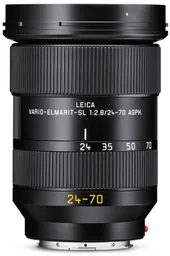
Leica Vario-Elmarit-SL 24-70mm F2.8 ASPH
24-70mm · f/2.8
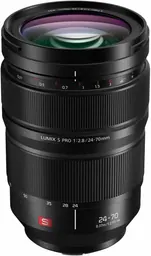
Panasonic Lumix S Pro 24-70mm F2.8
24-70mm · f/2.8
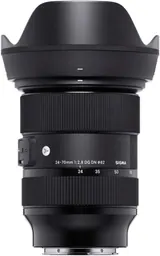
Sigma 24-70mm F2.8 DG DN Art
24-70mm · f/2.8
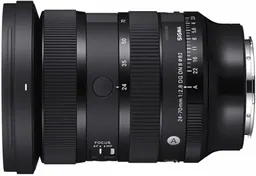
Sigma 24-70mm F2.8 DG DN II | Art
24-70mm · f/2.8

Sigma 20-60mm F2.8-4 DG Contemporary
20-60mm · f/2.8-4
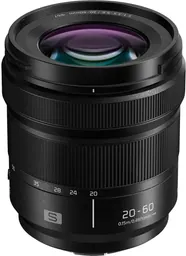
Panasonic Lumix S 20-60mm F3.5-5.6
20-60mm · f/3.5-5.6
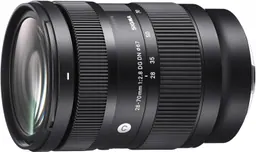
Sigma 28-70mm F2.8 DG DN | C
28-70mm · f/2.8
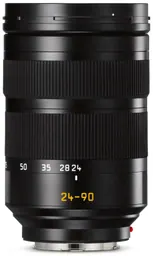
Leica Vario-Elmarit-SL 24-90mm F2.8-4 ASPH
24-90mm · f/2.8-4
Related guides
What does the f mean in camera lenses?
When it comes to photography, understanding the basics of f-stop is essential. F-stop is a critical component of a camera lens that…
How to clean a camera lens
Keeping your camera lenses clean is essential for getting clear, sharp, and high-quality images. Even the smallest speck of dust, dirt, or…
All camera lens types explained: Uses and functions
In this article, we'll explore the various types of camera lenses, their defining features, and when to use them. We'll also cover the…