

Light Lens Lab 28mm F2.8 Nine Element
- Focal length
- 28 mm
- Aperture
- f/2.8
- Weight
- 300 g
- Filter diameter
- 49 mm
- Min. focus distance
- 70 cm
- Length
- 56.8 mm
Overview
The Light Lens Lab 28mm f/2.8 Nine Element is a manual full-frame wide-angle prime for Leica M-mount cameras. Light Lens Lab describes it as a close homage to the original Nine Element design, adapted for digital sensors. It is aimed at M-mount shooters who want a compact 28 mm with a classic look and brass or titanium construction.
Optical design
According to Light Lens Lab, the lens follows the original nine element, six group layout closely. The company says it uses newly made in-house elements infused with fluorite and an extra-low dispersion (ED) glass element, which is meant to improve edge-to-edge rendering and reduce dispersion and distortion. Light Lens Lab also states that it optimised the design for digital sensors and eliminated the red fringing phenomenon that occurred on the original Nine Element. The maximum aperture is f/2.8, and the aperture can be set from f/2.8 to f/22.
Focusing and handling
There is no autofocus. Focusing is manual and coupled to the M-mount rangefinder, with a minimum focus distance of 0.7 m. The lens keeps the classic focus tab and an infinity lock. The filter thread is E49. A 12501 lens hood is available separately and is not included in the stated weight. Light Lens Lab says the lens is compatible with all digital M-mount cameras, but not with the Leica M5 and CL.
Build and size
The body is made from brass or titanium, depending on the finish. Light Lens Lab lists chrome and black paint finishes and says the lenses are made by hand in limited quantities. The lens weighs 300 g without the hood, is 56.8 mm long and has a diameter of 52.4 mm. That puts it in the compact range for a 28 mm with a metal body.
Where it fits
Within the database, comparable 28 mm lenses for M-mount include the Leica Elmarit-M 28mm f/2.8 ASPH, the Leica Summaron-M 28mm F5.6, the Voigtlander 28mm F2 Ultron VM II and the Thypoch Eureka 28mm F2.8. The Light Lens Lab differs in that it recreates a historical nine element layout and uses a brass body, while the Leica Elmarit-M and the Voigtlander follow modern designs.
Pros and cons
Pros
- Nine elements in six groups with fluorite-infused and ED elements, according to the maker
- Optimised for digital sensors, with reduced red fringing compared to the original, per Light Lens Lab
- Compact 28 mm with metal body
- Classic focus tab and infinity lock
- Close focus of 0.7 m matches rangefinder coupling
Cons
- Manual focus only
- Not compatible with Leica M5 and CL, according to the manufacturer
- f/2.8 is slower than some other 28 mm options
- Limited production, as stated by Light Lens Lab
- Hood is sold separately
Verdict
The 28mm f/2.8 Nine Element is a niche lens for M-mount users who value a historical optical layout and hand finished metal construction. It offers a compact size and a documented elements list, while accepting a slower aperture and the limits of manual rangefinder focusing.
Technical Specifications
- min focal length
- 28 mm
- max focal length
- 28 mm
- max f (min zoom)
- f/2.8
- max f (max zoom)
- f/2.8
- min. aperture
- f/22
- Elements
- 9
- Groups
- 6
- Weight
- 300 g (0.66 lb)
- Filter diameter
- 49 mm
- min focus distance
- 70 cm (27.56 in)
- Length
- 56.8 mm (2.24 in)
- Diameter
- 52.4 mm (2.06 in)
Which cameras does the Light Lens Lab 28mm F2.8 Nine Element fit?
The Light Lens Lab 28mm F2.8 Nine Element fits all Leica M-Mount cameras and covers the full 35 mm format.
Leica M-Mount cameras
- Full frame:
- Leica M EV1, Leica M11-D, Leica M11-P, Leica M11 Monochrom, Leica M11, Leica M10-R, Leica M10 Monochrom, Leica M-E (Typ 240), Leica M10-P, Leica M10-D, Leica M10, Leica M-D (Typ 262), Leica M (Typ 262), Leica M Monochrom (Typ 246), Leica M-P (Typ 240), Leica M (Typ 240), Leica M-E (Typ 220), Leica M Monochrom (Typ 230), Leica M9-P, Leica M9
With the Leica M-Adapter L the lens can also be used on Leica L-Mount cameras.
Light Lens Lab 28mm F2.8 Nine Element compared
Key specs side by side with the most similar Leica M-Mount lenses.
| Lens | Light Lens Lab 28mm F2.8 Nine Element | Carl Zeiss Biogon T* 2,8/28 ZM | Leica Elmarit-M 28mm f/2.8 ASPH | Thypoch Eureka 28mm F2.8 |
|---|---|---|---|---|
| Focal length | 28 mm | 28 mm | 28 mm | 28 mm |
| Max. aperture | f/2.8 | f/2.8 | f/2.8 | f/2.8 |
| Weight | 300 g | 230 g | 180 g | 133 g |
| Filter diameter | 49 mm | 46 mm | 39 mm | 27 mm |
| Min. focus distance | 70 cm | 50 cm | 70 cm | 40 cm |
| Length | 56.8 mm | 62 mm | 30 mm | 21.9 mm |
| Autofocus | no | no | no | no |
| Image stabilization | no | no | no | no |
Light Lens Lab 28mm F2.8 Nine Element: FAQ
Does the Light Lens Lab 28mm F2.8 Nine Element have autofocus?
No, the Light Lens Lab 28mm F2.8 Nine Element has no autofocus; you focus it manually.
Does the Light Lens Lab 28mm F2.8 Nine Element have image stabilization?
No, the Light Lens Lab 28mm F2.8 Nine Element has no stabilization of its own. On cameras with in-body image stabilization (IBIS) the image is still stabilized.
How much does the Light Lens Lab 28mm F2.8 Nine Element weigh?
The Light Lens Lab 28mm F2.8 Nine Element weighs 300 g. It is 56.8 mm long with a diameter of 52.4 mm.
What filter size does the Light Lens Lab 28mm F2.8 Nine Element use?
The Light Lens Lab 28mm F2.8 Nine Element takes 49 mm screw-in filters.
How close can the Light Lens Lab 28mm F2.8 Nine Element focus?
The minimum focus distance of the Light Lens Lab 28mm F2.8 Nine Element is 70 cm, measured from the sensor plane.
Similar lenses
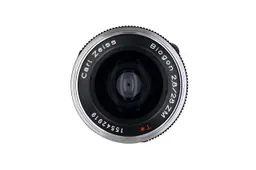
Carl Zeiss Biogon T* 2,8/28 ZM
28mm · f/2.8
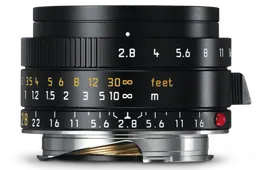
Leica Elmarit-M 28mm f/2.8 ASPH
28mm · f/2.8
-
Thypoch Eureka 28mm F2.8
28mm · f/2.8
-
Artra Lab Phi28 28mm f/2.8
28mm · f/2.8
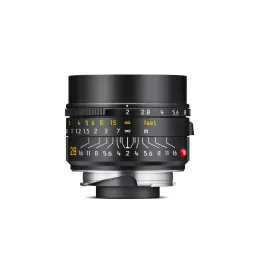
Leica Summicron-M 28mm F/2 ASPH (2023)
28mm · f/2
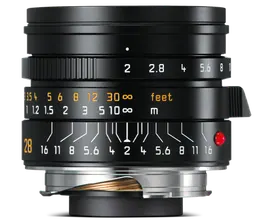
Leica Summicron-M 28mm f/2 ASPH
28mm · f/2
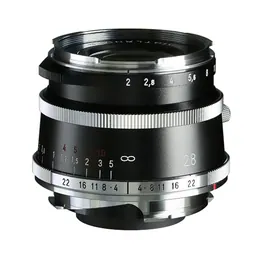
Voigtlander 28mm F2 Ultron VM II
28mm · f/2
-
Voigtländer APO-Lanthar 28mm f/2 Aspherical
28mm · f/2
Related guides
What does the f mean in camera lenses?
When it comes to photography, understanding the basics of f-stop is essential. F-stop is a critical component of a camera lens that…
How to clean a camera lens
Keeping your camera lenses clean is essential for getting clear, sharp, and high-quality images. Even the smallest speck of dust, dirt, or…
All camera lens types explained: Uses and functions
In this article, we'll explore the various types of camera lenses, their defining features, and when to use them. We'll also cover the…