

Light Lens Lab 35mm F1.4 Aspherical 11873
- Focal length
- 35 mm
- Aperture
- f/1.4
- Weight
- 278 g
- Filter diameter
- 46 mm
- Min. focus distance
- 70 cm
- Length
- 56.19 mm
Overview
The Light Lens Lab 35mm f/1.4 Aspherical 11873 is a manual full-frame wide-angle prime for Leica M-mount cameras. Light Lens Lab describes it as a faithful homage to the double aspherical optical concept of one of the most sought-after lenses in photographic history. It targets M-mount users who want a fast 35 mm with a historical optical idea.
Optical design
The lens has nine elements in five groups, with aspherical elements in groups two and five. According to Light Lens Lab, the aspherical elements are now made with a moulded and polished method instead of the ground and polished method used on the first prototype. The company also says it added extra-low dispersion and achromatic elements to reduce distortion, diffraction and chromatic aberration, and that lanthanide-infused elements keep the controlled glow at f/1.4. The maximum aperture is f/1.4 and the smallest aperture is f/16. Light Lens Lab states that all optical and mechanical parts are designed, manufactured and assembled in house.
Focusing and handling
There is no autofocus. Focusing is manual with rangefinder focusing down to 0.7 m. The filter thread is E46. The lens uses an M-mount bayonet. Light Lens Lab lists the length in the camera as 43 mm and the actual length as 56.19 mm, which suggests that the rear of the lens extends into the camera body.
Build and size
The aluminium version weighs 278 g and the titanium version weighs 300 g. The diameter is 52.94 mm. The black paint and chrome versions use 7075 aircraft-grade aluminium alloy, while the Titanium Grey Limited Edition uses titanium alloy and is limited to 300 pieces worldwide, according to Light Lens Lab.
Where it fits
Among 35 mm lenses for M-mount in the database, comparable options include the Leica Summilux-M 35mm f/1.4 ASPH, the Voigtlander 35mm F1.4 Nokton VM II, the Voigtlander 35mm F1.2 Nokton VM III, the Thypoch Simera 35mm F1.4 and the Kipon Iberit 35mm f/2.4. The Light Lens Lab differs mainly in its recreation approach and the metal body options. The company's 35mm f/2 Apochromatic is a later, more complex alternative with a slower aperture.
Pros and cons
Pros
- Fast f/1.4 aperture
- Nine elements in five groups with aspherical elements, per the manufacturer
- Compact at 278 g in aluminium
- Titanium edition available in limited numbers
- Fully published weight, size and optical data
Cons
- Manual focus only
- Closest focusing distance of 0.7 m with rangefinder
- Smallest aperture is f/16, not f/22
- The titanium edition is heavier and produced in limited numbers
Verdict
The 35mm f/1.4 Aspherical 11873 is a fast manual 35 mm for M-mount, built around a historical double aspherical idea and updated with modern elements. It will interest users who like documented optical recipes and compact metal lenses.
Technical Specifications
- min focal length
- 35 mm
- max focal length
- 35 mm
- max f (min zoom)
- f/1.4
- max f (max zoom)
- f/1.4
- min. aperture
- f/16
- Elements
- 9
- Groups
- 5
- Weight
- 278 g (0.61 lb)
- Filter diameter
- 46 mm
- min focus distance
- 70 cm (27.56 in)
- Length
- 56.19 mm (2.21 in)
- Diameter
- 52.94 mm (2.08 in)
Which cameras does the Light Lens Lab 35mm F1.4 Aspherical 11873 fit?
The Light Lens Lab 35mm F1.4 Aspherical 11873 fits all Leica M-Mount cameras and covers the full 35 mm format.
Leica M-Mount cameras
- Full frame:
- Leica M EV1, Leica M11-D, Leica M11-P, Leica M11 Monochrom, Leica M11, Leica M10-R, Leica M10 Monochrom, Leica M-E (Typ 240), Leica M10-P, Leica M10-D, Leica M10, Leica M-D (Typ 262), Leica M (Typ 262), Leica M Monochrom (Typ 246), Leica M-P (Typ 240), Leica M (Typ 240), Leica M-E (Typ 220), Leica M Monochrom (Typ 230), Leica M9-P, Leica M9
With the Leica M-Adapter L the lens can also be used on Leica L-Mount cameras.
Light Lens Lab 35mm F1.4 Aspherical 11873 compared
Key specs side by side with the most similar Leica M-Mount lenses.
| Lens | Light Lens Lab 35mm F1.4 Aspherical 11873 | Carl Zeiss Distagon T* 1,4/35 ZM | Leica Summilux-M 35mm f/1.4 ASPH | Voigtlander 35mm F1.4 Nokton VM II |
|---|---|---|---|---|
| Focal length | 35 mm | 35 mm | 35 mm | 35 mm |
| Max. aperture | f/1.4 | f/1.4 | f/1.4 | f/1.4 |
| Weight | 278 g | 381 g | 320 g | 189 g |
| Filter diameter | 46 mm | 49 mm | 46 mm | 43 mm |
| Min. focus distance | 70 cm | 70 cm | 70 cm | 70 cm |
| Length | 56.2 mm | 65 mm | 46 mm | 29 mm |
| Autofocus | no | no | no | no |
| Image stabilization | no | no | no | no |
Light Lens Lab 35mm F1.4 Aspherical 11873: FAQ
Does the Light Lens Lab 35mm F1.4 Aspherical 11873 have autofocus?
No, the Light Lens Lab 35mm F1.4 Aspherical 11873 has no autofocus; you focus it manually.
Does the Light Lens Lab 35mm F1.4 Aspherical 11873 have image stabilization?
No, the Light Lens Lab 35mm F1.4 Aspherical 11873 has no stabilization of its own. On cameras with in-body image stabilization (IBIS) the image is still stabilized.
How much does the Light Lens Lab 35mm F1.4 Aspherical 11873 weigh?
The Light Lens Lab 35mm F1.4 Aspherical 11873 weighs 278 g. It is 56.2 mm long with a diameter of 52.9 mm.
What filter size does the Light Lens Lab 35mm F1.4 Aspherical 11873 use?
The Light Lens Lab 35mm F1.4 Aspherical 11873 takes 46 mm screw-in filters.
How close can the Light Lens Lab 35mm F1.4 Aspherical 11873 focus?
The minimum focus distance of the Light Lens Lab 35mm F1.4 Aspherical 11873 is 70 cm, measured from the sensor plane.
Similar lenses
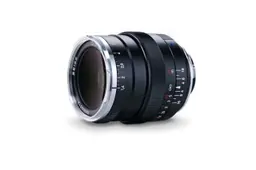
Carl Zeiss Distagon T* 1,4/35 ZM
35mm · f/1.4
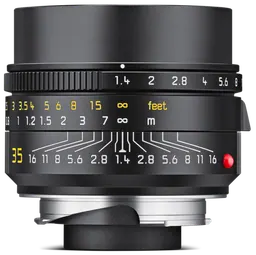
Leica Summilux-M 35mm f/1.4 ASPH
35mm · f/1.4
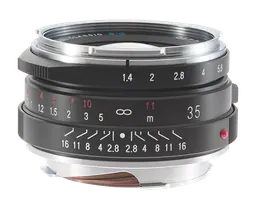
Voigtlander 35mm F1.4 Nokton VM II
35mm · f/1.4
-
Thypoch Simera 35mm F1.4
35mm · f/1.4
-
Funleader Artizlab Classic 35mm F1.4
35mm · f/1.4

Artra Lab SIMILAR Steel Rim 35mm f/1.4
35mm · f/1.4
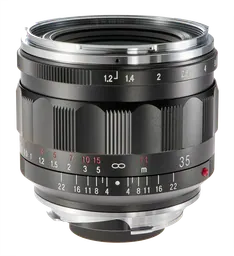
Voigtlander 35mm F1.2 Nokton VM III
35mm · f/1.2
-
Leica Noctilux-M 35mm f/1.2 ASPH
35mm · f/1.2
Related guides
What does the f mean in camera lenses?
When it comes to photography, understanding the basics of f-stop is essential. F-stop is a critical component of a camera lens that…
How to clean a camera lens
Keeping your camera lenses clean is essential for getting clear, sharp, and high-quality images. Even the smallest speck of dust, dirt, or…
All camera lens types explained: Uses and functions
In this article, we'll explore the various types of camera lenses, their defining features, and when to use them. We'll also cover the…