

Voigtländer APO-Lanthar 50mm f/3.5 Type I
- Focal length
- 50 mm
- Aperture
- f/3.5
- Weight
- 245 g
- Filter diameter
- 34 mm
- Min. focus distance
- 45 cm
- Length
- 45 mm
Overview
The Voigtländer APO-Lanthar 50mm f/3.5 Type I is a compact manual focus standard lens with the VM bayonet, compatible with Leica M. It carries the APO-Lanthar name, which Cosina uses for its highest performance apochromatic designs, in a small and slow package. Cosina announced it in February 2024, and it was released later that year. It is one of two versions: Type I, described here, and Type II, which focuses closer and takes a different filter size.
Optical design
The lens has 8 elements in 6 groups, four of which are made of anomalous partial dispersion glass. According to Cosina, the apochromatic design thoroughly eliminates aberrations, including axial chromatic aberration, and aims at the highest resolution and contrast. The aperture range is f/3.5 to f/22 with 10 blades. The image circle covers the full frame format.
Focusing and handling
Focusing is manual through a precisely machined all-metal helicoid. The lens is coupled to the rangefinder and can focus down to 0.45 m. A click marks the end of the rangefinder coupled range at 0.7 m, so you can feel when you leave it, which Cosina points out is helpful on cameras with live view. A screw-in metal hood and a matching metal cap are supplied. Cosina notes that the black lens with a black mount is not recognised by cameras that read a 6-bit code, and that lens detection should then be switched off.
Build and size
Type I comes in two versions. The two-tone black and chrome version uses brass and weighs 245 g. The matte black version uses aluminium and weighs 150 g. Both are 45.0 mm long with a diameter of 52.0 mm and a 34 mm filter thread. The database entry uses the brass weight.
Where it fits
Type II is the other version of the same optical design: it focuses to 0.35 m and uses 39 mm filters, with 250 g and 175 g models. For Leica M, other standard lenses in the database include the Voigtländer APO-Lanthar 50mm f/2 (288 g), the Leica APO-Summicron-M 50mm f/2 ASPH (300 g) and the Zeiss Planar T* 2/50 ZM (230 g). Compared with these, the f/3.5 lens gives up speed in return for size.
Pros and cons
Pros
- Apochromatic design with 4 elements of anomalous partial dispersion glass
- Compact, 45 mm long, and as light as 150 g
- Focuses down to 0.45 m
- Metal hood and cap included
- Choice of brass or aluminium construction
Cons
- f/3.5 is slow for a standard lens
- Manual focus only
- Type II offers closer focusing and 39 mm filters
- Black version with black mount is not read by 6-bit code cameras
Verdict
The APO-Lanthar 50mm f/3.5 Type I suits photographers who put apochromatic correction and a very small package ahead of speed. It is a niche lens for Leica M and VM cameras, and the choice between Type I and Type II mostly comes down to the minimum focus distance and filter size.
Technical Specifications
- min focal length
- 50 mm
- max focal length
- 50 mm
- max f (min zoom)
- f/3.5
- max f (max zoom)
- f/3.5
- min. aperture
- f/22
- Elements
- 8
- Groups
- 6
- Weight
- 245 g (0.54 lb)
- Filter diameter
- 34 mm
- min focus distance
- 45 cm (17.72 in)
- Length
- 45 mm (1.77 in)
- Diameter
- 52 mm (2.05 in)
Which cameras does the Voigtländer APO-Lanthar 50mm f/3.5 Type I fit?
The Voigtländer APO-Lanthar 50mm f/3.5 Type I fits all Leica M-Mount cameras and covers the full 35 mm format.
Leica M-Mount cameras
- Full frame:
- Leica M EV1, Leica M11-D, Leica M11-P, Leica M11 Monochrom, Leica M11, Leica M10-R, Leica M10 Monochrom, Leica M-E (Typ 240), Leica M10-P, Leica M10-D, Leica M10, Leica M-D (Typ 262), Leica M (Typ 262), Leica M Monochrom (Typ 246), Leica M-P (Typ 240), Leica M (Typ 240), Leica M-E (Typ 220), Leica M Monochrom (Typ 230), Leica M9-P, Leica M9
With the Leica M-Adapter L the lens can also be used on Leica L-Mount cameras.
Voigtländer APO-Lanthar 50mm f/3.5 Type I compared
Key specs side by side with the most similar Leica M-Mount lenses.
| Lens | Voigtländer APO-Lanthar 50mm f/3.5 Type I | Voigtländer APO-Lanthar 50mm f/3.5 Type II | Meyer-Optik Gorlitz Trioplan 50mm f/2.8 II | Leica Summarit-M 50mm f/2.5 |
|---|---|---|---|---|
| Focal length | 50 mm | 50 mm | 50 mm | 50 mm |
| Max. aperture | f/3.5 | f/3.5 | f/2.8 | f/2.5 |
| Weight | 245 g | 250 g | 200 g | 230 g |
| Filter diameter | 34 mm | 39 mm | 52 mm | 39 mm |
| Min. focus distance | 45 cm | 35 cm | 40 cm | 70 cm |
| Length | 45 mm | 45 mm | 60 mm | 33 mm |
| Autofocus | no | no | no | no |
| Image stabilization | no | no | no | no |
Voigtländer APO-Lanthar 50mm f/3.5 Type I: FAQ
Does the Voigtländer APO-Lanthar 50mm f/3.5 Type I have autofocus?
No, the Voigtländer APO-Lanthar 50mm f/3.5 Type I has no autofocus; you focus it manually.
Does the Voigtländer APO-Lanthar 50mm f/3.5 Type I have image stabilization?
No, the Voigtländer APO-Lanthar 50mm f/3.5 Type I has no stabilization of its own. On cameras with in-body image stabilization (IBIS) the image is still stabilized.
How much does the Voigtländer APO-Lanthar 50mm f/3.5 Type I weigh?
The Voigtländer APO-Lanthar 50mm f/3.5 Type I weighs 245 g. It is 45 mm long with a diameter of 52 mm.
What filter size does the Voigtländer APO-Lanthar 50mm f/3.5 Type I use?
The Voigtländer APO-Lanthar 50mm f/3.5 Type I takes 34 mm screw-in filters.
How close can the Voigtländer APO-Lanthar 50mm f/3.5 Type I focus?
The minimum focus distance of the Voigtländer APO-Lanthar 50mm f/3.5 Type I is 45 cm, measured from the sensor plane.
Similar lenses

Voigtländer APO-Lanthar 50mm f/3.5 Type II
50mm · f/3.5
-
Meyer-Optik Gorlitz Trioplan 50mm f/2.8 II
50mm · f/2.8
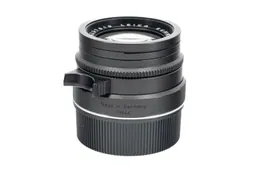
Leica Summarit-M 50mm f/2.5
50mm · f/2.5

KIPON Iberit 50mm f/2.4
50mm · f/2.4
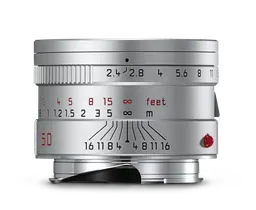
Leica Summarit-M 50mm F2.4 ASPH
50mm · f/2.4

Voigtländer Color-Skopar 50mm f/2.2
50mm · f/2.2
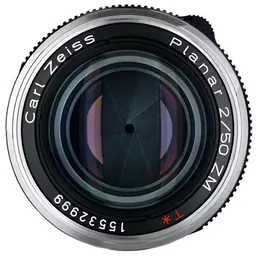
Carl Zeiss Planar T* 2/50 ZM
50mm · f/2
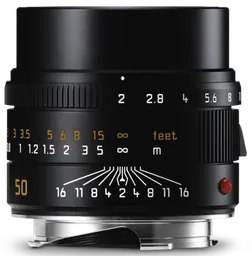
Leica APO-Summicron-M 50mm f/2 ASPH
50mm · f/2
Related guides
What does the f mean in camera lenses?
When it comes to photography, understanding the basics of f-stop is essential. F-stop is a critical component of a camera lens that…
How to clean a camera lens
Keeping your camera lenses clean is essential for getting clear, sharp, and high-quality images. Even the smallest speck of dust, dirt, or…
All camera lens types explained: Uses and functions
In this article, we'll explore the various types of camera lenses, their defining features, and when to use them. We'll also cover the…