
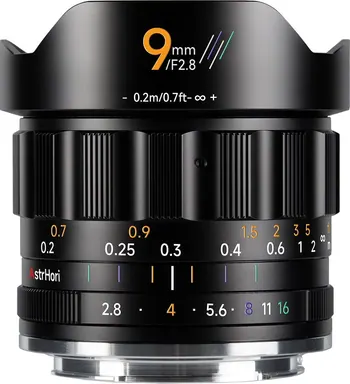
AstrHori 9mm f/2.8
- Focal length
- 9 mm
- Aperture
- f/2.8
- Weight
- –
- Filter diameter
- –
- Min. focus distance
- 20 cm
- Length
- 66 mm
Overview
The AstrHori 9mm f/2.8 is a manual-focus ultra-wide-angle prime for APS-C and Micro Four Thirds mirrorless cameras, offered for Sony E, Fujifilm X, Canon RF, Micro Four Thirds and Nikon Z. AstrHori gives it a 111.4 degree angle of view and describes it as a retro-styled all-metal lens for cityscapes, landscapes, interiors and shots that call for dramatic perspective.
Optical design
The lens has 11 elements in eight groups. The seven-blade aperture runs from f/2.8 to f/16, and the angle of view is 111.4 degrees. The minimum focusing distance is 0.2 m. According to AstrHori, f/2.8 is suited to night skies and starry scenes. The lens has an integrated lens hood.
Focusing and handling
Focusing is manual through a focus ring with a distance scale, and an aperture ring with click stops sets the aperture. There is no autofocus and no stabilizer. At this focal length depth of field is large, so zone focusing with the distance scale is a practical way of working.
Build and size
The body is made of metal and is built in a classic mechanical style with a retro look. In its Sony E version the lens measures about 62 mm in diameter and 66 mm in length and weighs about 306.5 g. AstrHori says the retro styling is meant to match both mirrorless bodies and vintage-styled cameras.
Where it fits
Other ultra-wide APS-C lenses in this database include the Samyang / Rokinon 10mm F2.8 ED AS NCS CS for Fujifilm X, Micro Four Thirds and Canon EF-M, the Venus Laowa 9mm F2.8 Zero-D and the Sony E 11mm F1.8 for Sony E. The AstrHori 6.5mm f/2 Fisheye is a fisheye sibling from the same maker, covering a wider angle with a curved projection.
Pros and cons
Pros
- 111.4 degree angle of view with f/2.8 aperture
- All-metal body with an integrated lens hood
- Close focusing at 0.2 m
- Aperture ring with click stops, available for five mounts
Cons
- Manual focus only
- About 306.5 g and 66 mm long on Sony E and a 306.5 g body for a manual 9mm lens
Verdict
The AstrHori 9mm f/2.8 is a bright manual ultra-wide for APS-C and Micro Four Thirds systems. It suits architecture, interiors, landscapes and night skies for shooters who are happy to focus by hand and prefer a straightforward all-metal lens.
Technical Specifications
- Min. focal length
- 9 mm
- Max. focal length
- 9 mm
- Max. aperture (min. zoom)
- f/2.8
- Max. aperture (max. zoom)
- f/2.8
- Min. aperture
- f/16
- Elements
- 11
- Groups
- 8
- Weight
- –
- Filter diameter
- –
- Min. focus distance
- 20 cm (7.87 in)
- Length
- 66 mm (2.6 in)
- Diameter
- 62 mm (2.44 in)
Manufacturer data: astrhori.cn
Which cameras does the AstrHori 9mm f/2.8 fit?
The AstrHori 9mm f/2.8 fits all Micro Four Thirds cameras. There its field of view equals 18 mm in full-frame terms (crop factor 2).
Micro Four Thirds cameras
- Micro Four Thirds:
- OM System PEN, OM System OM-3, OM System OM-5 Mark II, Panasonic Lumix G97 (G99M2), Panasonic Lumix GH7, OM System OM-1 Mark II, Panasonic Lumix G9 II, Panasonic Lumix G100D, OM System OM-5, OM System OM-1, Panasonic Lumix GH6, Panasonic Lumix GH5 II, Olympus PEN E-P7, Olympus OM-D E-M10 Mark IV, Olympus OM-D E-M1 Mark III, Panasonic Lumix G100 (G110), Panasonic Lumix BGH1, Olympus PEN E-PL10, Olympus OM-D E-M5 Mark III, Panasonic Lumix G95 (G90, G91), Olympus OM-D E-M1X, Panasonic Lumix GX9, Panasonic Lumix GF10 (GF90, GX880), Olympus PEN E-PL9, Panasonic Lumix GH5S, Blackmagic Pocket Cinema Camera 4K, Panasonic Lumix G9, Olympus OM-D E-M10 Mark III, Panasonic Lumix GF9 (GX850, GX800), Panasonic Lumix GH5, Olympus PEN E-PL8, Olympus OM-D E-M1 Mark II, Panasonic Lumix G85 (G80, G81), Panasonic Lumix GX85 (GX80, GX7 Mark II), Olympus PEN-F, Olympus OM-D E-M10 Mark II, Panasonic Lumix GX8, Panasonic Lumix G7, Panasonic Lumix GF7, Olympus OM-D E-M5 Mark II, Panasonic Lumix GM5, Olympus PEN E-PL7, Panasonic Lumix GH4, Olympus OM-D E-M10, Panasonic Lumix GM1, Olympus OM-D E-M1, Panasonic Lumix GX7, Olympus PEN E-PL6, Olympus PEN E-P5, Panasonic Lumix G6, Panasonic Lumix GF6, Blackmagic Pocket Cinema Camera, Olympus PEN E-PM2, Olympus PEN E-PL5, Panasonic Lumix GH3, Panasonic Lumix G5, Panasonic Lumix GF5, Olympus OM-D E-M5, Blackmagic Cinema Camera (MFT)
AstrHori 9mm f/2.8 compared
Key specs side by side with the most similar Micro Four Thirds lenses.
| Lens | AstrHori 9mm f/2.8 | Venus Laowa 9mm f/2.8 Zero-D | Samyang / Rokinon 10mm F2.8 ED AS NCS CS | 7Artisans 10mm F3.5 |
|---|---|---|---|---|
| Focal length | 9 mm | 9 mm | 10 mm | 10 mm |
| Max. aperture | f/2.8 | f/2.8 | f/2.8 | f/3.5 |
| Weight | – | 215 g | 580 g | – |
| Filter diameter | – | 49 mm | – | 37 mm |
| Min. focus distance | 20 cm | 12 cm | 25 cm | 20 cm |
| Length | 66 mm | 60 mm | 77 mm | 34 mm |
| Autofocus | no | no | no | no |
| Image stabilization | no | no | no | no |
This lens is also available for
AstrHori 9mm f/2.8: FAQ
Does the AstrHori 9mm f/2.8 have autofocus?
No, the AstrHori 9mm f/2.8 has no autofocus; you focus it manually.
Does the AstrHori 9mm f/2.8 have image stabilization?
No, the AstrHori 9mm f/2.8 has no stabilization of its own. On cameras with in-body image stabilization (IBIS) the image is still stabilized.
How close can the AstrHori 9mm f/2.8 focus?
The minimum focus distance of the AstrHori 9mm f/2.8 is 20 cm, measured from the sensor plane.
Similar lenses
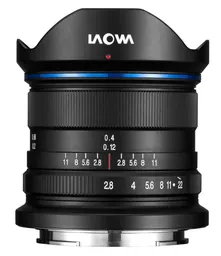
Venus Laowa 9mm f/2.8 Zero-D
9mm · f/2.8
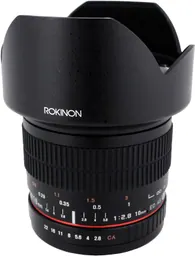
Samyang / Rokinon 10mm F2.8 ED AS NCS CS
10mm · f/2.8

7Artisans 10mm F3.5
10mm · f/3.5
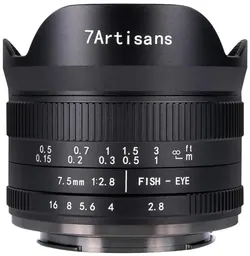
7artisans 7.5mm F2.8 Fisheye
7.5mm · f/2.8
-
SG-image MF 7.5mm F2.8 Fisheye
7.5mm · f/2.8
Brightin Star MF 7.5mm F2.8 IV APS-C Fisheye
7.5mm · f/2.8
Venus Laowa 10mm F2 Zero-D MFT
10mm · f/2
Samyang / Rokinon 7.5mm F3.5 UMC Fisheye MFT
7.5mm · f/3.5
Related guides
What does the f mean in camera lenses?
When it comes to photography, understanding the basics of f-stop is essential. F-stop is a critical component of a camera lens that…
How to clean a camera lens
Keeping your camera lenses clean is essential for getting clear, sharp, and high-quality images. Even the smallest speck of dust, dirt, or…
All camera lens types explained: Uses and functions
In this article, we'll explore the various types of camera lenses, their defining features, and when to use them. We'll also cover the…