
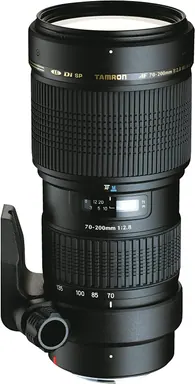
Nikon F (DX/FX) Autofocus
Tamron SP AF 70-200mm F/2.8 Di LD (IF) MACRO
- Focal length
- 70–200 mm
- Aperture
- f/2.8
- Weight
- 1150 g
- Filter diameter
- 77 mm
- Min. focus distance
- 95 cm
- Length
- 194.3 mm
At a Glance
This full-frame telephoto zoom for Nikon F-mount runs from 70 to 200 mm and holds f/2.8 throughout. A magnification of 1:3.1 at a 95 cm minimum focus distance gives it real close-up ability for a zoom of this kind. It weighs 1.15 kg and has no stabilizer. It suits sports, wildlife, events and portraits.
Good for
- Sports
- Wildlife
- Events
- Portraits
Derived from the manufacturer data, not from our own tests. How we check
Technical Specifications
- Min. focal length
- 70 mm
- Max. focal length
- 200 mm
- Max. aperture (min. zoom)
- f/2.8
- Max. aperture (max. zoom)
- f/2.8
- Min. aperture
- f/32
- Elements
- 18
- Groups
- 13
- Weight
- 1,150 g (2.54 lb)
- Filter diameter
- 77 mm
- Min. focus distance
- 95 cm (entire zoom range)
- Max. magnification
- 1:3.1 (0.32×)
- Length
- 194.3 mm (7.65 in)
- Diameter
- 89.5 mm (3.52 in)
- Released
- May 2008
Manufacturer data: tamron.com
Last checked: October 13, 2026 (against the manufacturer data) · How we check
Which cameras does the Tamron SP AF 70-200mm F/2.8 Di LD (IF) MACRO fit?
The Tamron SP AF 70-200mm F/2.8 Di LD (IF) MACRO is a full-frame lens for Nikon F-Mount cameras. On full-frame bodies it uses the whole sensor; on APS-C Nikon F-Mount cameras its field of view equals 105-300 mm in full-frame terms.
Nikon F-Mount cameras
With the Nikon FTZ II / FTZ the lens can also be used on Nikon Z (DX/FX) cameras.
Tamron SP AF 70-200mm F/2.8 Di LD (IF) MACRO compared
Key specs side by side with the most similar Nikon F-Mount lenses.
| Lens | Tamron SP AF 70-200mm F/2.8 Di LD (IF) MACRO | NIKKOR 70-200mm F/2.8E FL ED VR | Nikon AF-S Nikkor 70-200mm f/2.8G ED VR | Nikon AF-S Nikkor 70-200mm f/2.8G ED VR II |
|---|---|---|---|---|
| Focal length | 70-200 mm | 70-200 mm | 70-200 mm | 70-200 mm |
| Max. aperture | f/2.8 | f/2.8 | f/2.8 | f/2.8 |
| Weight | 1,150 g | 1,430 g | 1,470 g | 1,540 g |
| Filter diameter | 77 mm | 77 mm | 77 mm | 77 mm |
| Min. focus distance | 95 cm | 110 cm | 140 cm | 140 cm |
| Length | 194.3 mm | 202.5 mm | 215 mm | 205.5 mm |
| Autofocus | yes | yes | yes | yes |
| Image stabilization | no | yes | yes | yes |
This lens is also available for
Tamron SP AF 70-200mm F/2.8 Di LD (IF) MACRO: FAQ
Does the Tamron SP AF 70-200mm F/2.8 Di LD (IF) MACRO have autofocus?
Yes, the Tamron SP AF 70-200mm F/2.8 Di LD (IF) MACRO has autofocus.
Does the Tamron SP AF 70-200mm F/2.8 Di LD (IF) MACRO have image stabilization?
No, the Tamron SP AF 70-200mm F/2.8 Di LD (IF) MACRO has no stabilization of its own. On cameras with in-body image stabilization (IBIS) the image is still stabilized.
How much does the Tamron SP AF 70-200mm F/2.8 Di LD (IF) MACRO weigh?
The Tamron SP AF 70-200mm F/2.8 Di LD (IF) MACRO weighs 1,150 g. It is 194.3 mm long with a diameter of 89.5 mm.
What filter size does the Tamron SP AF 70-200mm F/2.8 Di LD (IF) MACRO use?
The Tamron SP AF 70-200mm F/2.8 Di LD (IF) MACRO takes 77 mm screw-in filters.
How close can the Tamron SP AF 70-200mm F/2.8 Di LD (IF) MACRO focus?
The minimum focus distance of the Tamron SP AF 70-200mm F/2.8 Di LD (IF) MACRO is 95 cm, measured from the sensor plane.
Is the Tamron SP AF 70-200mm F/2.8 Di LD (IF) MACRO a full-frame lens?
Yes, the Tamron SP AF 70-200mm F/2.8 Di LD (IF) MACRO covers full frame. On APS-C cameras its field of view equals 105-300 mm in full-frame terms.
Similar lenses
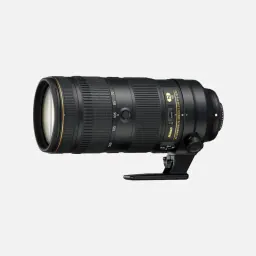
NIKKOR 70-200mm F/2.8E FL ED VR
70-200mm · f/2.8
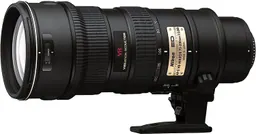
Nikon AF-S Nikkor 70-200mm f/2.8G ED VR
70-200mm · f/2.8
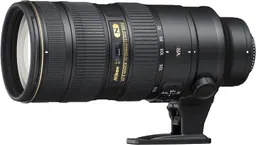
Nikon AF-S Nikkor 70-200mm f/2.8G ED VR II
70-200mm · f/2.8
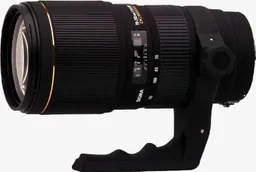
Sigma 70-200mm F2.8 EX DG Macro HSM II
70-200mm · f/2.8
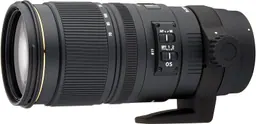
Sigma 70-200mm F2.8 EX DG OS HSM
70-200mm · f/2.8
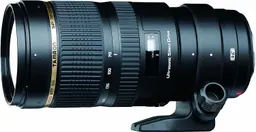
Tamron SP 70-200mm F/2.8 Di VC USD
70-200mm · f/2.8
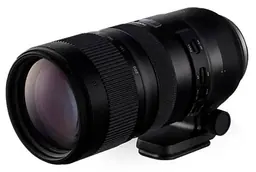
Tamron SP 70-200mm F/2.8 Di VC USD G2
70-200mm · f/2.8
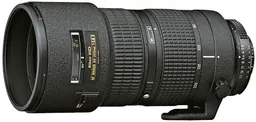
Nikon AF-Nikkor 80-200mm f/2.8D ED
80-200mm · f/2.8
Related guides
What does the f mean in camera lenses? f/2.8 explained
The f in f/2.8 is the f-number: focal length divided by aperture diameter. Learn why lower means more light and how the f-stop scale works.
How to clean a camera lens safely, step by step
How to clean a camera lens: blow off dust, then wipe gently with a microfiber cloth or lens paper. Steps and warnings from Canon, Nikon…
Types of Camera Lenses Explained: Uses and Differences
Types of camera lenses explained: wide-angle, standard, telephoto, prime, zoom, macro and more, with focal length ranges and typical uses.