

Voigtländer Nokton 35mm f/1.2 Aspherical IV
- Focal length
- 35 mm
- Aperture
- f/1.2
- Weight
- 300 g
- Filter diameter
- 52 mm
- Min. focus distance
- 50 cm
- Length
- 51.8 mm
Predecessor: Voigtlander 35mm F1.2 Nokton VM III
Overview
The Voigtländer Nokton 35mm f/1.2 Aspherical IV is a manual focus wide-angle lens with the VM bayonet, compatible with Leica M. It is the fourth version of Voigtländer's long-running f/1.2 35 mm for rangefinder cameras. Cosina announced it in February 2025, and it was released in 2025. The lens covers full frame and also works on mirrorless cameras with an adapter.
Optical design
The lens has 9 elements in 7 groups with four aspherical surfaces. According to Cosina, a generous use of high refractive index glass lets the design reach both a high image quality standard and the large aperture of f/1.2. The diaphragm has 12 blades to make the opening as circular as possible, which Cosina says gives soft round out-of-focus highlights. The aperture closes down to f/22 and the angle of view is 61.5 degrees.
Focusing and handling
Focusing is manual through an all-metal helicoid with a smooth torque. The rangefinder coupling works down to 0.7 m, and the lens can be focused closer, down to 0.5 m, which Cosina points out is useful with live view. An optional bayonet hood, the LH-14, is made of metal and slit to reduce vignetting in a rangefinder camera. It can be mounted in reverse for carrying.
Build and size
The lens is 51.8 mm long, 61.8 mm in diameter and weighs 300 g, with a 52 mm filter thread. Cosina says the weight was reduced to 300 g through improved mechanical parts. It is sold in black.
Where it fits
The earlier version in the database is the Voigtlander 35mm F1.2 Nokton VM III at 332 g. Other fast 35 mm lenses for Leica M are the Leica Noctilux-M 35mm f/1.2 ASPH (416 g), the Leica Summilux-M 35mm f/1.4 ASPH (320 g), the Zeiss Distagon T* 1,4/35 ZM (381 g) and the Thypoch Simera 35mm F1.4 (272 g). The Voigtlander 35mm F1.4 Nokton VM II (189 g) is lighter but slower at f/1.4. Version IV is the f/1.2 choice for those who want that aperture at a weight below the Summilux.
Pros and cons
Pros
- f/1.2 with 12 blades
- 300 g, lighter than the previous version
- Four aspherical surfaces and high refractive index glass
- Focuses down to 0.5 m
- Metal construction
Cons
- Manual focus only
- Hood is optional
- Heavier than f/1.4 alternatives such as the Nokton 35mm F1.4 VM II
- Black finish only
Verdict
The Nokton 35mm f/1.2 Aspherical IV is the current f/1.2 wide-angle standard from Voigtländer for Leica M and VM cameras. It suits photographers who want the fastest 35 mm in this system at a manageable weight, and it improves on the previous version mainly through lower weight.
Technical Specifications
- min focal length
- 35 mm
- max focal length
- 35 mm
- max f (min zoom)
- f/1.2
- max f (max zoom)
- f/1.2
- min. aperture
- f/22
- Elements
- 9
- Groups
- 7
- Weight
- 300 g (0.66 lb)
- Filter diameter
- 52 mm
- min focus distance
- 50 cm (19.69 in)
- Length
- 51.8 mm (2.04 in)
- Diameter
- 61.8 mm (2.43 in)
Which cameras does the Voigtländer Nokton 35mm f/1.2 Aspherical IV fit?
The Voigtländer Nokton 35mm f/1.2 Aspherical IV fits all Leica M-Mount cameras and covers the full 35 mm format.
Leica M-Mount cameras
- Full frame:
- Leica M EV1, Leica M11-D, Leica M11-P, Leica M11 Monochrom, Leica M11, Leica M10-R, Leica M10 Monochrom, Leica M-E (Typ 240), Leica M10-P, Leica M10-D, Leica M10, Leica M-D (Typ 262), Leica M (Typ 262), Leica M Monochrom (Typ 246), Leica M-P (Typ 240), Leica M (Typ 240), Leica M-E (Typ 220), Leica M Monochrom (Typ 230), Leica M9-P, Leica M9
With the Leica M-Adapter L the lens can also be used on Leica L-Mount cameras.
Voigtländer Nokton 35mm f/1.2 Aspherical IV compared
Key specs side by side with the most similar Leica M-Mount lenses.
| Lens | Voigtländer Nokton 35mm f/1.2 Aspherical IV | Voigtlander 35mm F1.2 Nokton VM III | Leica Noctilux-M 35mm f/1.2 ASPH | Carl Zeiss Distagon T* 1,4/35 ZM |
|---|---|---|---|---|
| Focal length | 35 mm | 35 mm | 35 mm | 35 mm |
| Max. aperture | f/1.2 | f/1.2 | f/1.2 | f/1.4 |
| Weight | 300 g | 332 g | 416 g | 381 g |
| Filter diameter | 52 mm | 52 mm | 49 mm | 49 mm |
| Min. focus distance | 50 cm | 50 cm | 50 cm | 70 cm |
| Length | 51.8 mm | 51 mm | 50.2 mm | 65 mm |
| Autofocus | no | no | no | no |
| Image stabilization | no | no | no | no |
Voigtländer Nokton 35mm f/1.2 Aspherical IV: FAQ
Does the Voigtländer Nokton 35mm f/1.2 Aspherical IV have autofocus?
No, the Voigtländer Nokton 35mm f/1.2 Aspherical IV has no autofocus; you focus it manually.
Does the Voigtländer Nokton 35mm f/1.2 Aspherical IV have image stabilization?
No, the Voigtländer Nokton 35mm f/1.2 Aspherical IV has no stabilization of its own. On cameras with in-body image stabilization (IBIS) the image is still stabilized.
How much does the Voigtländer Nokton 35mm f/1.2 Aspherical IV weigh?
The Voigtländer Nokton 35mm f/1.2 Aspherical IV weighs 300 g. It is 51.8 mm long with a diameter of 61.8 mm.
What filter size does the Voigtländer Nokton 35mm f/1.2 Aspherical IV use?
The Voigtländer Nokton 35mm f/1.2 Aspherical IV takes 52 mm screw-in filters.
How close can the Voigtländer Nokton 35mm f/1.2 Aspherical IV focus?
The minimum focus distance of the Voigtländer Nokton 35mm f/1.2 Aspherical IV is 50 cm, measured from the sensor plane.
Similar lenses
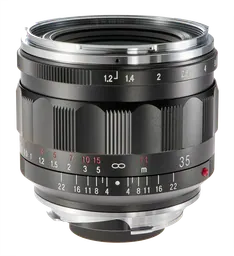
Voigtlander 35mm F1.2 Nokton VM III
35mm · f/1.2

Leica Noctilux-M 35mm f/1.2 ASPH
35mm · f/1.2
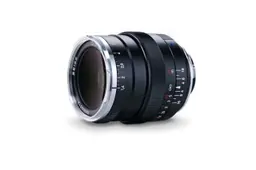
Carl Zeiss Distagon T* 1,4/35 ZM
35mm · f/1.4
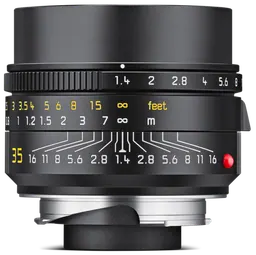
Leica Summilux-M 35mm f/1.4 ASPH
35mm · f/1.4
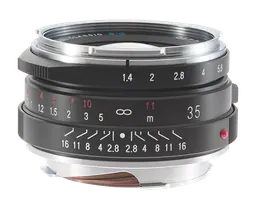
Voigtlander 35mm F1.4 Nokton VM II
35mm · f/1.4
-
Thypoch Simera 35mm F1.4
35mm · f/1.4
-
Funleader Artizlab Classic 35mm F1.4
35mm · f/1.4
-
Light Lens Lab 35mm F1.4 Aspherical 11873
35mm · f/1.4
Related guides
What does the f mean in camera lenses?
When it comes to photography, understanding the basics of f-stop is essential. F-stop is a critical component of a camera lens that…
How to clean a camera lens
Keeping your camera lenses clean is essential for getting clear, sharp, and high-quality images. Even the smallest speck of dust, dirt, or…
All camera lens types explained: Uses and functions
In this article, we'll explore the various types of camera lenses, their defining features, and when to use them. We'll also cover the…