

Micro Four Thirds (MFT/M43) Autofocus OIS
OM System M.Zuiko Digital ED 100-400mm F5.0-6.3 IS II
- Focal length
- 100–400 mm
- Aperture
- f/5–6.3
- Weight
- 1125 g
- Filter diameter
- 72 mm
- Min. focus distance
- 130 cm
- Length
- 205.6 mm
Predecessor: Olympus M.Zuiko Digital ED 100-400mm F5.0-6.3 IS
Overview
The OM System M.Zuiko Digital ED 100-400mm F5.0-6.3 IS II is a super-telephoto zoom for Micro Four Thirds cameras. OM System announced it in February 2025 together with the OM-3 as the updated version of the Olympus 100-400mm F5.0-6.3 IS. It is aimed at wildlife, bird and sports photographers who want long reach in a handheld lens. On the 2x crop of Micro Four Thirds, the focal range corresponds to 200-800mm in full-frame terms.
Optical design
The lens has 21 elements in 15 groups. According to OM System, these include 4 ED elements, 2 HR elements and 2 Super HR elements. The element and group count matches the previous version, and a hands-on report by Jason Odell describes the optical design as unchanged. The maximum aperture is F5.0 at 100mm and F6.3 at 400mm, the smallest aperture is F22, and the diaphragm has 9 circular blades.
Autofocus and handling
The main change over the predecessor is the image stabilizer. The lens has 5-axis Sync IS, which works together with the in-body stabilization of compatible OM System cameras, and OM System quotes up to 7 stops of shutter speed compensation. The minimum focus distance is 1.3 m with a maximum magnification of 0.29x, which equals 0.57x in 35mm terms. The MC-14 and MC-20 teleconverters are supported.
Build and size
The lens weighs 1,125 g without tripod adapter, caps and hood, is 205.6 mm long and 86.4 mm wide, and takes 72 mm filters. OM System lists IPX1 splashproof sealing plus dustproof and freezeproof construction. The front element has a fluorine coating. The tripod foot can be detached while the lens is mounted on the camera, and it is compatible with Arca-Swiss type clamps.
Where it fits
The direct predecessor is the Olympus M.Zuiko Digital ED 100-400mm F5.0-6.3 IS, which has the same 21/15 construction. For even more reach within the system, there is the OM System 150-600mm F5.0-6.3. The Panasonic Leica DG Vario-Elmar 100-400mm F4.0-6.3 II ASPH Power OIS covers the same range with a faster aperture at the short end. If a constant F2.8 over a shorter range is enough, see the OM System M.Zuiko Digital ED 50-200mm F2.8 IS Pro.
Pros and cons
Pros
- Large 200-800mm equivalent range in a compact zoom
- Sync IS with up to 7 stops according to OM System
- Detachable, Arca-Swiss compatible tripod foot
- IPX1 sealing, dustproof and freezeproof
Cons
- Slow maximum aperture of F6.3 at the long end
- Minimum focus distance of 1.3 m
- At 1,125 g, heavy for a Micro Four Thirds lens
- Sealing rating is lower than the IP53 of the 50-200mm F2.8 IS Pro
Verdict
The 100-400mm F5.0-6.3 IS II keeps the proven optical layout of its predecessor and fixes its weak point, the stabilization, while adding better sealing. For wildlife photographers on Micro Four Thirds who want 800mm equivalent, it is the smallest and lightest of the three super-telephoto zooms in the OM System lineup, according to Odell. Those who often shoot in dim light will find F6.3 limiting.
Technical Specifications
- min focal length
- 100 mm
- max focal length
- 400 mm
- max f (min zoom)
- f/5
- max f (max zoom)
- f/6.3
- min. aperture
- f/22
- Elements
- 21
- Groups
- 15
- Weight
- 1,125 g (2.48 lb)
- Filter diameter
- 72 mm
- min focus distance
- 130 cm (51.18 in)
- Length
- 205.6 mm (8.09 in)
- Diameter
- 86.4 mm (3.4 in)
Which cameras does the OM System M.Zuiko Digital ED 100-400mm F5.0-6.3 IS II fit?
The OM System M.Zuiko Digital ED 100-400mm F5.0-6.3 IS II fits all Micro Four Thirds cameras. There its field of view equals 200-800 mm in full-frame terms (crop factor 2).
Micro Four Thirds cameras
- Micro Four Thirds:
- OM System PEN, OM System OM-3, OM System OM-5 Mark II, Panasonic Lumix G97 (G99M2), Panasonic Lumix GH7, OM System OM-1 Mark II, Panasonic Lumix G9 II, Panasonic Lumix G100D, OM System OM-5, OM System OM-1, Panasonic Lumix GH6, Panasonic Lumix GH5 II, Olympus PEN E-P7, Olympus OM-D E-M10 Mark IV, Olympus OM-D E-M1 Mark III, Panasonic Lumix G100 (G110), Panasonic Lumix BGH1, Olympus PEN E-PL10, Olympus OM-D E-M5 Mark III, Panasonic Lumix G95 (G90, G91), Olympus OM-D E-M1X, Panasonic Lumix GX9, Panasonic Lumix GF10 (GF90, GX880), Olympus PEN E-PL9, Panasonic Lumix GH5S, Blackmagic Pocket Cinema Camera 4K, Panasonic Lumix G9, Olympus OM-D E-M10 Mark III, Panasonic Lumix GF9 (GX850, GX800), Panasonic Lumix GH5, Olympus PEN E-PL8, Olympus OM-D E-M1 Mark II, Panasonic Lumix G85 (G80, G81), Panasonic Lumix GX85 (GX80, GX7 Mark II), Olympus PEN-F, Olympus OM-D E-M10 Mark II, Panasonic Lumix GX8, Panasonic Lumix G7, Panasonic Lumix GF7, Olympus OM-D E-M5 Mark II, Panasonic Lumix GM5, Olympus PEN E-PL7, Panasonic Lumix GH4, Olympus OM-D E-M10, Panasonic Lumix GM1, Olympus OM-D E-M1, Panasonic Lumix GX7, Olympus PEN E-PL6, Olympus PEN E-P5, Panasonic Lumix G6, Panasonic Lumix GF6, Blackmagic Pocket Cinema Camera, Olympus PEN E-PM2, Olympus PEN E-PL5, Panasonic Lumix GH3, Panasonic Lumix G5, Panasonic Lumix GF5, Olympus OM-D E-M5, Blackmagic Cinema Camera (MFT)
OM System M.Zuiko Digital ED 100-400mm F5.0-6.3 IS II compared
Key specs side by side with the most similar Micro Four Thirds lenses.
| Lens | OM System M.Zuiko Digital ED 100-400mm F5.0-6.3 IS II | Olympus M.Zuiko Digital ED 100-400mm F5.0-6.3 IS | Panasonic Leica DG Vario-Elmar 100-400mm F4.0-6.3 ASPH Power OIS | Panasonic Leica DG Vario-Elmar 100-400mm F4.0-6.3 II ASPH Power OIS |
|---|---|---|---|---|
| Focal length | 100-400 mm | 100-400 mm | 100-400 mm | 100-400 mm |
| Max. aperture | f/5-6.3 | f/5-6.3 | f/4-6.3 | f/4-6.3 |
| Weight | 1,125 g | 1,120 g | 985 g | 985 g |
| Filter diameter | 72 mm | 72 mm | 72 mm | 72 mm |
| Min. focus distance | 130 cm | 17 cm | 130 cm | 130 cm |
| Length | 205.6 mm | 206 mm | 172 mm | 172 mm |
| Autofocus | yes | yes | yes | yes |
| Image stabilization | yes | yes | yes | yes |
OM System M.Zuiko Digital ED 100-400mm F5.0-6.3 IS II: FAQ
Does the OM System M.Zuiko Digital ED 100-400mm F5.0-6.3 IS II have autofocus?
Yes, the OM System M.Zuiko Digital ED 100-400mm F5.0-6.3 IS II has autofocus.
Does the OM System M.Zuiko Digital ED 100-400mm F5.0-6.3 IS II have image stabilization?
Yes, the OM System M.Zuiko Digital ED 100-400mm F5.0-6.3 IS II has optical image stabilization.
How much does the OM System M.Zuiko Digital ED 100-400mm F5.0-6.3 IS II weigh?
The OM System M.Zuiko Digital ED 100-400mm F5.0-6.3 IS II weighs 1,125 g. It is 205.6 mm long with a diameter of 86.4 mm.
What filter size does the OM System M.Zuiko Digital ED 100-400mm F5.0-6.3 IS II use?
The OM System M.Zuiko Digital ED 100-400mm F5.0-6.3 IS II takes 72 mm screw-in filters.
How close can the OM System M.Zuiko Digital ED 100-400mm F5.0-6.3 IS II focus?
The minimum focus distance of the OM System M.Zuiko Digital ED 100-400mm F5.0-6.3 IS II is 130 cm, measured from the sensor plane.
Similar lenses
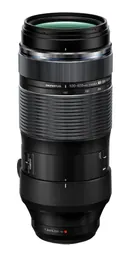
Olympus M.Zuiko Digital ED 100-400mm F5.0-6.3 IS
100-400mm · f/5-6.3
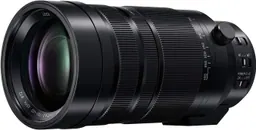
Panasonic Leica DG Vario-Elmar 100-400mm F4.0-6.3 ASPH Power OIS
100-400mm · f/4-6.3
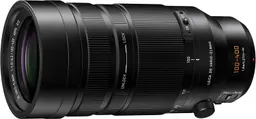
Panasonic Leica DG Vario-Elmar 100-400mm F4.0-6.3 II ASPH Power OIS
100-400mm · f/4-6.3
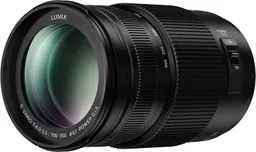
Panasonic Lumix G Vario 100-300mm F4-5.6 II Power OIS
100-300mm · f/4-5.6
-
Panasonic Lumix G Vario 100-300mm F4-5.6 OIS
100-300mm · f/4-5.6
Olympus M.Zuiko Digital ED 150-400mm F4.5 TC 1.25x IS PRO
150-400mm · f/4.5
Olympus M.Zuiko Digital ED 75-300mm 1:4.8-6.7
75-300mm · f/4.8-6.7
-
Olympus M.Zuiko ED 75-300mm 1:4.8-6.7 II
75-300mm · f/4.8-6.7
Related guides
What does the f mean in camera lenses?
When it comes to photography, understanding the basics of f-stop is essential. F-stop is a critical component of a camera lens that…
How to clean a camera lens
Keeping your camera lenses clean is essential for getting clear, sharp, and high-quality images. Even the smallest speck of dust, dirt, or…
All camera lens types explained: Uses and functions
In this article, we'll explore the various types of camera lenses, their defining features, and when to use them. We'll also cover the…