
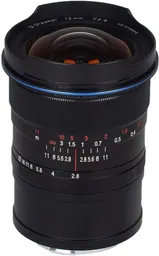
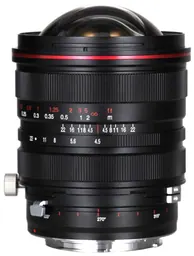
Venus Laowa 12mm F2.8 Lite Zero-D FF
- Focal length
- 12 mm
- Aperture
- f/2.8
- Weight
- 480 g
- Filter diameter
- 72 mm
- Diameter
- –
- min. focus dist.
- 14 cm

219 results




When it comes to photography, understanding the basics of f-stop is essential. F-stop is a critical component of a camera lens that…
Keeping your camera lenses clean is essential for getting clear, sharp, and high-quality images. Even the smallest speck of dust, dirt, or…
In this article, we'll explore the various types of camera lenses, their defining features, and when to use them. We'll also cover the…
When Canon unveiled the RF mount in 2018, I was both skeptical and intrigued. As a long-time Canon shooter, I had invested heavily in EF lenses and wasn’t sure if this was just another industry trend or a genuine leap forward. But after using the RF system extensively, I can confidently say it’s a game-changer—not just for Canon users but for the entire photography world.
The RF mount doesn’t just refine what we had before; it redefines what’s possible in optical and camera design. From groundbreaking lenses to the way it integrates with Canon’s mirrorless cameras, the RF mount has fundamentally shifted how I think about gear and what it can do.
At first glance, the RF mount might seem like a slightly tweaked EF mount, but it’s so much more. The shorter flange distance of 20mm makes a world of difference. For those not obsessed with technical specs (like I am), this essentially means lenses can be designed to sit closer to the sensor, which opens up massive creative and technical possibilities. For example, we now see lenses like the RF 28-70mm f/2L USM—something that was simply impossible before. A constant f/2 zoom? That’s the kind of thing that gets photographers excited, and it’s only feasible because of the RF mount's design.
The larger diameter also plays a huge role. By matching the EF mount’s 54mm size, Canon didn’t just ensure compatibility with older lenses via adapters—it also gave engineers the flexibility to create optics with larger apertures, sharper corners, and fewer compromises. As someone who’s tested everything from vintage primes to cutting-edge zooms, I can tell you the difference is palpable. Images feel cleaner, sharper, and just... better.
I’ve worked with a range of RF lenses, and a few have left a lasting impression. Let me highlight some standouts:
RF 50mm f/1.2L USM: I’ve used Canon’s 50mm primes for years, but this one sets a new benchmark. It’s ridiculously sharp, even wide open, with stunning bokeh that makes portraits look like they belong in a gallery. The focus is snappy, and while it’s a bit heavy, the results are worth the extra weight in your bag.
RF 15-35mm f/2.8L IS USM: As someone who loves shooting landscapes and architecture, this lens feels like a dream. The addition of image stabilization (something the EF version lacked) makes it even more versatile, especially for handheld low-light shots.
RF 28-70mm f/2L USM: This lens is a marvel, plain and simple. It’s not for everyone—it’s expensive and heavy—but if you need the versatility of a zoom with the quality of a prime, there’s nothing else like it.
Canon didn’t just recreate its EF lineup with the RF system; it pushed boundaries. Sure, there are more affordable lenses like the RF 24-105mm f/4-7.1 IS STM, but what excites me most are these flagship lenses that show what’s possible when you start fresh.
One of my initial concerns with switching to the RF system was compatibility. After all, I’ve collected EF lenses for over a decade, and the thought of replacing them all was daunting. Thankfully, Canon nailed it with their EF-EOS R adapter. Using my EF 70-200mm f/2.8L IS II USM on an RF camera feels just as natural as it did on my DSLR—if not better, thanks to improved autofocus performance.
This adaptability means I can use my existing lenses while slowly adding RF glass to my kit. It’s a smart move by Canon, ensuring that the transition to mirrorless doesn’t feel like a forced upgrade but a choice.
As much as I love the RF system, it’s not perfect. The lens lineup, while impressive, still has gaps. For instance, budget-friendly telephoto primes are noticeably missing, and I’d love to see more compact options for travel photographers. And while Canon has made great strides in autofocus and stabilization, some RF lenses are undeniably heavy—pushing the boundaries of what’s “portable.”
Another challenge is price. Many RF lenses, especially the high-end models, are expensive. While the quality justifies the cost, it can be a barrier for hobbyists or those new to Canon’s ecosystem.
The RF mount isn’t just about technical specs; it’s about rethinking what a camera system can offer. It’s given me tools that didn’t exist before—lenses that let me shoot in new ways and cameras that feel like extensions of my vision. As a photographer, that’s what matters most.
When I switched to the EOS R5, I felt like I was stepping into the future. The RF mount’s potential is enormous, and Canon seems committed to pushing it further. Whether you’re a pro looking for the ultimate image quality or a hobbyist exploring mirrorless photography, the RF mount has something to offer. For me, it’s reignited my passion for gear—not just as a tool but as a creative partner.
Yes, with Canon's Mount Adapter EF-EOS R, which accepts EF, EF-S, TS-E and MP-E lenses. According to Canon, all EF-EOS R adapters keep autofocus, chromatic aberration correction and lens metadata fully working. The adapter is sold as a standard version, a version with a control ring and a version with a drop-in filter slot. EF-S lenses fit too, but a full-frame EOS R camera then crops the image to the APS-C area (1.6x crop factor).
RF-S lenses are designed for APS-C cameras such as the EOS R7 and R10, while RF lenses are designed for full-frame sensors. The mount is identical, so both types fit every camera of the EOS R System. A full-frame body automatically crops the image to the APS-C area when you attach an RF-S lens. An RF lens on an APS-C body, on the other hand, gives a 1.6x crop factor.
Yes, but mostly for APS-C cameras. As of 2026, Sigma and Tamron sell licensed autofocus lenses for RF-S, while third-party full-frame autofocus lenses for RF remain rare (Samyang has offered a few). Manual-focus lenses for RF are available from many makers.
The RF mount (2018) keeps the 54 mm diameter of the EF mount (1987) but cuts the flange distance from 44 mm to 20 mm, because mirrorless cameras need no space for a mirror. It also has 12 electrical contacts instead of 8, which allows faster communication between camera and lens. RF lenses cannot be used on EF DSLRs, and Canon offers no adapter for that.
All cameras of Canon's EOS R System use it, both full-frame models (for example the EOS R5 Mark II and EOS R1) and APS-C models (EOS R7, EOS R10). Some Cinema EOS cameras such as the EOS R5 C, C70 and C80 use RF as well. EF DSLRs and EOS M cameras have different mounts and cannot take RF lenses.