

Nikon Z (DX/FX) Autofocus OIS
Nikon Nikkor Z 70-200mm F2.8 VR S II
- Focal length
- 70–200 mm
- Aperture
- f/2.8
- Weight
- 998 g
- Filter diameter
- 77 mm
- Min. focus distance
- 38 cm
- Length
- 208 mm
Predecessor: Nikon Nikkor Z 70-200mm F2.8 VR S
Overview
The Nikon Nikkor Z 70-200mm F2.8 VR S II is the second generation of Nikon's professional f/2.8 telephoto zoom for the Z mount. Nikon announced it on 23 February 2026. It is made for full-frame Z cameras and aims at portraits, weddings, events, sports and wildlife at moderate distances. Nikon's main point is weight: at 998 g, it is described as the lightest lens in its class and 26 percent lighter than its predecessor.
Optical design
Nikon's US specification lists 18 elements in 16 groups. The press release names six types of special elements, namely Super ED, aspherical ED, ED, aspherical, fluorite and SR (Short-wavelength Refractive). The aperture is a constant f/2.8, with a smallest aperture of f/22 and an 11-blade rounded diaphragm. The lens uses a Meso Amorphous Coat and an ARNEO Coat against ghosting and flare, plus a fluorine coating on the front element.
Autofocus and handling
Autofocus uses a Silky Swift VCM (SSVCM), which Nikon describes as extremely fast, precise and quiet for stills and video. The vibration reduction offers 6.0 stops with a camera that supports Synchro VR. The zoom is internal, so the length stays constant when zooming. Nikon lists a control ring with a click on/off switch, a filter adjustment window for polarizers and variable ND filters, and compatibility with the Z TELECONVERTER TC-1.4x and TC-2.0x. The minimum focus distance is 0.38 m at 70 mm and 0.8 m at 200 mm.
Build and size
The lens weighs 998 g without the tripod collar and measures about 90 mm in diameter and 208 mm in length, which Nikon says is 12 mm shorter than its predecessor. The filter thread is 77 mm. Nikon lists extensive weather sealing but notes that complete dust and drip resistance is not guaranteed in all situations.
Where it fits
The predecessor, the Nikon Nikkor Z 70-200mm F2.8 VR S, weighs 1440 g in our database with 21 elements in 18 groups and a length of 220 mm. The VR S II keeps the f/2.8 aperture and the filter size while cutting weight and length.
Pros and cons
Pros
- 998 g, lightest in its class according to Nikon
- Constant f/2.8 with 11 rounded aperture blades
- 6.0 stops of VR with Synchro VR
- Internal zoom with constant length
- Compatible with Nikon's TC-1.4x and TC-2.0x teleconverters
- Filter adjustment window and switchable control ring clicks
Cons
- 998 g is still a heavy lens for long days
- Minimum aperture f/22 and a 77 mm thread, same as before
- The 6.0 stops of VR apply with a camera that supports Synchro VR
- Nikon does not guarantee complete weather protection
Verdict
The Nikkor Z 70-200mm F2.8 VR S II keeps what made the first version a Z-mount reference and takes a lot of weight out of it. It is aimed at working photographers who carry the lens all day and want new AF and 6-stop VR. For those who do not need that weight saving, the original VR S is the heavier previous version.
Technical Specifications
- min focal length
- 70 mm
- max focal length
- 200 mm
- max f (min zoom)
- f/2.8
- max f (max zoom)
- f/2.8
- min. aperture
- f/22
- Elements
- 18
- Groups
- 16
- Weight
- 998 g (2.2 lb)
- Filter diameter
- 77 mm
- min focus distance
- 38 cm (14.96 in)
- Length
- 208 mm (8.19 in)
- Diameter
- 90 mm (3.54 in)
Which cameras does the Nikon Nikkor Z 70-200mm F2.8 VR S II fit?
The Nikon Nikkor Z 70-200mm F2.8 VR S II is a full-frame lens for Nikon Z cameras. On full-frame bodies it uses the whole sensor; on APS-C Nikon Z cameras its field of view equals 105-300 mm in full-frame terms.
Nikon Z cameras
- Full frame:
- Nikon ZR, Nikon Z5II, Nikon Z6III, Nikon Z8, Nikon Zf, Nikon Z9, Nikon Z5, Nikon Z6II, Nikon Z7II, Nikon Z6, Nikon Z7
- APS-C:
- Nikon Z50II, Nikon Z30, Nikon Z fc, Nikon Z50
Nikon Nikkor Z 70-200mm F2.8 VR S II compared
Key specs side by side with the most similar Nikon Z lenses.
| Lens | Nikon Nikkor Z 70-200mm F2.8 VR S II | Nikon Nikkor Z 70-200mm F2.8 VR S | Nikon Nikkor Z 70-180mm F2.8 | Tamron 70-300mm F/4.5-6.3 DI III RXD |
|---|---|---|---|---|
| Focal length | 70-200 mm | 70-200 mm | 70-180 mm | 70-300 mm |
| Max. aperture | f/2.8 | f/2.8 | f/2.8 | f/4.5-6.3 |
| Weight | 998 g | 1,440 g | 795 g | 580 g |
| Filter diameter | 77 mm | 77 mm | 67 mm | 67 mm |
| Min. focus distance | 38 cm | 50 cm | 27 cm | 80 cm |
| Length | 208 mm | 220 mm | 151 mm | 150 mm |
| Autofocus | yes | yes | yes | yes |
| Image stabilization | yes | yes | no | no |
Nikon Nikkor Z 70-200mm F2.8 VR S II: FAQ
Does the Nikon Nikkor Z 70-200mm F2.8 VR S II have autofocus?
Yes, the Nikon Nikkor Z 70-200mm F2.8 VR S II has autofocus.
Does the Nikon Nikkor Z 70-200mm F2.8 VR S II have image stabilization?
Yes, the Nikon Nikkor Z 70-200mm F2.8 VR S II has optical image stabilization.
How much does the Nikon Nikkor Z 70-200mm F2.8 VR S II weigh?
The Nikon Nikkor Z 70-200mm F2.8 VR S II weighs 998 g. It is 208 mm long with a diameter of 90 mm.
What filter size does the Nikon Nikkor Z 70-200mm F2.8 VR S II use?
The Nikon Nikkor Z 70-200mm F2.8 VR S II takes 77 mm screw-in filters.
How close can the Nikon Nikkor Z 70-200mm F2.8 VR S II focus?
The minimum focus distance of the Nikon Nikkor Z 70-200mm F2.8 VR S II is 38 cm, measured from the sensor plane.
Is the Nikon Nikkor Z 70-200mm F2.8 VR S II a full-frame lens?
Yes, the Nikon Nikkor Z 70-200mm F2.8 VR S II covers full frame. On APS-C cameras its field of view equals 105-300 mm in full-frame terms.
Similar lenses
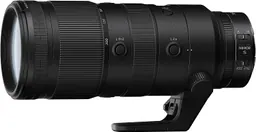
Nikon Nikkor Z 70-200mm F2.8 VR S
70-200mm · f/2.8
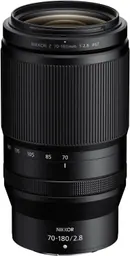
Nikon Nikkor Z 70-180mm F2.8
70-180mm · f/2.8
Tamron 70-300mm F/4.5-6.3 DI III RXD
70-300mm · f/4.5-6.3
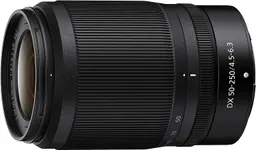
Nikon Nikkor Z DX 50-250mm F4.5-6.3 VR
50-250mm · f/4.5-6.3
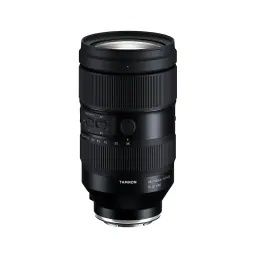
Tamron 35-150mm F/2-2.8 Di III VXD
35-150mm · f/2-2.8
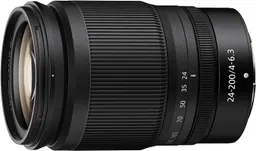
Nikon Nikkor Z 24-200mm F4-6.3 VR
24-200mm · f/4-6.3
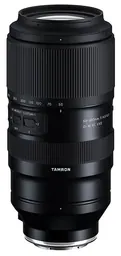
Tamron 50-400mm F/4.5-6.3 Di III VC VXD
50-400mm · f/4.5-6.3
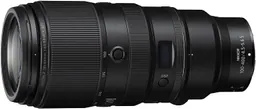
Nikon Nikkor Z 100-400mm F4.5-5.6 VR S
100-400mm · f/4.5-5.6
Related guides
What does the f mean in camera lenses?
When it comes to photography, understanding the basics of f-stop is essential. F-stop is a critical component of a camera lens that…
How to clean a camera lens
Keeping your camera lenses clean is essential for getting clear, sharp, and high-quality images. Even the smallest speck of dust, dirt, or…
All camera lens types explained: Uses and functions
In this article, we'll explore the various types of camera lenses, their defining features, and when to use them. We'll also cover the…