

Nikon Z (DX/FX) Autofocus OIS
Sigma 16-300mm F3.5-6.7 DC OS Contemporary
- Focal length
- 16–300 mm
- Aperture
- f/3.5–6.7
- Weight
- 630 g
- Filter diameter
- 67 mm
- Min. focus distance
- 17 cm
- Length
- 125.4 mm
Overview
The Sigma 16-300mm F3.5-6.7 DC OS Contemporary is an APS-C all-in-one zoom with an 18.8x range, available for Sony E, Leica L-Mount, Fujifilm X and Canon RF. A Nikon Z version has been announced for release on 5 November 2026. The focal range corresponds to about 24 to 450mm in 35mm terms (roughly 25.6 to 480mm on Canon RF). Sigma calls it the first mirrorless lens with this zoom ratio. It suits travel, wildlife, sports and general use with a single lens.
Optical design
The lens has 20 elements in 14 groups, including 1 FLD, 4 SLD and 4 aspherical elements. The diaphragm has 9 rounded blades and the smallest aperture is F22 at 16mm and F45 at 300mm. According to Sigma, the maximum magnification is 1:2 at 70mm, 1:3 at the wide end and 1:4 at the telephoto end. The minimum focus distance is 17cm at the wide end and 105cm at the long end. Sigma also says focus breathing is suppressed, which helps with focus stacking and video.
Autofocus and handling
An HLA (High-response Linear Actuator) drives the autofocus. Optical stabilization uses Sigma's OS2 algorithm and offers 6 stops at 16mm and 4.5 stops at 300mm by CIPA guidelines, measured on an APS-C camera according to Sigma. A zoom lock switch holds the lens at the wide end so the barrel does not extend.
Build and size
Sigma quotes 615g for Sony E, L-Mount and Fujifilm X, 625g for Canon RF and 630g for Nikon Z. Length varies by mount between 121.4mm (L-Mount, Canon RF) and 125.4mm (Nikon Z), with a diameter of 73.8mm and a 67mm filter thread. The structure is dust and splash resistant and the front element has a water and oil repellent coating.
Where it fits
In the database, the Sigma 18-300 F3.5-6.3 DC Macro OS HSM Contemporary is Sigma's earlier long-range zoom for DSLRs. For Sony E and Fujifilm X, the Tamron 18-300mm F3.5-6.3 Di III-A VC VXD is the direct competitor. The Sony E 18-135mm F3.5-5.6 OSS and the Fujifilm XF 18-135mm F3.5-5.6 R LM OIS WR cover a shorter range, and the Sigma 18-50mm F2.8 DC DN Contemporary is a lighter, brighter option with far less reach.
Pros and cons
Pros
- 18.8x zoom from 16mm to 300mm in a lens of about 615g
- Optical stabilization with up to 6 stops at the wide end by Sigma's rating
- Maximum magnification of 1:2 at 70mm
- Dust and splash resistant, with zoom lock
Cons
- Aperture closes to F6.7 at 300mm
- Not suited to shallow depth of field or very dim light
- The barrel extends when zooming to the long end
Verdict
The Sigma 16-300mm F3.5-6.7 DC OS Contemporary is a one-lens travel solution for APS-C owners who accept a variable aperture in exchange for reach and a wide start at 16mm. The built-in stabilization is a practical advantage on camera bodies without in-body stabilization.
Technical Specifications
- min focal length
- 16 mm
- max focal length
- 300 mm
- max f (min zoom)
- f/3.5
- max f (max zoom)
- f/6.7
- min. aperture
- f/22
- Elements
- 20
- Groups
- 14
- Weight
- 630 g (1.39 lb)
- Filter diameter
- 67 mm
- min focus distance
- 17 cm (6.69 in)
- Length
- 125.4 mm (4.94 in)
- Diameter
- 73.8 mm (2.91 in)
Which cameras does the Sigma 16-300mm F3.5-6.7 DC OS Contemporary fit?
The Sigma 16-300mm F3.5-6.7 DC OS Contemporary is designed for APS-C sensors. On APS-C Nikon Z cameras its field of view equals 24-450 mm in full-frame terms. Full-frame bodies use it in APS-C (crop) mode, recording only part of the sensor and fewer megapixels.
Nikon Z cameras
- Full frame (in APS-C mode):
- Nikon ZR, Nikon Z5II, Nikon Z6III, Nikon Z8, Nikon Zf, Nikon Z9, Nikon Z5, Nikon Z6II, Nikon Z7II, Nikon Z6, Nikon Z7
- APS-C:
- Nikon Z50II, Nikon Z30, Nikon Z fc, Nikon Z50
Sigma 16-300mm F3.5-6.7 DC OS Contemporary compared
Key specs side by side with the most similar Nikon Z lenses.
| Lens | Sigma 16-300mm F3.5-6.7 DC OS Contemporary | Nikon Nikkor Z DX 18-140mm f/3.5-6.3 VR | Nikon Nikkor Z 24-200mm F4-6.3 VR | Nikon Nikkor Z 28-400mm F4-8 VR |
|---|---|---|---|---|
| Focal length | 16-300 mm | 18-140 mm | 24-200 mm | 28-400 mm |
| Max. aperture | f/3.5-6.7 | f/3.5-6.3 | f/4-6.3 | f/4-8 |
| Weight | 630 g | 315 g | 570 g | 725 g |
| Filter diameter | 67 mm | 62 mm | 67 mm | 77 mm |
| Min. focus distance | 17 cm | 20 cm | 50 cm | 20 cm |
| Length | 125.4 mm | 90 mm | 114 mm | 142 mm |
| Autofocus | yes | yes | yes | yes |
| Image stabilization | yes | yes | yes | yes |
This lens is also available for
Sigma 16-300mm F3.5-6.7 DC OS Contemporary: FAQ
Does the Sigma 16-300mm F3.5-6.7 DC OS Contemporary have autofocus?
Yes, the Sigma 16-300mm F3.5-6.7 DC OS Contemporary has autofocus.
Does the Sigma 16-300mm F3.5-6.7 DC OS Contemporary have image stabilization?
Yes, the Sigma 16-300mm F3.5-6.7 DC OS Contemporary has optical image stabilization.
How much does the Sigma 16-300mm F3.5-6.7 DC OS Contemporary weigh?
The Sigma 16-300mm F3.5-6.7 DC OS Contemporary weighs 630 g. It is 125.4 mm long with a diameter of 73.8 mm.
What filter size does the Sigma 16-300mm F3.5-6.7 DC OS Contemporary use?
The Sigma 16-300mm F3.5-6.7 DC OS Contemporary takes 67 mm screw-in filters.
How close can the Sigma 16-300mm F3.5-6.7 DC OS Contemporary focus?
The minimum focus distance of the Sigma 16-300mm F3.5-6.7 DC OS Contemporary is 17 cm, measured from the sensor plane.
Is the Sigma 16-300mm F3.5-6.7 DC OS Contemporary a full-frame lens?
No, the Sigma 16-300mm F3.5-6.7 DC OS Contemporary is an APS-C lens. On APS-C cameras its field of view equals 24-450 mm in full-frame terms.
Similar lenses
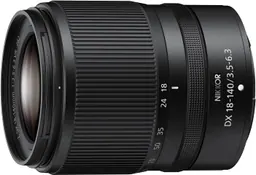
Nikon Nikkor Z DX 18-140mm f/3.5-6.3 VR
18-140mm · f/3.5-6.3
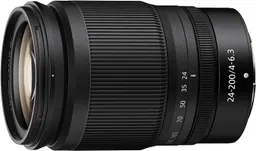
Nikon Nikkor Z 24-200mm F4-6.3 VR
24-200mm · f/4-6.3
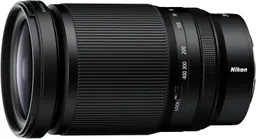
Nikon Nikkor Z 28-400mm F4-8 VR
28-400mm · f/4-8
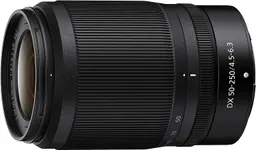
Nikon Nikkor Z DX 50-250mm F4.5-6.3 VR
50-250mm · f/4.5-6.3
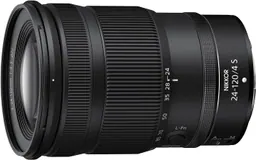
Nikon Nikkor Z 24-120mm F4 S
24-120mm · f/4
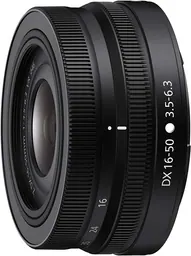
Nikon Nikkor Z DX 16-50mm F3.5-6.3 VR
16-50mm · f/3.5-6.3
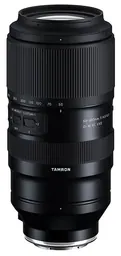
Tamron 50-400mm F/4.5-6.3 Di III VC VXD
50-400mm · f/4.5-6.3
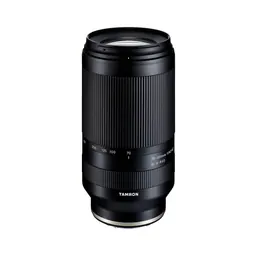
Tamron 70-300mm F/4.5-6.3 DI III RXD
70-300mm · f/4.5-6.3
Related guides
What does the f mean in camera lenses?
When it comes to photography, understanding the basics of f-stop is essential. F-stop is a critical component of a camera lens that…
How to clean a camera lens
Keeping your camera lenses clean is essential for getting clear, sharp, and high-quality images. Even the smallest speck of dust, dirt, or…
All camera lens types explained: Uses and functions
In this article, we'll explore the various types of camera lenses, their defining features, and when to use them. We'll also cover the…