
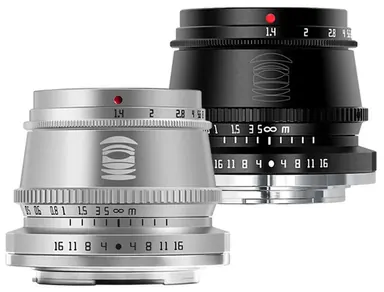
TTArtisan 35mm f/1.4
- Focal length
- 35 mm
- Aperture
- f/1.4
- Weight
- 180 g
- Filter diameter
- 39 mm
- Min. focus distance
- 28 cm
- Length
- 44 mm
At a Glance
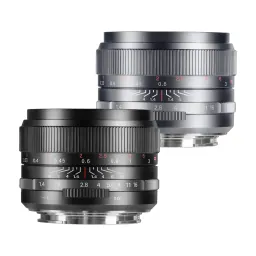
The TTArtisan 35mm f/1.4 for Nikon Z APS-C cameras is a manual standard prime. Its focal length is equivalent to 53 mm on full frame. With f/1.4 it gathers a lot of light, and at 180 g it stays compact. A clicked aperture ring and a full metal body are included, and it focuses down to 28 cm. Everyday shooting, street, low light and travel are typical uses.
Good for
- Everyday
- Street
- Low light
- Travel
Worth knowing
- APS-C image circle: on full-frame cameras only usable in crop mode, at reduced resolution.
- No autofocus: focusing is manual only.
Derived from the manufacturer data, not from our own tests. How we check
Technical Specifications
- Min. focal length
- 35 mm
- Max. focal length
- 35 mm
- Max. aperture (min. zoom)
- f/1.4
- Max. aperture (max. zoom)
- f/1.4
- Min. aperture
- f/16
- Elements
- 7
- Groups
- 6
- Weight
- 180 g (0.4 lb)
- Filter diameter
- 39 mm
- Min. focus distance
- 28 cm (11.02 in)
- Length
- 44 mm (1.73 in)
- Diameter
- 56 mm (2.2 in)
Manufacturer data: ttartisan.com
Last checked: October 13, 2026 (against the manufacturer data) · How we check
Which cameras does the TTArtisan 35mm f/1.4 fit?
The TTArtisan 35mm f/1.4 is designed for APS-C sensors. On APS-C Nikon Z cameras its field of view equals 53 mm in full-frame terms. Full-frame bodies use it in APS-C (crop) mode, recording only part of the sensor and fewer megapixels.
Nikon Z cameras
- Full frame (in APS-C mode):
- Nikon Z5IIC,Nikon ZR,Nikon Z5II,Nikon Z6III,Nikon Z8,Nikon Zf,Nikon Z9,Nikon Z5,Nikon Z6II,Nikon Z7II,Nikon Z6,Nikon Z7
- APS-C:
- Nikon Z50II,Nikon Z30,Nikon Z fc,Nikon Z50
TTArtisan 35mm f/1.4 compared
Key specs side by side with the most similar Nikon Z lenses.
| Lens | TTArtisan 35mm f/1.4 | TTArtisan Tilt APS-C 35mm f/1.4 | Voigtländer Nokton 35mm f/1.2 | SG-image MF 35mm F1.2 |
|---|---|---|---|---|
| Focal length | 35 mm | 35 mm | 35 mm | 35 mm |
| Max. aperture | f/1.4 | f/1.4 | f/1.2 | f/1.2 |
| Weight | 180 g | – | 230 g | 200 g |
| Filter diameter | 39 mm | 52 mm | 46 mm | 46 mm |
| Min. focus distance | 28 cm | 35 cm | 30 cm | 40 cm |
| Length | 44 mm | 65 mm | 41 mm | 33 mm |
| Autofocus | no | no | no | no |
| Image stabilization | no | no | no | no |
This lens is also available for
TTArtisan 35mm f/1.4: FAQ
Does the TTArtisan 35mm f/1.4 have autofocus?
No, the TTArtisan 35mm f/1.4 has no autofocus; you focus it manually.
Does the TTArtisan 35mm f/1.4 have image stabilization?
No, the TTArtisan 35mm f/1.4 has no stabilization of its own. On cameras with in-body image stabilization (IBIS) the image is still stabilized.
How much does the TTArtisan 35mm f/1.4 weigh?
The TTArtisan 35mm f/1.4 weighs 180 g. It is 44 mm long with a diameter of 56 mm.
What filter size does the TTArtisan 35mm f/1.4 use?
The TTArtisan 35mm f/1.4 takes 39 mm screw-in filters.
How close can the TTArtisan 35mm f/1.4 focus?
The minimum focus distance of the TTArtisan 35mm f/1.4 is 28 cm, measured from the sensor plane.
Is the TTArtisan 35mm f/1.4 a full-frame lens?
No, the TTArtisan 35mm f/1.4 is an APS-C lens. On APS-C cameras its field of view equals 53 mm in full-frame terms.
Similar lenses
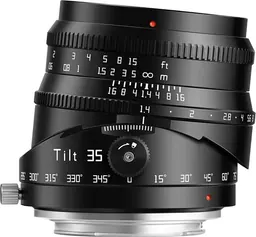
TTArtisan Tilt APS-C 35mm f/1.4
35mm · f/1.4
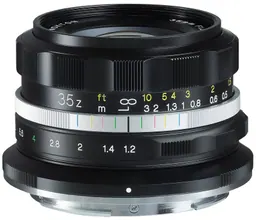
Voigtländer Nokton 35mm f/1.2
35mm · f/1.2
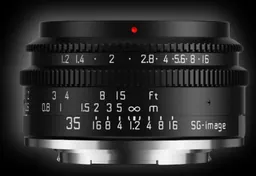
SG-image MF 35mm F1.2
35mm · f/1.2
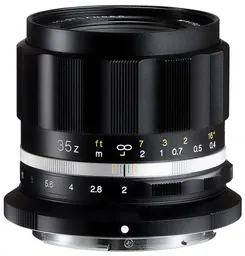
Voigtländer Macro APO-Ultron 35mm f/2
35mm · f/2
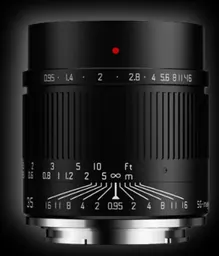
SG-image MF 35mm F0.95
35mm · f/0.95
Viltrox AF 35mm F1.7
35mm · f/1.7
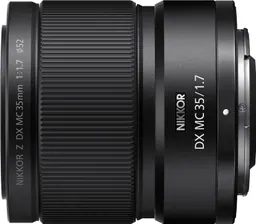
Nikon Nikkor Z DX MC 35mm F1.7
35mm · f/1.7
7artisans Photoelectric 35mm f/1.4 Mark III
35mm · f/1.4
Related guides
What does the f mean in camera lenses? f/2.8 explained
The f in f/2.8 is the f-number: focal length divided by aperture diameter. Learn why lower means more light and how the f-stop scale works.
How to clean a camera lens safely, step by step
How to clean a camera lens: blow off dust, then wipe gently with a microfiber cloth or lens paper. Steps and warnings from Canon, Nikon…
Types of Camera Lenses Explained: Uses and Differences
Types of camera lenses explained: wide-angle, standard, telephoto, prime, zoom, macro and more, with focal length ranges and typical uses.