

Venus Laowa 17mm F4 Zero-D Tilt-Shift
- Focal length
- 17 mm
- Aperture
- f/4
- Weight
- 810 g
- Filter diameter
- 86 mm
- Min. focus distance
- 25 cm
- Length
- 111 mm
Overview
The Venus Laowa 17mm F4 Zero-D Tilt-Shift is an ultra wide manual focus tilt-shift lens for full frame mirrorless cameras with a 104 degree angle of view. Announced in March 2026, it is offered for Sony E, Nikon Z, Canon RF, Leica L and Fujifilm GFX, and Laowa sells a shift only version as a separate model. It is aimed at architecture, interiors and landscape photographers who need to correct converging lines or control the plane of focus at a very wide angle.
Optical design
The lens has 18 elements in 12 groups and 14 aperture blades, with an aperture range of f/4 to f/22. Laowa labels the design Zero-D, meaning it aims for minimal distortion. The minimum focus distance is 25 cm with a maximum magnification of 0.131x. Laowa gives the movements as plus or minus 10 degrees of tilt and plus or minus 12 mm of shift on full frame, with shift reduced to plus or minus 8 mm on the medium format GFX version.
Focusing and handling
Focusing is manual. The tilt-shift mechanism rotates 360 degrees, and according to PetaPixel the tripod collar clicks every 15 degrees, making it simple to align the movements. The product page notes that the L mount version is not compatible with several Panasonic Lumix models, namely the S5 II, S5 IIX, S1 II, S1 IIE and S1R II. There is no electronic aperture control in the specifications, and no stabilizer.
Build and size
The tilt-shift version weighs 810 g without caps and is about 111 mm long with a diameter of 93 mm, according to the product page. The front takes 86 mm filters, which is large but allows screw in filters at this angle of view. A tripod foot with Arca-Swiss support is part of the package.
Where it fits
Laowa's earlier Venus Laowa 17mm F4 Zero-D GFX was built for Fujifilm G only, so the new lens is the first 17 mm tilt-shift from Laowa for several full frame mounts. In the database, the Canon TS-E 17mm f/4L and the Nikon PC Nikkor 19mm F4E ED are the established DSLR counterparts. Within Laowa, shift only options include the Venus Laowa 15mm f/4.5R Zero-D Shift and the Venus Laowa 12-24mm f/5.6 Zoom Shift CF.
Pros and cons
Pros
- 104 degree angle of view with tilt and shift
- 14 aperture blades
- 810 g, light for a tilt-shift of this class
- 25 cm minimum focus distance
- Medium format support with a reduced shift of 8 mm
Cons
- Manual focus only
- Shift limited to 8 mm on GFX
- 86 mm filters are large
- Not compatible with some Panasonic Lumix bodies on L mount
- f/4 maximum aperture
Verdict
The Venus Laowa 17mm F4 Zero-D Tilt-Shift is a focused tool for architecture and interior work, with a long list of mounts. Photographers who do not need tilt can look at the shift only version, which Laowa lists with a lower weight of 770 g and a shift of 11 mm.
Technical Specifications
- min focal length
- 17 mm
- max focal length
- 17 mm
- max f (min zoom)
- f/4
- max f (max zoom)
- f/4
- min. aperture
- f/22
- Elements
- 18
- Groups
- 12
- Weight
- 810 g (1.79 lb)
- Filter diameter
- 86 mm
- min focus distance
- 25 cm (9.84 in)
- Length
- 111 mm (4.37 in)
- Diameter
- 93 mm (3.66 in)
Which cameras does the Venus Laowa 17mm F4 Zero-D Tilt-Shift fit?
The Venus Laowa 17mm F4 Zero-D Tilt-Shift is a full-frame lens for Nikon Z cameras. On full-frame bodies it uses the whole sensor; on APS-C Nikon Z cameras its field of view equals 26 mm in full-frame terms.
Nikon Z cameras
- Full frame:
- Nikon ZR, Nikon Z5II, Nikon Z6III, Nikon Z8, Nikon Zf, Nikon Z9, Nikon Z5, Nikon Z6II, Nikon Z7II, Nikon Z6, Nikon Z7
- APS-C:
- Nikon Z50II, Nikon Z30, Nikon Z fc, Nikon Z50
Venus Laowa 17mm F4 Zero-D Tilt-Shift compared
Key specs side by side with the most similar Nikon Z lenses.
| Lens | Venus Laowa 17mm F4 Zero-D Tilt-Shift | TTArtisan Tilt-Shift 17mm f/4 | 7artisans Photoelectric 15mm f/4 | NiSi 15mm f/4 Sunstar ASPH |
|---|---|---|---|---|
| Focal length | 17 mm | 17 mm | 15 mm | 15 mm |
| Max. aperture | f/4 | f/4 | f/4 | f/4 |
| Weight | 810 g | – | 536 g | 470 g |
| Filter diameter | 86 mm | – | 77 mm | 72 mm |
| Min. focus distance | 25 cm | 30 cm | 40 cm | 20 cm |
| Length | 111 mm | 116 mm | 97 mm | 81 mm |
| Autofocus | no | no | no | no |
| Image stabilization | no | no | no | no |
This lens is also available for
Venus Laowa 17mm F4 Zero-D Tilt-Shift: FAQ
Does the Venus Laowa 17mm F4 Zero-D Tilt-Shift have autofocus?
No, the Venus Laowa 17mm F4 Zero-D Tilt-Shift has no autofocus; you focus it manually.
Does the Venus Laowa 17mm F4 Zero-D Tilt-Shift have image stabilization?
No, the Venus Laowa 17mm F4 Zero-D Tilt-Shift has no stabilization of its own. On cameras with in-body image stabilization (IBIS) the image is still stabilized.
How much does the Venus Laowa 17mm F4 Zero-D Tilt-Shift weigh?
The Venus Laowa 17mm F4 Zero-D Tilt-Shift weighs 810 g. It is 111 mm long with a diameter of 93 mm.
What filter size does the Venus Laowa 17mm F4 Zero-D Tilt-Shift use?
The Venus Laowa 17mm F4 Zero-D Tilt-Shift takes 86 mm screw-in filters.
How close can the Venus Laowa 17mm F4 Zero-D Tilt-Shift focus?
The minimum focus distance of the Venus Laowa 17mm F4 Zero-D Tilt-Shift is 25 cm, measured from the sensor plane.
Is the Venus Laowa 17mm F4 Zero-D Tilt-Shift a full-frame lens?
Yes, the Venus Laowa 17mm F4 Zero-D Tilt-Shift covers full frame. On APS-C cameras its field of view equals 26 mm in full-frame terms.
Similar lenses

TTArtisan Tilt-Shift 17mm f/4
17mm · f/4
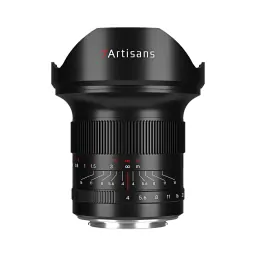
7artisans Photoelectric 15mm f/4
15mm · f/4
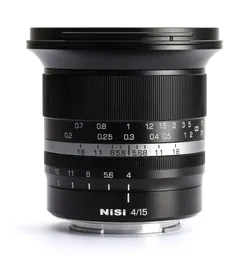
NiSi 15mm f/4 Sunstar ASPH
15mm · f/4
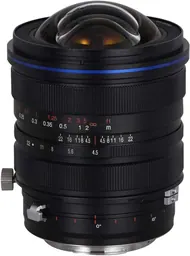
Venus Laowa 15mm F4.5 Zero-D Shift
15mm · f/4.5
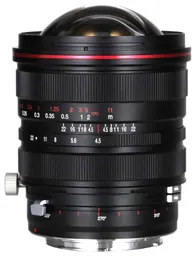
Venus Laowa 15mm f/4.5R Zero-D Shift
15mm · f/4.5
Voigtländer Heliar 15mm f/4.5 Super Wide
15mm · f/4.5

Venus Laowa 15mm F4.5 0.5X Wide Angle Macro
15mm · f/4.5
Venus Laowa 20mm F4 Zero-D Shift
20mm · f/4
Related guides
What does the f mean in camera lenses?
When it comes to photography, understanding the basics of f-stop is essential. F-stop is a critical component of a camera lens that…
How to clean a camera lens
Keeping your camera lenses clean is essential for getting clear, sharp, and high-quality images. Even the smallest speck of dust, dirt, or…
All camera lens types explained: Uses and functions
In this article, we'll explore the various types of camera lenses, their defining features, and when to use them. We'll also cover the…