
Guide
Canon EF vs. EF-S Lenses: Differences and Compatibility
Canon EF vs. EF-S lenses explained: how they differ, which fit full-frame and APS-C DSLRs, EOS R and EOS M, and where you need an adapter.
Last update: 5 min read
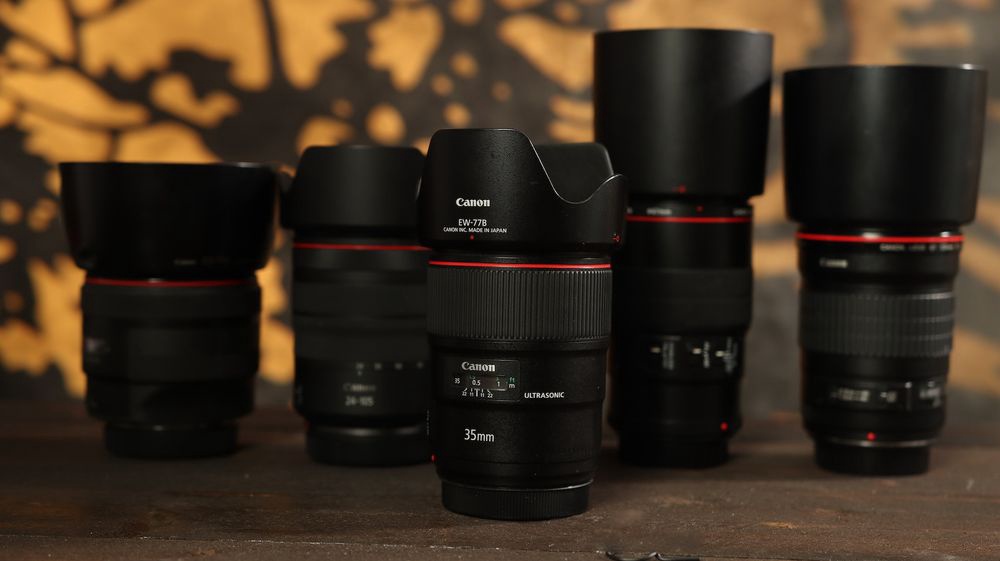
EF lenses fit all Canon EOS DSLRs, including full frame. EF-S lenses are made only for EOS DSLRs with an APS-C sensor and cannot be used on full-frame DSLRs[1]. The difference lies in the smaller image circle and the shorter back focus of EF-S lenses[2]. On mirrorless EOS R and EOS M cameras, both types work through an adapter.
EF and EF-S: image circle and back focus
Canon's EF-S lenses are tailored optically and mechanically to APS-C sensors. Two things contribute to this[2]:
- Smaller image circle: It is sized for the APS-C sensor. The lens covers only that smaller area.
- Shorter back focus: The distance between the rear lens element and the sensor is shorter than on regular EF lenses. It suits the smaller quick-return mirror of APS-C cameras.
EF lenses, in contrast, cover a full-frame sensor. That is why they work on both full frame and APS-C.
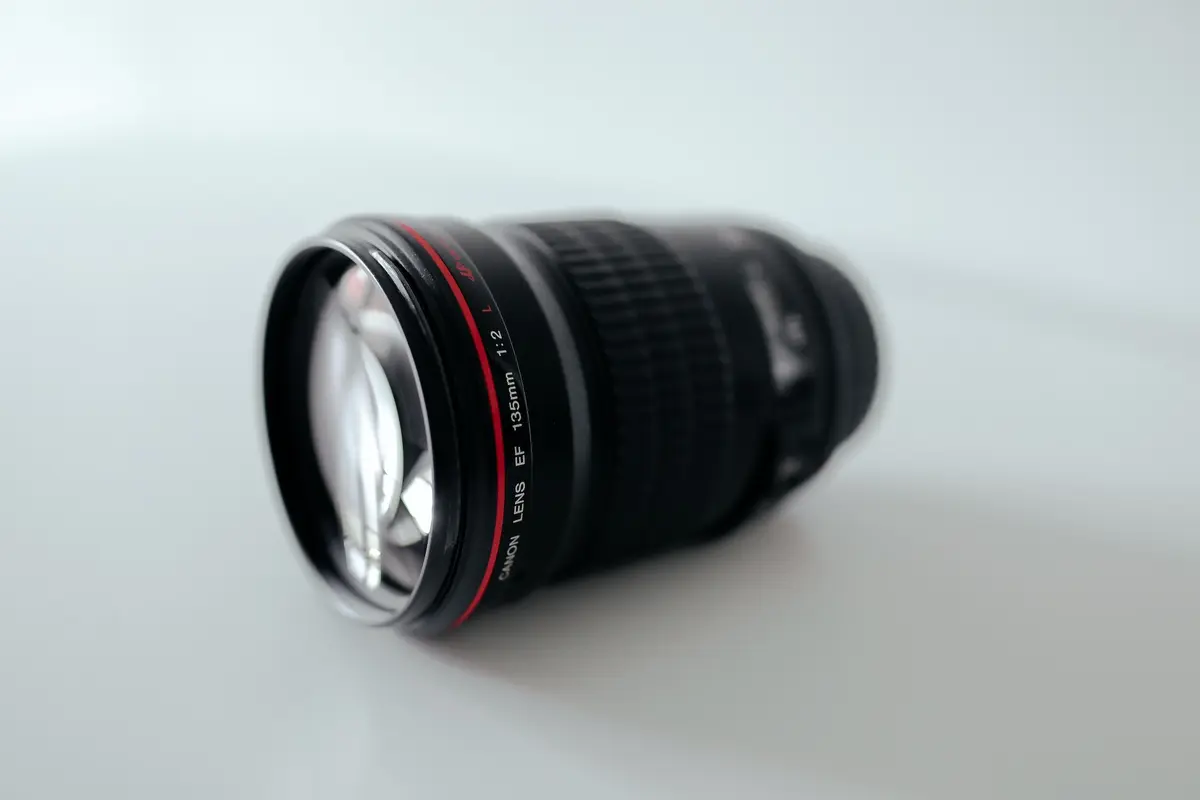
Because of the short back focus, EF-S lenses cannot be mounted mechanically on cameras that do not support them. A rubber ring on the rear end also protects the camera body if someone tries anyway[2]. Canon warns that attaching one to an incompatible camera may damage the body or the lens[1].
How to tell lens and mount apart
The mount on the camera shows what it accepts[3]:
- Red dot and white square: EOS APS-C DSLR, accepts EF and EF-S.
- Red dot only: EOS full-frame DSLR, accepts EF only.
- Red line: EOS R System, mirrorless (RF mount).
- White dot: EOS M series, mirrorless (EF-M mount).
You align EF-S lenses with the white square mark and EF lenses with the red one[2]. The type is also in the name, for example "EF-S 24mm f/2.8 STM".
Which lens fits which camera?
Canon shows the compatibility in a chart, summarized here[3]:
| Lens | APS-C DSLR | Full-frame DSLR | EOS R APS-C | EOS R full frame | EOS M |
|---|---|---|---|---|---|
| EF | yes, crop 1.6 | yes | with adapter, crop 1.6 | with adapter | with adapter, crop 1.6 |
| EF-S | yes | no | with adapter | with adapter, crop | with adapter |
| EF-M | no | no | no | no | yes |
| RF | no | no | yes, crop 1.6 | yes | no |
| RF-S | no | no | yes | yes, automatic crop | no |
Canon names the Mount Adapter EF-EOS R for the EOS R cameras and the Mount Adapter EF-EOS M for the EOS M series[3].
EF-S lenses on full frame
On DSLRs it does not work. The EOS 5D, 6D, 1D X and the other full-frame and 1D models are listed by Canon as not compatible. The same goes for very old APS-C models such as the EOS 10D, D60 and D30[1]. If you move from APS-C to a full-frame DSLR, you need EF lenses.
On full-frame EOS R cameras it works with the adapter. Canon lists EF-S there as compatible with the EF-EOS R adapter and points to possible limitations described in the camera's manual[3]. You get cropped images that match the smaller image circle of EF-S optics[4]. Fewer pixels also means less resolution for large enlargements[5]. The same principle applies at Sony, as the article APS-C lenses on full-frame Sony cameras shows.
EF lenses on APS-C cameras
This works on all APS-C models, only the focal length acts longer. Canon uses a crop factor of 1.6: a 50 mm lens equals about 80 mm in 35 mm terms on APS-C[2]. What the crop factor does otherwise is covered in the article APS-C vs. full frame. EF lenses are built for the larger sensor and are often larger than EF-S lenses[5]. In the catalog you find Canon EF, split into APS-C and full frame.
EF-M and RF-S: do not confuse them with EF-S
- EF-M is the mount of the EOS M series and works only there. EF-M lenses fit neither DSLRs nor EOS R cameras[3]. More on the Canon EF-M page.
- RF-S is the APS-C variant of the RF mount and works on all EOS R cameras. On full-frame models, the camera automatically crops to APS-C[5]. The page Canon RF APS-C lists the lenses.
- EF-S on the EOS M series works with the EF-EOS M adapter: attach the lens to the adapter first, then the adapter to the camera[1].
Lenses from other makers
On lenses from other makers the format is in the name, for example "DC" for APS-C and "DG" for full frame at Sigma. Sigma writes that an APS-C lens on a full-frame camera vignettes heavily without a crop mode[6]. Whether such a lens with an EF mount is usable on your full-frame camera therefore depends on the camera and the manufacturer's notes. Check the maker's compatibility list for your body before buying.
Frequently asked questions
Can you use an EF-S lens on a full-frame camera?
Not on Canon full-frame DSLRs. With the EF-EOS R adapter it works on full-frame models of the EOS R series, and the camera then crops to APS-C[3][4].
Can you use EF lenses on APS-C cameras?
Yes. On EOS DSLRs with an APS-C sensor, all EF lenses fit, and the focal length acts longer because of the factor 1.6[2].
What is the difference between EF-S and EF-M?
EF-S is for APS-C DSLRs, EF-M for the mirrorless EOS M cameras. The mounts are not interchangeable, and EF-S works on EOS M only with an adapter[3].
Do EF lenses fit the EOS R?
Yes, with the Mount Adapter EF-EOS R[3]. On APS-C models of the EOS R series, the crop factor of 1.6 applies.
How can you recognize an EF-S lens?
By the name "EF-S", by the white square mark on the mount and by the rubber ring on the rear end[2].
Sources
- [1] Canon USA: Can EF-S lenses be used with the camera? Accessed October 14, 2026.
List of cameras with and without EF-S support, warning, EF-S on EOS M with adapter
- [2] Canon USA: Explanation of EF-S lenses. Accessed October 14, 2026.
Smaller image circle, shorter back focus, mechanical lockout, rubber ring, mount marks, factor 1.6
- [3] Canon Europe: Compatibility Guide for Lenses. Accessed October 14, 2026.
Mount marks, compatibility chart EF/EF-S/EF-M/RF/RF-S, adapters EF-EOS R and EF-EOS M, crop factor 1.6
- [4] Canon Europe: EOS R System questions answered. Accessed October 14, 2026.
EF and EF-S on EOS R via adapter, EF-S gives cropped images
- [5] Canon Europe: APS-C vs full-frame - the difference explained. Accessed October 14, 2026.
Sensor sizes (36 x 24 mm, APS-C 22.2 x 14.8 mm), crop factor 1.6, examples for reach, weight, noise, RF-S on full frame with automatic crop
- [6] Sigma: What Do All the Numbers and Letters in a Lens Name Mean? Accessed October 14, 2026.
DC/DG designation, APS-C lenses on full frame without crop mode vignette heavily
Matching lenses
Canon EF-S 10-18mm F4.5–5.6 IS STM
10-18mm · f/4.5-5.6
Canon EF
Canon EF-S 15-85mm f/3.5-5.6 IS USM
15-85mm · f/3.5-5.6
Canon EF
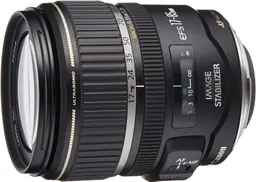
Canon EF-S 17-85mm f/4-5.6 IS USM
17-85mm · f/4-5.6
Canon EF
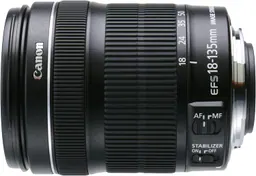
Canon EF-S 18-135mm F3.5-5.6 IS STM
18-135mm · f/3.5-5.6
Canon EF
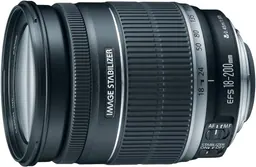
Canon EF-S 18-200mm f/3.5-5.6 IS
18-200mm · f/3.5-5.6
Canon EF
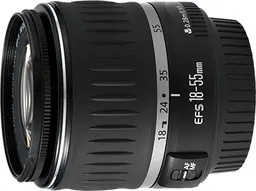
Canon EF-S 18-55mm f/3.5-5.6
18-55mm · f/3.5-5.6
Canon EF
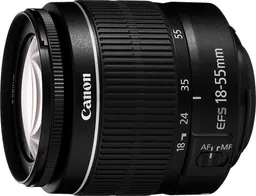
Canon EF-S 18-55mm f/3.5-5.6 III
18-55mm · f/3.5-5.6
Canon EF
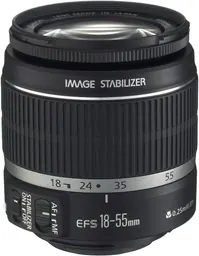
Canon EF-S 18-55mm f/3.5-5.6 IS II
18-55mm · f/3.5-5.6
Canon EF