
Irix 15mm F2.4
Nikon F (DX/FX)
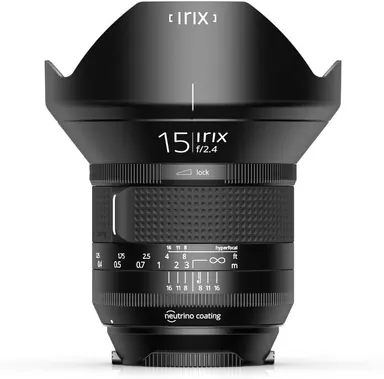
Overview
The Irix 15mm F2.4 for Nikon F (DX) is a unique wide-angle lens that offers a host of features particularly appealing to landscape and architecture photographers. This lens stands out due to its stunning optical performance and build quality, making it a compelling choice in the ultra-wide category.
Optical Quality
The Irix 15mm F2.4 is equipped with a robust optical design that employs a number of high-quality glass elements. With 16 elements in 11 groups, this lens is designed to minimize distortion and chromatic aberrations even at its widest aperture. The lens produces sharp images with impressive detail from the center to the corners, which is pivotal for landscape captures where detail plays a key role. The fast maximum aperture of F2.4 allows for some creative depth of field control and performs fairly well in low-light conditions, making it versatile for various shooting scenarios.
Build and Handling
One of the standout features of the Irix 15mm F2.4 is its solid construction, which is particularly appealing for outdoor photographers. It's designed to withstand the elements, featuring weather sealing that allows for usage in challenging environments. The full-metal body feels durable and robust in hand, giving a sense of quality. Additionally, the lens includes an ergonomic focus ring that has a smooth operation, allowing for precise manual focusing, an often essential feature in wide-angle photography.
Autofocus and Usability
It's important to note that the Irix 15mm F2.4 is a manual focus lens. While this may deter some users looking for autofocus convenience, the precision in focusing aids in producing excellent results once mastered. Ultra-wide angles can be forgiving in terms of depth of field, which means that even with manual focusing, achieving sharp imagery is generally achievable.
Distortion and Vignetting
Wide-angle lenses often battle with distortion, and while the Irix 15mm does exhibit some barrel distortion at wider apertures, it is handled better than many other models in the same range. The lens also features a slight vignette; however, this tends to be less noticeable when stopped down, especially for landscape photography where detail across the whole frame is paramount.
Pros and Cons
Pros
- Exceptional optical quality with minimal distortion.
- Robust build with weather sealing for outdoor use.
- Fast aperture of F2.4 allows for low-light performance and bokeh effects.
- Smooth manual focus operation for better creative control.
Cons
- Lack of autofocus may not suit every user.
- Slight barrel distortion noticeable at wider apertures.
Verdict
In conclusion, the Irix 15mm F2.4 for Nikon F (DX) is an excellent choice for photographers who prioritize optical quality and rugged build over the convenience of autofocus. While manual focusing may require a learning curve, the results yield beautiful, sharp images that are perfect for wide landscapes and architectural shots. If you are a dedicated photographer who can appreciate the nuances of manual focus, the Irix 15mm F2.4 will undoubtedly enhance your photographic toolkit.
Technical Specifications
Which cameras does the Irix 15mm F2.4 fit?
The Irix 15mm F2.4 is a full-frame lens for Nikon F-Mount cameras. On full-frame bodies it uses the whole sensor; on APS-C Nikon F-Mount cameras its field of view equals 23 mm in full-frame terms.
Nikon F-Mount cameras
- Full frame:
- Nikon D6, Nikon D780, Nikon D850, Nikon D5, Nikon D810A, Nikon D4S, Nikon D810, Nikon D750, Nikon Df, Nikon D610, Nikon D4, Nikon D800, Nikon D800E, Nikon D600, Nikon D3S, Nikon D3X, Nikon D700
- APS-C:
- Nikon D3500, Nikon D7500, Nikon D500, Nikon D3400, Nikon D5600, Nikon D5500, Nikon D7200, Nikon D3300, Nikon D7100, Nikon D5300, Nikon D3200, Nikon D5200, Nikon D5100, Nikon D7000, Nikon D3100, Nikon D300S, Nikon D5000, Nikon D3000, Nikon D90, Nikon D60
With the Nikon FTZ II / FTZ the lens can also be used on Nikon Z (DX/FX) cameras.
Irix 15mm F2.4 compared
Key specs side by side with the most similar Nikon F-Mount lenses.
| Lens | Irix 15mm F2.4 | Zeiss Distagon T* 2,8/15 | Zeiss Milvus 15mm F2.8 | Samyang / Rokinon 14mm F2.8 ED AS IF UMC |
|---|---|---|---|---|
| Focal length | 15 mm | 15 mm | 15 mm | 14 mm |
| Max. aperture | f/2.4 | f/2.8 | f/2.8 | f/2.8 |
| Weight | 608 g | 730 g | 947 g | 552 g |
| Filter diameter | 95 mm | 95 mm | 95 mm | – |
| Min. focus distance | 28 cm | 25 cm | 25 cm | 28 cm |
| Length | 100 mm | 135 mm | 100 mm | 96 mm |
| Autofocus | no | no | no | no |
| Image stabilization | no | no | no | no |
This lens is also available for
Irix 15mm F2.4: FAQ
Does the Irix 15mm F2.4 have autofocus?
No, the Irix 15mm F2.4 has no autofocus; you focus it manually.
Does the Irix 15mm F2.4 have image stabilization?
No, the Irix 15mm F2.4 has no stabilization of its own. On cameras with in-body image stabilization (IBIS) the image is still stabilized.
How much does the Irix 15mm F2.4 weigh?
The Irix 15mm F2.4 weighs 608 g. It is 100 mm long with a diameter of 114 mm.
What filter size does the Irix 15mm F2.4 use?
The Irix 15mm F2.4 takes 95 mm screw-in filters.
How close can the Irix 15mm F2.4 focus?
The minimum focus distance of the Irix 15mm F2.4 is 28 cm, measured from the sensor plane.
Is the Irix 15mm F2.4 a full-frame lens?
Yes, the Irix 15mm F2.4 covers full frame. On APS-C cameras its field of view equals 23 mm in full-frame terms.
Similar lenses
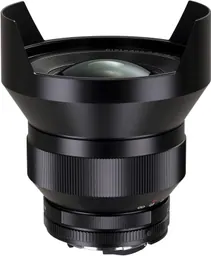
Zeiss Distagon T* 2,8/15
15mm · f/2.8
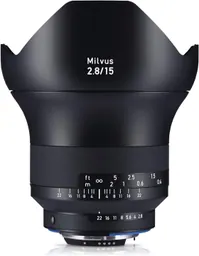
Zeiss Milvus 15mm F2.8
15mm · f/2.8
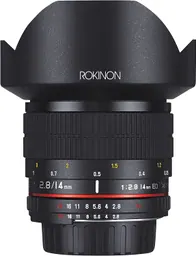
Samyang / Rokinon 14mm F2.8 ED AS IF UMC
14mm · f/2.8
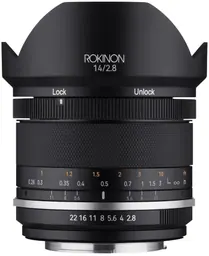
Samyang MF 14mm F2.8 Mk2 / Rokinon MF 14mm F2.8 II
14mm · f/2.8
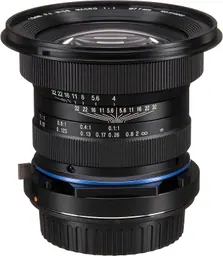
Venus Laowa 15mm F4 1:1 Macro
15mm · f/4
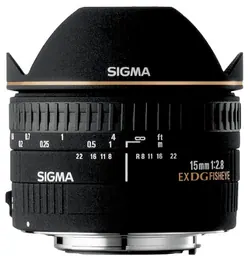
Sigma 15mm F2.8 EX DG Diagonal Fisheye
15mm · f/2.8
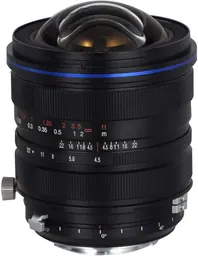
Venus Laowa 15mm F4.5 Zero-D Shift
15mm · f/4.5
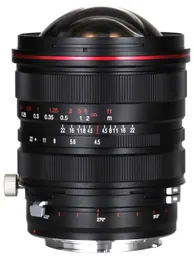
Venus Laowa 15mm f/4.5R Zero-D Shift
15mm · f/4.5
Related guides
What does the f mean in camera lenses?
When it comes to photography, understanding the basics of f-stop is essential. F-stop is a critical component of a camera lens that…
How to clean a camera lens
Keeping your camera lenses clean is essential for getting clear, sharp, and high-quality images. Even the smallest speck of dust, dirt, or…
All camera lens types explained: Uses and functions
In this article, we'll explore the various types of camera lenses, their defining features, and when to use them. We'll also cover the…