
Nikon AF-S Nikkor 500mm f/4G ED VR
Nikon F (DX/FX)
Overview
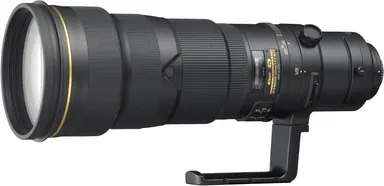
The Nikon AF-S Nikkor 500mm f/4G ED VR is a prime telephoto lens that is particularly renowned among wildlife and sports photographers. It boasts a fast f/4 maximum aperture, which allows for excellent light-gathering capabilities and the ability to create beautiful background blur, making it a fantastic option for isolating subjects in a busy environment.
Build Quality and Design
This lens is built like a tank, featuring a robust magnesium alloy body that is both lightweight and durable, which is a significant advantage for photographers who spend hours in the field. The lens also has a weather-sealed design, providing protection against dust and moisture, which is an excellent feature for outdoor and wildlife photography. The integrated Vibration Reduction (VR) technology is another standout, reducing camera shake and allowing for sharper images even at slower shutter speeds.
Optical Performance
When it comes to image quality, the AF-S Nikkor 500mm f/4G ED VR delivers stunning sharpness and clarity, even wide open at f/4. Chromatic aberrations and flare are well controlled, thanks to Nikon's ED glass elements and a Super Integrated Coating. Bokeh is smooth and creamy, contributing to aesthetic visuals in portraits and wildlife images. The lens also performs admirably when stopped down, providing remarkable detail and contrast across the entire frame.
Autofocus System
The autofocus on this lens is fast, accurate, and nearly silent, making it perfect for capturing fast-moving subjects. The multi-focus system ensures that tracking an action-filled scene is seamless, which is vital for sports and wildlife photographers. However, it’s worth noting that while the lens is geared towards high-end performance, occasional hunting in low light situations can occur, which may require manual adjustments for consistency.
Pros and Cons
Pros
- Excellent build quality with weather-sealing
- Outstanding optical performance with minimized aberrations
- Fast and accurate autofocus system
- Impressive low-light capabilities due to f/4 aperture
- Effective stabilization with VR technology
Cons
- The lens is quite expensive, which may deter hobbyists
- It can be cumbersome to handle without proper support, such as a tripod
- The weight might be unmanageable for some users over long shooting sessions
Verdict
Overall, the Nikon AF-S Nikkor 500mm f/4G ED VR is a fantastic lens that is primarily aimed at serious photographers who demand high-quality performance in their photography. While its price point may seem steep, the resulting image quality, build, and versatility are hard to beat for capturing distant subjects with precision and detail. If you are a professional or an enthusiast willing to invest in a premium telephoto lens for your Nikon F (DX) mount, this lens is definitely worth considering.
Technical Specifications
Which cameras does the Nikon AF-S Nikkor 500mm f/4G ED VR fit?
The Nikon AF-S Nikkor 500mm f/4G ED VR is a full-frame lens for Nikon F-Mount cameras. On full-frame bodies it uses the whole sensor; on APS-C Nikon F-Mount cameras its field of view equals 750 mm in full-frame terms.
Nikon F-Mount cameras
- Full frame:
- Nikon D6, Nikon D780, Nikon D850, Nikon D5, Nikon D810A, Nikon D4S, Nikon D810, Nikon D750, Nikon Df, Nikon D610, Nikon D4, Nikon D800, Nikon D800E, Nikon D600, Nikon D3S, Nikon D3X, Nikon D700
- APS-C:
- Nikon D3500, Nikon D7500, Nikon D500, Nikon D3400, Nikon D5600, Nikon D5500, Nikon D7200, Nikon D3300, Nikon D7100, Nikon D5300, Nikon D3200, Nikon D5200, Nikon D5100, Nikon D7000, Nikon D3100, Nikon D300S, Nikon D5000, Nikon D3000, Nikon D90, Nikon D60
With the Nikon FTZ II / FTZ the lens can also be used on Nikon Z (DX/FX) cameras.
Nikon AF-S Nikkor 500mm f/4G ED VR compared
Key specs side by side with the most similar Nikon F-Mount lenses.
| Lens | Nikon AF-S Nikkor 500mm f/4G ED VR | Nikon AF-S Nikkor 500mm F4E FL ED VR | Nikon AF-S Nikkor 500mm f/4D ED-IF II | Sigma 500mm F4 DG OS HSM Sport |
|---|---|---|---|---|
| Focal length | 500 mm | 500 mm | 500 mm | 500 mm |
| Max. aperture | f/4 | f/4 | f/4 | f/4 |
| Weight | 3,880 g | 3,090 g | 3,800 g | 3,310 g |
| Filter diameter | 52 mm | 40.5 mm | 52 mm | 46 mm |
| Min. focus distance | 400 cm | 360 cm | 460 cm | 350 cm |
| Length | 391 mm | 387 mm | 394 mm | 380 mm |
| Autofocus | yes | yes | yes | yes |
| Image stabilization | yes | yes | no | yes |
Nikon AF-S Nikkor 500mm f/4G ED VR: FAQ
Does the Nikon AF-S Nikkor 500mm f/4G ED VR have autofocus?
Yes, the Nikon AF-S Nikkor 500mm f/4G ED VR has autofocus.
Does the Nikon AF-S Nikkor 500mm f/4G ED VR have image stabilization?
Yes, the Nikon AF-S Nikkor 500mm f/4G ED VR has optical image stabilization.
How much does the Nikon AF-S Nikkor 500mm f/4G ED VR weigh?
The Nikon AF-S Nikkor 500mm f/4G ED VR weighs 3,880 g. It is 391 mm long with a diameter of 140 mm.
What filter size does the Nikon AF-S Nikkor 500mm f/4G ED VR use?
The Nikon AF-S Nikkor 500mm f/4G ED VR takes 52 mm screw-in filters.
How close can the Nikon AF-S Nikkor 500mm f/4G ED VR focus?
The minimum focus distance of the Nikon AF-S Nikkor 500mm f/4G ED VR is 400 cm, measured from the sensor plane.
Is the Nikon AF-S Nikkor 500mm f/4G ED VR a full-frame lens?
Yes, the Nikon AF-S Nikkor 500mm f/4G ED VR covers full frame. On APS-C cameras its field of view equals 750 mm in full-frame terms.
Similar lenses
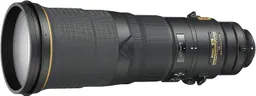
Nikon AF-S Nikkor 500mm F4E FL ED VR
500mm · f/4

Nikon AF-S Nikkor 500mm f/4D ED-IF II
500mm · f/4
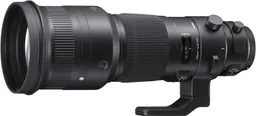
Sigma 500mm F4 DG OS HSM Sport
500mm · f/4
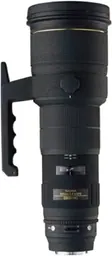
Sigma 500mm F4.5 EX DG HSM
500mm · f/4.5
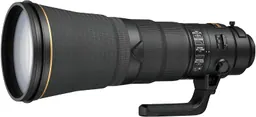
Nikon AF-S Nikkor 600mm F4E FL ED VR
600mm · f/4
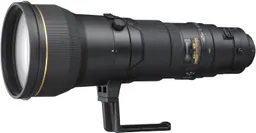
Nikon AF-S Nikkor 600mm f/4D ED-IF II
600mm · f/4
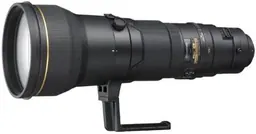
Nikon AF-S Nikkor 600mm f/4G ED VR
600mm · f/4
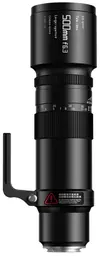
TTArtisan 500mm f/6.3
500mm · f/6.3
Related guides
What does the f mean in camera lenses?
When it comes to photography, understanding the basics of f-stop is essential. F-stop is a critical component of a camera lens that…
How to clean a camera lens
Keeping your camera lenses clean is essential for getting clear, sharp, and high-quality images. Even the smallest speck of dust, dirt, or…
All camera lens types explained: Uses and functions
In this article, we'll explore the various types of camera lenses, their defining features, and when to use them. We'll also cover the…