

Nikon Z (DX/FX) Autofocus
Nikon Nikkor Z 24-70mm F2.8 S II
- Focal length
- 24–70 mm
- Aperture
- f/2.8
- Weight
- 675 g
- Filter diameter
- 77 mm
- Min. focus distance
- 24 cm
- Length
- 142 mm
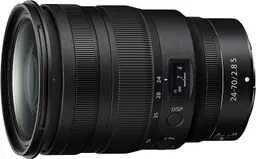
Predecessor: Nikon Nikkor Z 24-70mm F2.8 S
Overview
The Nikon Nikkor Z 24-70mm F2.8 S II is a standard zoom with a constant f/2.8 aperture for Nikon Z mount full frame cameras. Nikon announced it in August 2025 as the successor to the Nikkor Z 24-70mm F2.8 S. It is meant for event, wedding, documentary and video work where one fast zoom has to cover wide angle to short telephoto.
Optical design
The lens has 14 elements in 10 groups, including two ED elements, three aspherical elements and a fluorine-coated front element. Nikon highlights a large double-sided aspherical front element and says the optical performance is the highest in the S-Line series. Meso Amorphous Coat and ARNEO Coat are used against ghosting and flare. A newly developed 11-blade diaphragm gives rounded bokeh, and the smallest aperture is f/22.
Autofocus and handling
This is the first Nikon zoom with the Silky Swift VCM (SSVCM) focus actuator, part of a multi-focusing system. Nikon claims autofocus about 5 times faster than the original Z 24-70mm F2.8 S and about 60 percent better AF tracking while zooming, measured by Nikon's own standards. Focus breathing is suppressed for video. The control ring has a click on/off switch, and a filter adjustment window in the hood allows adjusting a polarizer or variable ND filter without removing the hood. The minimum focus distance is 0.24 m at 24 and 28 mm and 0.33 m at 70 mm, with a maximum reproduction ratio of 0.32x at 70 mm.
Build and size
The zoom is internal: the lens keeps a constant length of about 142 mm while zooming, so the balance stays fixed on a gimbal. Nikon says this also keeps dust out and improves drip resistance. At about 675 g, 84 mm in diameter and with a 77 mm filter thread, Nikon calls it the lightest 24-70 mm f/2.8 for full frame mirrorless as of August 2025.
Where it fits
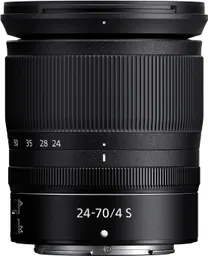
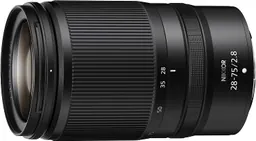
The predecessor is the original Nikon Nikkor Z 24-70mm F2.8 S. Other options on the Z mount are the Nikon Nikkor Z 28-75mm F2.8 and the Nikon Nikkor Z 24-70mm F4 S, which gives up one stop of light. Photographers who prefer reach over speed can look at the Nikon Nikkor Z 24-120mm F4 S.
Pros and cons
Pros
- Constant f/2.8 from 24 to 70 mm
- Internal zoom with constant length
- Light for its class at about 675 g
- SSVCM autofocus with focus breathing suppression
- Filter adjustment window in the hood
Cons
- No lens stabilizer, so stabilization depends on the camera body
- At about 675 g it is still heavier than a variable-aperture zoom such as the Nikon Nikkor Z 24-105mm F4-7.1 (350 g)
- Maximum reproduction ratio of 0.32x is not macro
Verdict
A well-equipped successor for those who work with the standard zoom every day. The internal zoom, the lower weight and the new focus drive are the main reasons to prefer it over the first version.
Technical Specifications
- min focal length
- 24 mm
- max focal length
- 70 mm
- max f (min zoom)
- f/2.8
- max f (max zoom)
- f/2.8
- min. aperture
- f/22
- Elements
- 14
- Groups
- 10
- Weight
- 675 g (1.49 lb)
- Filter diameter
- 77 mm
- min focus distance
- 24 cm (9.45 in)
- Length
- 142 mm (5.59 in)
- Diameter
- 84 mm (3.31 in)
Which cameras does the Nikon Nikkor Z 24-70mm F2.8 S II fit?
The Nikon Nikkor Z 24-70mm F2.8 S II is a full-frame lens for Nikon Z cameras. On full-frame bodies it uses the whole sensor; on APS-C Nikon Z cameras its field of view equals 36-105 mm in full-frame terms.
Nikon Z cameras
- Full frame:
- Nikon ZR, Nikon Z5II, Nikon Z6III, Nikon Z8, Nikon Zf, Nikon Z9, Nikon Z5, Nikon Z6II, Nikon Z7II, Nikon Z6, Nikon Z7
- APS-C:
- Nikon Z50II, Nikon Z30, Nikon Z fc, Nikon Z50
Nikon Nikkor Z 24-70mm F2.8 S II compared
Key specs side by side with the most similar Nikon Z lenses.
| Lens | Nikon Nikkor Z 24-70mm F2.8 S II | Nikon Nikkor Z 24-70mm F2.8 S | Nikon Nikkor Z 24-70mm F4 S | Nikon Nikkor Z 28-75mm F2.8 |
|---|---|---|---|---|
| Focal length | 24-70 mm | 24-70 mm | 24-70 mm | 28-75 mm |
| Max. aperture | f/2.8 | f/2.8 | f/4 | f/2.8 |
| Weight | 675 g | 805 g | 500 g | 565 g |
| Filter diameter | 77 mm | 82 mm | 72 mm | 67 mm |
| Min. focus distance | 24 cm | 38 cm | 30 cm | 19 cm |
| Length | 142 mm | 126 mm | 89 mm | 121 mm |
| Autofocus | yes | yes | yes | yes |
| Image stabilization | no | no | no | no |
Nikon Nikkor Z 24-70mm F2.8 S II: FAQ
Does the Nikon Nikkor Z 24-70mm F2.8 S II have autofocus?
Yes, the Nikon Nikkor Z 24-70mm F2.8 S II has autofocus.
Does the Nikon Nikkor Z 24-70mm F2.8 S II have image stabilization?
No, the Nikon Nikkor Z 24-70mm F2.8 S II has no stabilization of its own. On cameras with in-body image stabilization (IBIS) the image is still stabilized.
How much does the Nikon Nikkor Z 24-70mm F2.8 S II weigh?
The Nikon Nikkor Z 24-70mm F2.8 S II weighs 675 g. It is 142 mm long with a diameter of 84 mm.
What filter size does the Nikon Nikkor Z 24-70mm F2.8 S II use?
The Nikon Nikkor Z 24-70mm F2.8 S II takes 77 mm screw-in filters.
How close can the Nikon Nikkor Z 24-70mm F2.8 S II focus?
The minimum focus distance of the Nikon Nikkor Z 24-70mm F2.8 S II is 24 cm, measured from the sensor plane.
Is the Nikon Nikkor Z 24-70mm F2.8 S II a full-frame lens?
Yes, the Nikon Nikkor Z 24-70mm F2.8 S II covers full frame. On APS-C cameras its field of view equals 36-105 mm in full-frame terms.
Similar lenses
Nikon Nikkor Z 24-70mm F2.8 S
24-70mm · f/2.8
Nikon Nikkor Z 24-70mm F4 S
24-70mm · f/4
Nikon Nikkor Z 28-75mm F2.8
28-75mm · f/2.8
Tamron 28-75mm F/2.8 DI III VXD G2
28-75mm · f/2.8
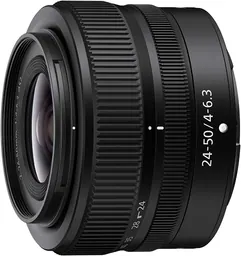
Nikon Nikkor Z 24-50mm F4-6.3
24-50mm · f/4-6.3

Nikon Nikkor Z 24-105mm F4-7.1
24-105mm · f/4-7.1

Tamron 17-70mm F2.8 Di III-A VC RXD
17-70mm · f/2.8
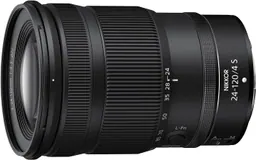
Nikon Nikkor Z 24-120mm F4 S
24-120mm · f/4
Related guides
What does the f mean in camera lenses?
When it comes to photography, understanding the basics of f-stop is essential. F-stop is a critical component of a camera lens that…
How to clean a camera lens
Keeping your camera lenses clean is essential for getting clear, sharp, and high-quality images. Even the smallest speck of dust, dirt, or…
All camera lens types explained: Uses and functions
In this article, we'll explore the various types of camera lenses, their defining features, and when to use them. We'll also cover the…