

Nikon Z (DX/FX) Autofocus
Nikon Nikkor Z DX 16-50mm F2.8 VR
- Focal length
- 16–50 mm
- Aperture
- f/2.8
- Weight
- 330 g
- Filter diameter
- 67 mm
- Min. focus distance
- 15 cm
- Length
- 88 mm
Overview
The Nikon Nikkor Z DX 16-50mm F2.8 VR is a standard zoom with a constant f/2.8 aperture for Nikon Z mount cameras with an APS-C (DX) sensor. Nikon announced it in October 2025. The focal length range is equivalent to about 24-75 mm on full frame. It is aimed at DX users who want a brighter alternative to the small kit zoom without moving to a large lens.
Optical design
The lens has 12 elements in 11 groups, including one ED element and two aspherical elements. Nikon says these reduce aberrations, and that the lens delivers clear colors with less color bleed. The diaphragm has 9 rounded blades and closes down to f/22.
Autofocus and handling
A stepping motor (STM) drives autofocus, which Nikon describes as quiet. For video, the design suppresses focus breathing. A built-in lens-shift vibration reduction (VR) system is rated by Nikon at up to 5.0 stops at the center of the frame, measured to the CIPA 2024 standard with the Z50II at the telephoto end. The control ring can be assigned focus mode (M/A), aperture, exposure compensation or ISO. With the Z50II, Hi-Res Zoom in video extends the range to the equivalent of 16-100 mm at a constant f/2.8, according to Nikon. The minimum focus distance is 0.15 m at 16 mm and 0.25 m at 50 mm, with a maximum reproduction ratio of 0.24x at 50 mm.
Build and size
The lens weighs about 330 g, measures about 74.5 mm in diameter and 88 mm in length from the mount flange, and takes 67 mm filters. Nikon says it was designed with dust and drip resistance in mind, without guaranteeing it in all situations.
Where it fits
It is a different lens from the Nikon Nikkor Z DX 16-50mm F3.5-6.3 VR, which is smaller but much slower. Other DX zooms in our database are the Nikon Nikkor Z DX 12-28mm f/3.5-5.6 PZ VR and the Nikon Nikkor Z DX 18-140mm f/3.5-6.3 VR. For primes on the same mount there is the Nikon Nikkor Z DX 24mm F1.7.
Pros and cons
Pros
- Constant f/2.8 on a DX body
- Built-in VR rated up to 5.0 stops by Nikon
- Close focusing from 0.15 m at 16 mm
- Compact and light at about 330 g
- Focus breathing suppression and quiet STM autofocus
Cons
- The range ends at 50 mm, equal to about 75 mm on full frame
- Not as small as the f/3.5-6.3 version
- Dust and drip resistance is not guaranteed in all conditions, per Nikon
Verdict
A step up from the kit zoom for DX shooters who care about low light, background separation and video, while staying at a moderate size and weight.
Technical Specifications
- min focal length
- 16 mm
- max focal length
- 50 mm
- max f (min zoom)
- f/2.8
- max f (max zoom)
- f/2.8
- min. aperture
- f/22
- Elements
- 12
- Groups
- 11
- Weight
- 330 g (0.73 lb)
- Filter diameter
- 67 mm
- min focus distance
- 15 cm (5.91 in)
- Length
- 88 mm (3.46 in)
- Diameter
- 74.5 mm (2.93 in)
Which cameras does the Nikon Nikkor Z DX 16-50mm F2.8 VR fit?
The Nikon Nikkor Z DX 16-50mm F2.8 VR is designed for APS-C sensors. On APS-C Nikon Z cameras its field of view equals 24-75 mm in full-frame terms. Full-frame bodies use it in APS-C (crop) mode, recording only part of the sensor and fewer megapixels.
Nikon Z cameras
- Full frame (in APS-C mode):
- Nikon ZR, Nikon Z5II, Nikon Z6III, Nikon Z8, Nikon Zf, Nikon Z9, Nikon Z5, Nikon Z6II, Nikon Z7II, Nikon Z6, Nikon Z7
- APS-C:
- Nikon Z50II, Nikon Z30, Nikon Z fc, Nikon Z50
Nikon Nikkor Z DX 16-50mm F2.8 VR compared
Key specs side by side with the most similar Nikon Z lenses.
| Lens | Nikon Nikkor Z DX 16-50mm F2.8 VR | Nikon Nikkor Z DX 16-50mm F3.5-6.3 VR | Tamron 17-70mm F2.8 Di III-A VC RXD | Tamron 20-40mm F/2.8 Di III VXD |
|---|---|---|---|---|
| Focal length | 16-50 mm | 16-50 mm | 17-70 mm | 20-40 mm |
| Max. aperture | f/2.8 | f/3.5-6.3 | f/2.8 | f/2.8 |
| Weight | 330 g | 135 g | 540 g | 380 g |
| Filter diameter | 67 mm | 46 mm | 67 mm | 67 mm |
| Min. focus distance | 15 cm | 20 cm | 19 cm | 17 cm |
| Length | 88 mm | 32 mm | 121.3 mm | 88.7 mm |
| Autofocus | yes | yes | yes | yes |
| Image stabilization | no | yes | yes | no |
Nikon Nikkor Z DX 16-50mm F2.8 VR: FAQ
Does the Nikon Nikkor Z DX 16-50mm F2.8 VR have autofocus?
Yes, the Nikon Nikkor Z DX 16-50mm F2.8 VR has autofocus.
Does the Nikon Nikkor Z DX 16-50mm F2.8 VR have image stabilization?
No, the Nikon Nikkor Z DX 16-50mm F2.8 VR has no stabilization of its own. On cameras with in-body image stabilization (IBIS) the image is still stabilized.
How much does the Nikon Nikkor Z DX 16-50mm F2.8 VR weigh?
The Nikon Nikkor Z DX 16-50mm F2.8 VR weighs 330 g. It is 88 mm long with a diameter of 74.5 mm.
What filter size does the Nikon Nikkor Z DX 16-50mm F2.8 VR use?
The Nikon Nikkor Z DX 16-50mm F2.8 VR takes 67 mm screw-in filters.
How close can the Nikon Nikkor Z DX 16-50mm F2.8 VR focus?
The minimum focus distance of the Nikon Nikkor Z DX 16-50mm F2.8 VR is 15 cm, measured from the sensor plane.
Is the Nikon Nikkor Z DX 16-50mm F2.8 VR a full-frame lens?
No, the Nikon Nikkor Z DX 16-50mm F2.8 VR is an APS-C lens. On APS-C cameras its field of view equals 24-75 mm in full-frame terms.
Similar lenses
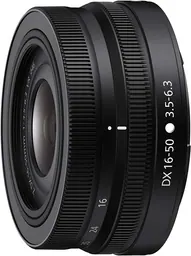
Nikon Nikkor Z DX 16-50mm F3.5-6.3 VR
16-50mm · f/3.5-6.3

Tamron 17-70mm F2.8 Di III-A VC RXD
17-70mm · f/2.8

Tamron 20-40mm F/2.8 Di III VXD
20-40mm · f/2.8

Tamron 16-30mm F2.8 Di III VXD G2
16-30mm · f/2.8
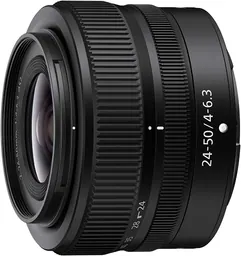
Nikon Nikkor Z 24-50mm F4-6.3
24-50mm · f/4-6.3
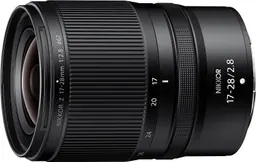
Nikkor Z 17-28mm F2.8
17-28mm · f/2.8
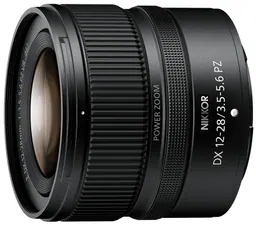
NIKKOR Z DX 12-28mm f/3.5-5.6 PZ VR
12-28mm · f/3.5-5.6
Nikon Nikkor Z 24-70mm F2.8 S
24-70mm · f/2.8
Related guides
What does the f mean in camera lenses?
When it comes to photography, understanding the basics of f-stop is essential. F-stop is a critical component of a camera lens that…
How to clean a camera lens
Keeping your camera lenses clean is essential for getting clear, sharp, and high-quality images. Even the smallest speck of dust, dirt, or…
All camera lens types explained: Uses and functions
In this article, we'll explore the various types of camera lenses, their defining features, and when to use them. We'll also cover the…