
Fujifilm XF 70-300 F4-5.6 R LM OIS WR
Fujifilm X
Overview
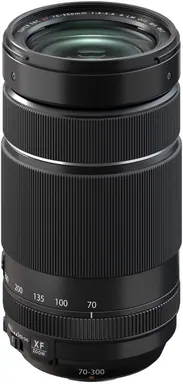
Fujifilm has made significant strides in the lens market, particularly with their lineup for the X-mount. The Fujifilm XF 70-300 F4-5.6 R LM OIS WR is an impressive addition to their telephoto zoom range. Designed to cater to both amateur and professional photographers, this lens offers versatility while maintaining a lightweight profile.
The build quality of the XF 70-300 is commendable. It features a robust weather-sealed construction, making it suitable for outdoor photography even in challenging conditions. The lens weighs around 580 grams, which is relatively lightweight for a telephoto zoom, allowing for comfortable handling over extended shooting sessions. The zoom mechanism is smooth and precise, with a focus ring that provides a tactile feel while making adjustments.
Optically, the XF 70-300 is engineered with a combination of ED (Extra-low Dispersion) and Super ED glass elements. This design significantly reduces chromatic aberrations and enhances color rendition across the zoom range. With a focal length of 70-300mm, this lens is exceptionally versatile, proving useful for everything from wildlife and sports photography to portraiture. The fast and quiet Linear Motor (LM) autofocus system is another highlight, providing quick focusing capabilities ideal for capturing moving subjects.
One of the main features that distinguishes this lens is its Optical Image Stabilization (OIS). With up to 5 stops of stabilization, it effectively minimizes blur from camera shake, enabling sharper images at slower shutter speeds. This is particularly beneficial when shooting handheld at longer focal lengths.
However, despite its many strengths, there are a few drawbacks. The maximum aperture of f/4-5.6 might not satisfy some photographers looking for a shallower depth of field or better low-light performance. While it performs reasonably well in moderately lit conditions, it requires higher ISO settings in dimmer environments, which can lead to increased noise in images, especially for those shooting at higher ISOs typical of smaller sensors.
Pros and Cons
Pros
- Robust weather-sealed construction for outdoor use.
- Lightweight and comfortable for prolonged shooting.
- Excellent optical quality with minimal chromatic aberration.
- Fast and quiet autofocus system.
- Effective Optical Image Stabilization (OIS) for increased sharpness.
Cons
- Maximum aperture of f/4-5.6 limits low-light performance.
- Might struggle with high ISO settings in poorly lit situations.
Verdict
The Fujifilm XF 70-300 F4-5.6 R LM OIS WR lens offers a perfect blend of versatility, optical performance, and convenience for Fujifilm X-mount users. While it may have some limitations in low-light situations due to its smaller maximum aperture, its weather-resistant design, lightweight build, and effective stabilization make it a valuable tool for outdoor and action photography. If you're in the market for a telephoto lens that balances quality and portability, this lens should definitely be on your radar.
Technical Specifications
Which cameras does the Fujifilm XF 70-300 F4-5.6 R LM OIS WR fit?
The Fujifilm XF 70-300 F4-5.6 R LM OIS WR fits all Fujifilm X-Mount cameras. There its field of view equals 105-450 mm in full-frame terms (crop factor 1.5).
Fujifilm X-Mount cameras
- APS-C:
- Fujifilm X-T30 III, Fujifilm X-E5, Fujifilm X-M5, Fujifilm X-T50, Fujifilm X-S20, Fujifilm X-T5, Fujifilm X-H2, Fujifilm X-H2S, Fujifilm X-T30 II, Fujifilm X-E4, Fujifilm X-S10, Fujifilm X-T4, Fujifilm X-T200, Fujifilm X-Pro3, Fujifilm X-A7, Fujifilm X-T30, Fujifilm X-T3, Fujifilm X-T100, Fujifilm X-H1, Fujifilm X-A5, Fujifilm X-E3, Fujifilm X-T20, Fujifilm X-A10, Fujifilm X-A3, Fujifilm X-T2, Fujifilm X-E2S, Fujifilm X-Pro2, Fujifilm X-T10, Fujifilm X-A2, Fujifilm X-T1, Fujifilm X-E2, Fujifilm X-A1, Fujifilm X-M1, Fujifilm X-E1, Fujifilm X-Pro1
Fujifilm XF 70-300 F4-5.6 R LM OIS WR compared
Key specs side by side with the most similar Fujifilm X-Mount lenses.
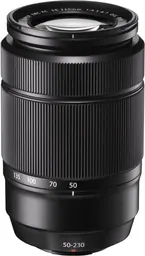
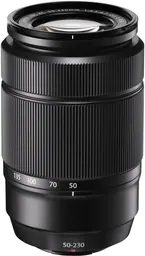
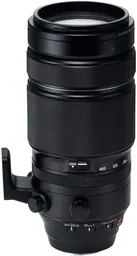
| Lens | Fujifilm XF 70-300 F4-5.6 R LM OIS WR | Fujifilm XC 50-230mm F4.5-6.7 OIS | Fujifilm XC 50-230mm F4.5-6.7 OIS II | Fujifilm XF 100-400mm F4.5-5.6 R LM OIS WR |
|---|---|---|---|---|
| Focal length | 70-300 mm | 50-230 mm | 50-230 mm | 100-400 mm |
| Max. aperture | f/4-5.6 | f/4.5-6.7 | f/4.5-6.7 | f/4.5-5.6 |
| Weight | 580 g | 375 g | 375 g | 1,375 g |
| Filter diameter | 67 mm | 58 mm | 58 mm | 77 mm |
| Min. focus distance | 83 cm | 110 cm | 110 cm | 175 cm |
| Length | 133 mm | 111 mm | 111 mm | 211 mm |
| Autofocus | yes | yes | yes | yes |
| Image stabilization | yes | yes | yes | yes |
Comparisons with this lens
Fujifilm XF 70-300 F4-5.6 R LM OIS WR: FAQ
Does the Fujifilm XF 70-300 F4-5.6 R LM OIS WR have autofocus?
Yes, the Fujifilm XF 70-300 F4-5.6 R LM OIS WR has autofocus.
Does the Fujifilm XF 70-300 F4-5.6 R LM OIS WR have image stabilization?
Yes, the Fujifilm XF 70-300 F4-5.6 R LM OIS WR has optical image stabilization.
How much does the Fujifilm XF 70-300 F4-5.6 R LM OIS WR weigh?
The Fujifilm XF 70-300 F4-5.6 R LM OIS WR weighs 580 g. It is 133 mm long with a diameter of 75 mm.
What filter size does the Fujifilm XF 70-300 F4-5.6 R LM OIS WR use?
The Fujifilm XF 70-300 F4-5.6 R LM OIS WR takes 67 mm screw-in filters.
How close can the Fujifilm XF 70-300 F4-5.6 R LM OIS WR focus?
The minimum focus distance of the Fujifilm XF 70-300 F4-5.6 R LM OIS WR is 83 cm, measured from the sensor plane.
Similar lenses
Fujifilm XC 50-230mm F4.5-6.7 OIS
50-230mm · f/4.5-6.7
Fujifilm XC 50-230mm F4.5-6.7 OIS II
50-230mm · f/4.5-6.7
Fujifilm XF 100-400mm F4.5-5.6 R LM OIS WR
100-400mm · f/4.5-5.6
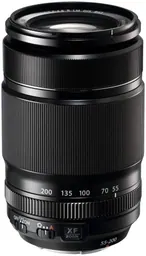
Fujifilm XF 55-200mm F3.5-4.8 R LM OIS
55-200mm · f/3.5-4.8
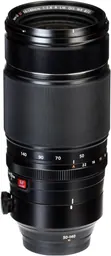
Fujifilm XF 50-140mm F2.8 R LM OIS WR
50-140mm · f/2.8
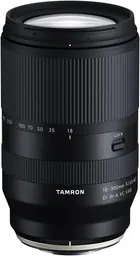
Tamron 18-300mm F3.5-6.3 Di III-A VC VXD
18-300mm · f/3.5-6.3
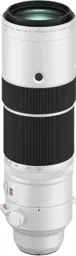
Fujifilm XF 150-600mm F5.6-8 R LM OIS WR
150-600mm · f/5.6-8
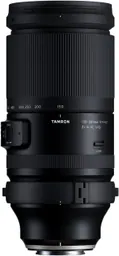
Tamron 150-500mm F5-6.7 Di III VC VXD
150-500mm · f/5-6.7
Related guides
What does the f mean in camera lenses?
When it comes to photography, understanding the basics of f-stop is essential. F-stop is a critical component of a camera lens that…
How to clean a camera lens
Keeping your camera lenses clean is essential for getting clear, sharp, and high-quality images. Even the smallest speck of dust, dirt, or…
All camera lens types explained: Uses and functions
In this article, we'll explore the various types of camera lenses, their defining features, and when to use them. We'll also cover the…