
Nikon Nikkor Z 24mm F1.8 S
Nikon Z (DX/FX)
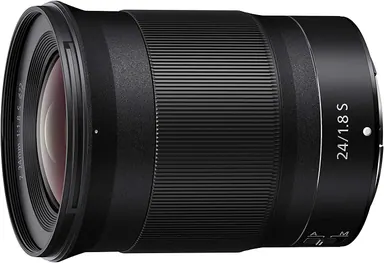
Overview
The Nikon Nikkor Z 24mm F1.8 S is a remarkable addition to Nikon's mirrorless lens lineup, tailored for photographers looking for a versatile and high-performing prime lens. With a maximum aperture of F1.8, this lens not only excels in low-light conditions but also provides a beautiful bokeh that enhances subject isolation, making it ideal for portraiture, street photography, and landscapes alike.
Build Quality and Design
One of the standout features of this lens is its construction. The Nikkor Z 24mm F1.8 S boasts a sturdy and weather-sealed design, which is essential for outdoor photographers who face varying environmental conditions. The lens has a sleek and modern aesthetic, lending a professional look to your camera setup. The focus and aperture rings are well-damped, allowing for smooth adjustments with excellent tactile feedback.
Optical Performance
When it comes to optical quality, the Nikkor Z 24mm F1.8 S does not disappoint. Sharpness is impressive right from the maximum aperture, and it only gets better as you stop down. Edge-to-edge performance shows minimal distortion and chromatic aberration, making it a solid choice for landscape and architectural photography. The lens also features an excellent control of flare and ghosting, thanks to its advanced coating techniques, which helps maintain contrast and color fidelity even in challenging lighting conditions.
Autofocus System
The autofocus performance of the Nikkor Z 24mm F1.8 S is fast, accurate, and nearly silent, making it ideal for both still photography and video applications. The lens is equipped with a stepping motor that allows for smooth focus transitions, which is particularly useful for videographers wanting a more cinematic feel. Additionally, manual focusing is a pleasure thanks to the resistance of the focus ring, providing ample feedback for precise adjustments.
Compatibility
Designed specifically for the Nikon Z mount, this lens integrates seamlessly with Nikon's Z-series mirrorless cameras, ensuring full compatibility with their autofocus system and image stabilization features. This makes it a perfect companion for anyone using Nikon’s latest technology, giving photographers a competitive edge in various shooting situations.
Pros and Cons
Pros
- Exceptional optical performance with sharpness across the frame.
- Compact and lightweight design, making it highly portable.
- Excellent build quality with weather-sealing.
- Fast and silent autofocus suitable for both photography and videography.
- Highly versatile for various photography styles.
Cons
- Some may find the price point slightly higher compared to other lenses in the same focal length range.
- The front element is a bit susceptible to reflections in certain lighting conditions, although this is improved with the coating.
Verdict
The Nikon Nikkor Z 24mm F1.8 S is a top-tier prime lens that combines superb optical quality, rugged build, and excellent autofocus performance. While the price might be a consideration for budget-conscious photographers, the functionality and image quality it offers make it a worthy investment for anyone serious about their photography. Whether you're capturing expansive landscapes or intimate portraits, this lens delivers an outstanding performance that will satisfy even the most discerning photographers.
Technical Specifications
Which cameras does the Nikon Nikkor Z 24mm F1.8 S fit?
The Nikon Nikkor Z 24mm F1.8 S is a full-frame lens for Nikon Z cameras. On full-frame bodies it uses the whole sensor; on APS-C Nikon Z cameras its field of view equals 36 mm in full-frame terms.
Nikon Z cameras
- Full frame:
- Nikon ZR, Nikon Z5II, Nikon Z6III, Nikon Z8, Nikon Zf, Nikon Z9, Nikon Z5, Nikon Z6II, Nikon Z7II, Nikon Z6, Nikon Z7
- APS-C:
- Nikon Z50II, Nikon Z30, Nikon Z fc, Nikon Z50
Nikon Nikkor Z 24mm F1.8 S compared
Key specs side by side with the most similar Nikon Z lenses.
| Lens | Nikon Nikkor Z 24mm F1.8 S | Viltrox AF 24mm F1.8 | Viltrox AF 28mm F1.8 | Nikon Nikkor Z DX 24mm F1.7 |
|---|---|---|---|---|
| Focal length | 24 mm | 24 mm | 28 mm | 24 mm |
| Max. aperture | f/1.8 | f/1.8 | f/1.8 | f/1.7 |
| Weight | 450 g | 370 g | 367 g | 135 g |
| Filter diameter | 72 mm | 55 mm | 55 mm | 46 mm |
| Min. focus distance | 25 cm | 30 cm | 37 cm | 18 cm |
| Length | 97 mm | 87 mm | 88 mm | 40 mm |
| Autofocus | yes | yes | yes | yes |
| Image stabilization | no | yes | no | no |
Nikon Nikkor Z 24mm F1.8 S: FAQ
Does the Nikon Nikkor Z 24mm F1.8 S have autofocus?
Yes, the Nikon Nikkor Z 24mm F1.8 S has autofocus.
Does the Nikon Nikkor Z 24mm F1.8 S have image stabilization?
No, the Nikon Nikkor Z 24mm F1.8 S has no stabilization of its own. On cameras with in-body image stabilization (IBIS) the image is still stabilized.
How much does the Nikon Nikkor Z 24mm F1.8 S weigh?
The Nikon Nikkor Z 24mm F1.8 S weighs 450 g. It is 97 mm long with a diameter of 78 mm.
What filter size does the Nikon Nikkor Z 24mm F1.8 S use?
The Nikon Nikkor Z 24mm F1.8 S takes 72 mm screw-in filters.
How close can the Nikon Nikkor Z 24mm F1.8 S focus?
The minimum focus distance of the Nikon Nikkor Z 24mm F1.8 S is 25 cm, measured from the sensor plane.
Is the Nikon Nikkor Z 24mm F1.8 S a full-frame lens?
Yes, the Nikon Nikkor Z 24mm F1.8 S covers full frame. On APS-C cameras its field of view equals 36 mm in full-frame terms.
Similar lenses
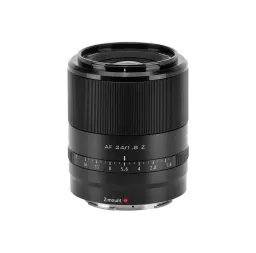
Viltrox AF 24mm F1.8
24mm · f/1.8
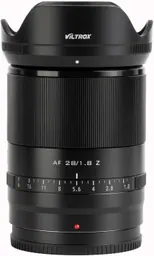
Viltrox AF 28mm F1.8
28mm · f/1.8
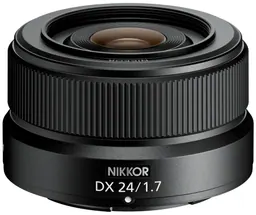
Nikon Nikkor Z DX 24mm F1.7
24mm · f/1.7
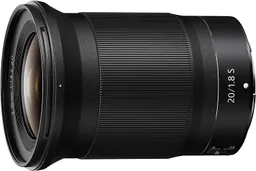
Nikon Nikkor Z 20mm F1.8 S
20mm · f/1.8
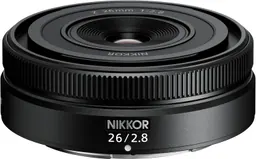
Nikon Nikkor Z 26mm F2.8
26mm · f/2.8
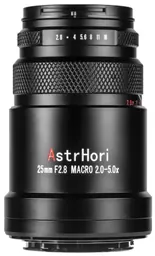
AstrHori 25mm f/2.8 2-5x Ultra Macro
25mm · f/2.8
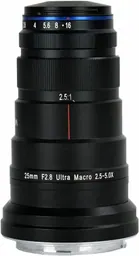
Venus Laowa 25mm F2.8 2.5-5X Ultra Macro
25mm · f/2.8
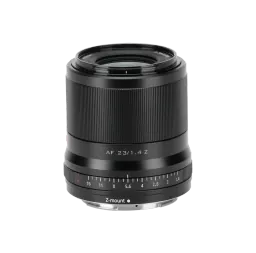
Viltrox AF 23mm F/1.4
23mm · f/1.4
Related guides
What does the f mean in camera lenses?
When it comes to photography, understanding the basics of f-stop is essential. F-stop is a critical component of a camera lens that…
How to clean a camera lens
Keeping your camera lenses clean is essential for getting clear, sharp, and high-quality images. Even the smallest speck of dust, dirt, or…
All camera lens types explained: Uses and functions
In this article, we'll explore the various types of camera lenses, their defining features, and when to use them. We'll also cover the…