

Nikon Z (DX/FX) Autofocus
Tamron 35-100mm F/2.8 Di III VXD
- Focal length
- 35–100 mm
- Aperture
- f/2.8
- Weight
- 575 g
- Filter diameter
- 67 mm
- Min. focus distance
- 22 cm
- Length
- 121.5 mm
Overview
The Tamron 35-100mm F/2.8 Di III VXD (Model A078) is a fast standard to short telephoto zoom for full-frame mirrorless cameras, available for Sony E and Nikon Z. Tamron built it around the portrait focal lengths 35mm, 50mm, 85mm and 100mm, with a constant F2.8 aperture in a small body. According to Tamron it was developed after users of the larger 35-150mm F/2-2.8 Di III VXD (Model A058) asked for a lighter and more compact option.
Optical design
Tamron lists 15 elements in 13 groups, including one XLD (eXtra Low Dispersion), two LD (Low Dispersion) and three GM (Glass Molded Aspherical) elements. The circular diaphragm has 9 blades and stays almost perfectly circular up to two stops down from maximum aperture, according to Tamron. The minimum aperture is F22. The angle of view runs from 63 degrees 26 minutes to 24 degrees 25 minutes. Minimum focusing distance is 22 cm at the wide end and 65 cm at the long end, with magnification of 1:3.3 and 1:5.9.
Autofocus and handling
The VXD linear motor (Voice-coil eXtreme-torque Drive) drives the autofocus. Tamron states it is fast and precise for natural expressions. The lens works with Tamron Lens Utility, which assigns functions for stills and video. Tamron notes a minimized barrel extension that stabilizes the center of gravity while zooming, which helps handheld work and gimbals. The zoom and focus rings use a material meant to improve grip. No vibration compensation is listed, so shake reduction depends on the camera body.
Build and size
On Sony E the lens weighs 565 g and is 119.2mm long. The Nikon Z version weighs 575 g and is 121.5mm long. Maximum diameter is 80.6mm and the filter thread is 67mm. The barrel has moisture-resistant construction with leak-resistant seals, and the front element has a fluorine coating that repels water and oil.
Where it fits
The larger sibling is the Tamron 35-150mm F/2-2.8 Di III VXD. On Sony E and Nikon Z, other standard zoom options include the Tamron 28-75mm F2.8 Di III VXD G2 and the Tamron 70-180mm F2.8 Di III VC VXD G2 for more reach. On Sony E there are also the Sony FE 24-70mm F2.8 GM II and the Sony FE 24-50mm F2.8 G, and on Nikon Z the Nikon Nikkor Z 24-70mm F2.8 S and Nikon Nikkor Z 70-180mm F2.8.
Pros and cons
Pros
- Constant F2.8 across 35-100mm
- Compact for the class: 565 g and 119.2mm on Sony E
- Moisture-resistant construction with fluorine coating
- Available for Sony E and Nikon Z
Cons
- No vibration compensation listed
- 100mm is shorter than the 150mm of the 35-150mm
- Quality claims come from Tamron, independent measurements are still needed
Verdict
A small F2.8 zoom aimed at portrait and travel shooters who find the 35-150mm too large. It is a sensible trade if 100mm is long enough.
Technical Specifications
- min focal length
- 35 mm
- max focal length
- 100 mm
- max f (min zoom)
- f/2.8
- max f (max zoom)
- f/2.8
- min. aperture
- f/22
- Elements
- 15
- Groups
- 13
- Weight
- 575 g (1.27 lb)
- Filter diameter
- 67 mm
- min focus distance
- 22 cm (8.66 in)
- Length
- 121.5 mm (4.78 in)
- Diameter
- 80.6 mm (3.17 in)
Which cameras does the Tamron 35-100mm F/2.8 Di III VXD fit?
The Tamron 35-100mm F/2.8 Di III VXD is a full-frame lens for Nikon Z cameras. On full-frame bodies it uses the whole sensor; on APS-C Nikon Z cameras its field of view equals 53-150 mm in full-frame terms.
Nikon Z cameras
- Full frame:
- Nikon ZR, Nikon Z5II, Nikon Z6III, Nikon Z8, Nikon Zf, Nikon Z9, Nikon Z5, Nikon Z6II, Nikon Z7II, Nikon Z6, Nikon Z7
- APS-C:
- Nikon Z50II, Nikon Z30, Nikon Z fc, Nikon Z50
Tamron 35-100mm F/2.8 Di III VXD compared
Key specs side by side with the most similar Nikon Z lenses.
| Lens | Tamron 35-100mm F/2.8 Di III VXD | Nikon Nikkor Z 28-75mm F2.8 | Tamron 28-75mm F/2.8 DI III VXD G2 | Tamron 35-150mm F/2-2.8 Di III VXD |
|---|---|---|---|---|
| Focal length | 35-100 mm | 28-75 mm | 28-75 mm | 35-150 mm |
| Max. aperture | f/2.8 | f/2.8 | f/2.8 | f/2-2.8 |
| Weight | 575 g | 565 g | 550 g | 1,165 g |
| Filter diameter | 67 mm | 67 mm | 67 mm | 82 mm |
| Min. focus distance | 22 cm | 19 cm | 18 cm | 33 cm |
| Length | 121.5 mm | 121 mm | 120 mm | 158 mm |
| Autofocus | yes | yes | yes | yes |
| Image stabilization | no | no | no | no |
This lens is also available for
Tamron 35-100mm F/2.8 Di III VXD: FAQ
Does the Tamron 35-100mm F/2.8 Di III VXD have autofocus?
Yes, the Tamron 35-100mm F/2.8 Di III VXD has autofocus.
Does the Tamron 35-100mm F/2.8 Di III VXD have image stabilization?
No, the Tamron 35-100mm F/2.8 Di III VXD has no stabilization of its own. On cameras with in-body image stabilization (IBIS) the image is still stabilized.
How much does the Tamron 35-100mm F/2.8 Di III VXD weigh?
The Tamron 35-100mm F/2.8 Di III VXD weighs 575 g. It is 121.5 mm long with a diameter of 80.6 mm.
What filter size does the Tamron 35-100mm F/2.8 Di III VXD use?
The Tamron 35-100mm F/2.8 Di III VXD takes 67 mm screw-in filters.
How close can the Tamron 35-100mm F/2.8 Di III VXD focus?
The minimum focus distance of the Tamron 35-100mm F/2.8 Di III VXD is 22 cm, measured from the sensor plane.
Is the Tamron 35-100mm F/2.8 Di III VXD a full-frame lens?
Yes, the Tamron 35-100mm F/2.8 Di III VXD covers full frame. On APS-C cameras its field of view equals 53-150 mm in full-frame terms.
Similar lenses
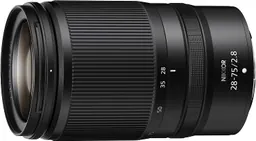
Nikon Nikkor Z 28-75mm F2.8
28-75mm · f/2.8
Tamron 28-75mm F/2.8 DI III VXD G2
28-75mm · f/2.8
Tamron 35-150mm F/2-2.8 Di III VXD
35-150mm · f/2-2.8

Nikon Nikkor Z 24-105mm F4-7.1
24-105mm · f/4-7.1

Nikon Nikkor Z 28-135mm F4 PZ
28-135mm · f/4
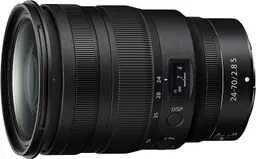
Nikon Nikkor Z 24-70mm F2.8 S
24-70mm · f/2.8

Nikon Nikkor Z 24-70mm F2.8 S II
24-70mm · f/2.8
Nikon Nikkor Z 24-120mm F4 S
24-120mm · f/4
Related guides
What does the f mean in camera lenses?
When it comes to photography, understanding the basics of f-stop is essential. F-stop is a critical component of a camera lens that…
How to clean a camera lens
Keeping your camera lenses clean is essential for getting clear, sharp, and high-quality images. Even the smallest speck of dust, dirt, or…
All camera lens types explained: Uses and functions
In this article, we'll explore the various types of camera lenses, their defining features, and when to use them. We'll also cover the…