
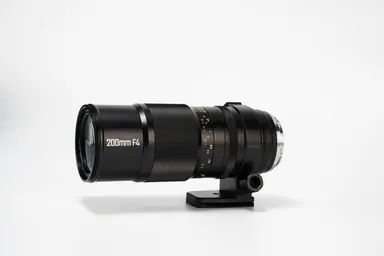
Mitakon Zhongyi 200mm f/4 1x Macro
- Focal length
- 200 mm
- Aperture
- f/4
- Weight
- 1300 g
- Filter diameter
- 67 mm
- Min. focus distance
- 48 cm
- Length
- 186 mm
At a Glance
For Nikon Z, this 200 mm macro lens offers 1:1 reproduction, f/4 and a 48 cm minimum focus distance, all with manual focus. It is heavy at 1.3 kg and 186 mm long. Macro, product and landscape photography are the fields it suits, the focal length adding telephoto reach.
Good for
- Macro
- Product
- Landscape
Worth knowing
- No autofocus: focusing is manual only.
- At 1.3 kg it is heavy: a monopod or tripod helps for longer sessions.
Derived from the manufacturer data, not from our own tests. How we check
Technical Specifications
- Min. focal length
- 200 mm
- Max. focal length
- 200 mm
- Max. aperture (min. zoom)
- f/4
- Max. aperture (max. zoom)
- f/4
- Min. aperture
- f/32
- Elements
- 11
- Groups
- 7
- Weight
- 1,300 g (2.87 lb)
- Filter diameter
- 67 mm
- Min. focus distance
- 48 cm (18.9 in)
- Max. magnification
- 1:1 (1×)
- Length
- 186 mm (7.32 in)
- Diameter
- 75 mm (2.95 in)
Manufacturer data: zyoptics.net
Last checked: October 13, 2026 (against the manufacturer data) · How we check
Which cameras does the Mitakon Zhongyi 200mm f/4 1x Macro fit?
The Mitakon Zhongyi 200mm f/4 1x Macro is a full-frame lens for Nikon Z cameras. On full-frame bodies it uses the whole sensor; on APS-C Nikon Z cameras its field of view equals 300 mm in full-frame terms.
Nikon Z cameras
Mitakon Zhongyi 200mm f/4 1x Macro compared
Key specs side by side with the most similar Nikon Z lenses.
| Lens | Mitakon Zhongyi 200mm f/4 1x Macro | Kase 200mm F5.6 MC Reflex | Venus Laowa 180mm F4.5 1.5X Ultra Macro APO | Venus Laowa 200mm F2 AF FF |
|---|---|---|---|---|
| Focal length | 200 mm | 200 mm | 180 mm | 200 mm |
| Max. aperture | f/4 | f/5.6 | f/4.5 | f/2 |
| Weight | 1,300 g | 424 g | – | 1,588 g |
| Filter diameter | 67 mm | 67 mm | 62 mm | 105 mm |
| Min. focus distance | 48 cm | 200 cm | 30 cm | 150 cm |
| Length | 186 mm | 116 mm | – | 176.8 mm |
| Autofocus | no | no | yes | yes |
| Image stabilization | no | no | no | no |
This lens is also available for
Mitakon Zhongyi 200mm f/4 1x Macro: FAQ
Does the Mitakon Zhongyi 200mm f/4 1x Macro have autofocus?
No, the Mitakon Zhongyi 200mm f/4 1x Macro has no autofocus; you focus it manually.
Does the Mitakon Zhongyi 200mm f/4 1x Macro have image stabilization?
No, the Mitakon Zhongyi 200mm f/4 1x Macro has no stabilization of its own. On cameras with in-body image stabilization (IBIS) the image is still stabilized.
How much does the Mitakon Zhongyi 200mm f/4 1x Macro weigh?
The Mitakon Zhongyi 200mm f/4 1x Macro weighs 1,300 g. It is 186 mm long with a diameter of 75 mm.
What filter size does the Mitakon Zhongyi 200mm f/4 1x Macro use?
The Mitakon Zhongyi 200mm f/4 1x Macro takes 67 mm screw-in filters.
How close can the Mitakon Zhongyi 200mm f/4 1x Macro focus?
The minimum focus distance of the Mitakon Zhongyi 200mm f/4 1x Macro is 48 cm, measured from the sensor plane.
Is the Mitakon Zhongyi 200mm f/4 1x Macro a full-frame lens?
Yes, the Mitakon Zhongyi 200mm f/4 1x Macro covers full frame. On APS-C cameras its field of view equals 300 mm in full-frame terms.
Similar lenses
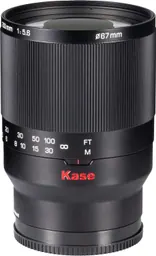
Kase 200mm F5.6 MC Reflex
200mm · f/5.6
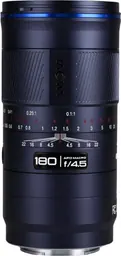
Venus Laowa 180mm F4.5 1.5X Ultra Macro APO
180mm · f/4.5
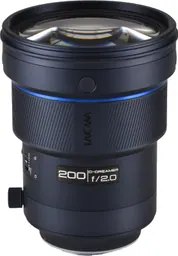
Venus Laowa 200mm F2 AF FF
200mm · f/2
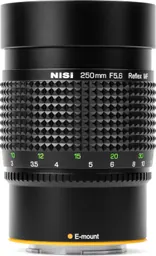
NiSi 250mm f/5.6 Reflex
250mm · f/5.6
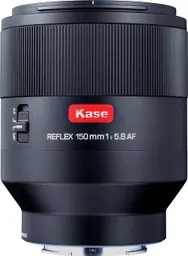
Kase AF 150mm F5.6 Reflex
150mm · f/5.6
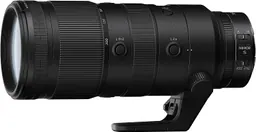
Nikon Nikkor Z 70-200mm F2.8 VR S
70-200mm · f/2.8
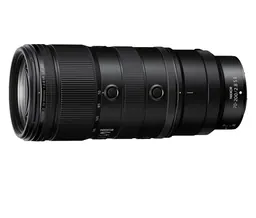
Nikon Nikkor Z 70-200mm F2.8 VR S II
70-200mm · f/2.8
Tamron 150-500mm f/5-6.7 Di III VC VXD
150-500mm · f/5-6.7
Related guides
What does the f mean in camera lenses? f/2.8 explained
The f in f/2.8 is the f-number: focal length divided by aperture diameter. Learn why lower means more light and how the f-stop scale works.
How to clean a camera lens safely, step by step
How to clean a camera lens: blow off dust, then wipe gently with a microfiber cloth or lens paper. Steps and warnings from Canon, Nikon…
Types of Camera Lenses Explained: Uses and Differences
Types of camera lenses explained: wide-angle, standard, telephoto, prime, zoom, macro and more, with focal length ranges and typical uses.